Author: Modern Urban Prepper Editorial Team

  • Emergency Radio Guide: Staying Connected in an Apartment Blackout

    ⚡ Quick Summary

    An emergency radio is your lifeline when cell towers fail, Wi-Fi goes dark, and your smartphone becomes a dead brick. It’s a dedicated device that pulls broadcasts from NOAA weather alerts, AM/FM stations, and emergency services — no data plan, no Wi-Fi, no problem.

    Why you need one: During blackouts, natural disasters, and infrastructure failures, cellular networks get crushed within minutes. Everyone tries to call, text, and stream at once. Cell towers lose power. Your phone dies. An emergency radio keeps working — receiving real-time alerts, evacuation orders, and weather updates when every other communication method has failed.

    Your 3 Must-Have Features:

    • NOAA Weather Radio — Automated alerts for severe weather, natural disasters, and civil emergencies broadcast 24/7 from government transmitters.
    • Multiple power options — Battery, hand crank, and solar. If you’re relying on one power source, you’ve got a single point of failure.
    • Compact & apartment-friendly — No gear that takes up a cubic foot of closet space. The best emergency radio for apartments fits in a drawer and stays charged for months.
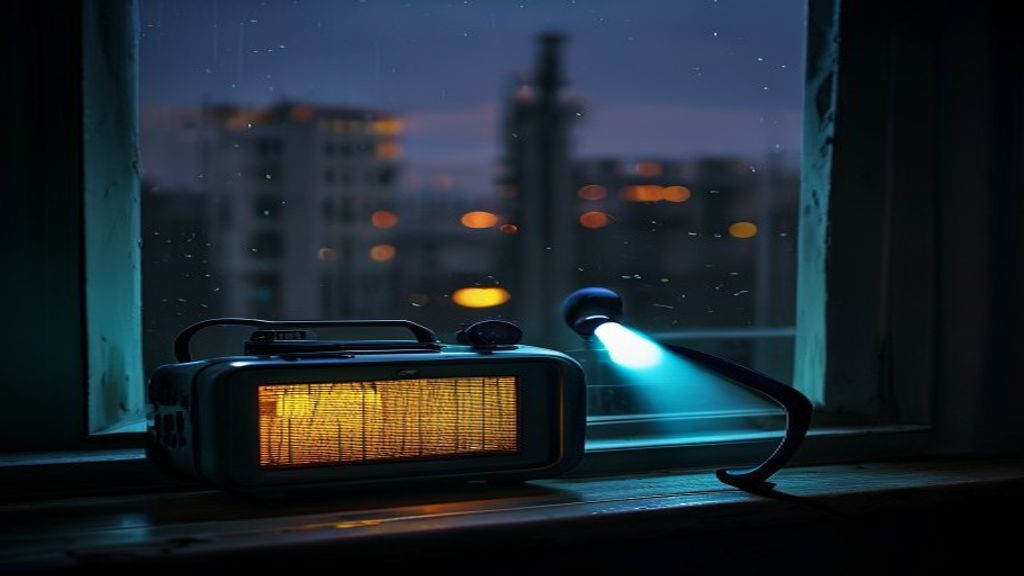
    Best emergency radio for apartments showing NOAA weather alert during blackout
    Emergency radio displaying a NOAA weather alert during an apartment blackout

    Why Phones Fail During Emergencies

    Your smartphone is incredible — until it’s not. The moment a major emergency hits, your phone becomes a liability disguised as a lifeline. Understanding why this happens is the first step toward building a real urban emergency communication strategy.

    Network congestion is instantaneous. When a hurricane makes landfall, a wildfire spreads, or a major earthquake hits, millions of people do the same thing at the same time: they pick up their phones. Cell towers are designed for normal usage patterns, not for every subscriber trying to make a call within a 10-minute window. The network chokes. Calls don’t connect. Text messages queue for hours. Even emergency services struggle to get through.

    Cell towers lose power fast. Most cellular infrastructure has backup batteries that last 4–8 hours, maybe 24 if they’re well-maintained. When the grid goes down and stays down, those towers go dark. Your phone still has signal bars, but there’s nothing on the other end listening. You’re shouting into a void.

    Your battery dies faster than you think. A fully charged smartphone under normal use lasts a day. Under emergency use — constant refreshing, GPS tracking, flashlight mode, trying to get signal — you’re lucky to get 6 hours. Once it’s dead, you’re cut off. No weather updates. No news. No idea what’s happening two blocks away or two states over. For backup power solutions, check out our guide to portable power stations designed for apartments.

    Internet-dependent apps are useless without data. All your streaming news apps, social media feeds, and messaging platforms require an active internet connection. Wi-Fi routers die when the power goes out. Cellular data vanishes when towers fail. Suddenly, your $1,200 smartphone is a paperweight with a cracked screen and 4% battery.

    Emergency radio broadcasts don’t depend on any of that. They’re one-way transmissions from high-powered government and commercial transmitters designed to stay operational during disasters. NOAA weather radio stations have backup generators, redundant power systems, and prioritized infrastructure maintenance. AM/FM stations are often the last thing to go dark. A battery-powered radio emergency device will pull in those signals long after every cell tower in your city has gone silent.

    Types of Emergency Radios

    Not all emergency radios are built the same. The right choice for apartment living depends on your power access, storage constraints, and how much you’re willing to spend. Here’s what actually matters.

    NOAA Weather Radio (Apartment Essential)

    NOAA weather radio is the gold standard for emergency alerts in the United States. It’s a network of over 1,000 transmitters covering all 50 states, coastal waters, Puerto Rico, the U.S. Virgin Islands, and U.S. Pacific Territories. These stations broadcast continuous weather information 24/7 and automatically interrupt programming to send emergency alerts for tornadoes, floods, earthquakes, chemical spills, AMBER alerts, and civil emergencies.

    A NOAA weather radio apartment setup doesn’t require an antenna farm on your balcony or a ham radio license. It’s a simple receiver that picks up VHF frequencies in the 162 MHz range. Most models include Specific Area Message Encoding (SAME), which filters alerts so you only hear warnings relevant to your county — not every flood watch in a 200-mile radius.

    If you only buy one emergency communication device, make it a NOAA-capable radio. Everything else is secondary.

    Hand Crank Radio vs Battery Radio

    This is the debate that derails every emergency radio discussion. The truth: both have a place, and the best models combine them.

    Hand crank radios eliminate battery dependency. When the power’s been out for 72 hours and every AA battery in your building is dead, you can still crank for 60 seconds and get 10–30 minutes of listening time. The trade-off is bulk and weight. Hand crank mechanisms add size, and cheap ones break after a few dozen uses. Quality hand crank models (like the Eton FRX5-BT) are built to last but cost more.

    Battery-powered emergency radios are simpler, lighter, and often cheaper. A good set of lithium AA batteries can sit in a drawer for 10+ years and still work when you need them. The downside is obvious: if you don’t have spare batteries, you’re done. For apartment preppers, the hybrid approach works best — a radio with battery power and hand crank backup. You use batteries for everyday convenience and crank power when you’ve run out of options.

    Solar panels are common on multi-power radios, but don’t rely on them as your primary source. They’re slow, require direct sunlight, and are nearly useless indoors or during overcast emergency conditions. Treat solar as a tertiary option at best.

    AM/FM + NOAA (The Practical Standard)

    Most quality emergency radios combine AM, FM, and NOAA weather bands in one unit. This isn’t just about entertainment — AM and FM stations often carry local news, emergency broadcasts, and community coordination information during disasters. AM radio, in particular, has incredible range and can pull in stations hundreds of miles away at night, giving you a broader picture of what’s happening regionally.

    Skip radios that only do FM or only do weather. You want all three bands in one compact unit.
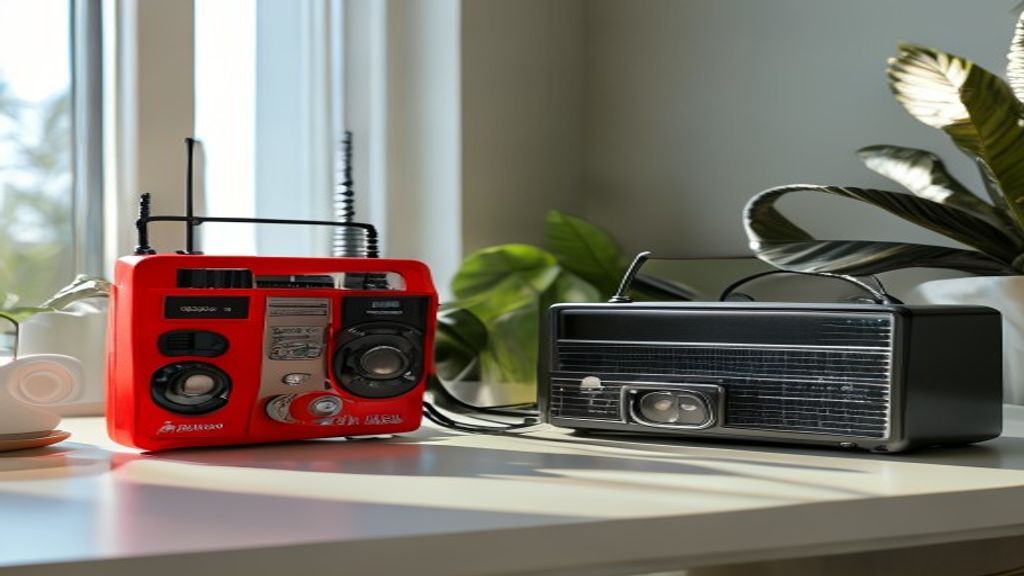
    Hand crank radio vs battery radio comparison showing different emergency radio types for apartments
    Three types of emergency radios: hand crank, battery-powered, and multi-power NOAA

    Apartment-Specific Challenges

    Living in an apartment changes the equation. The same emergency radio that works great for a suburban household with garage space and easy outdoor access might be completely wrong for a 600-square-foot apartment on the 12th floor.

    Limited storage space means size matters. You don’t have a dedicated emergency closet or a basement shelf. Your radio needs to fit in a kitchen drawer, a hallway closet, or inside your bug out bag checklist kit without monopolizing space. Anything larger than a shoebox is a tough sell for most apartment dwellers.

    Poor reception is common in urban high-rises. Concrete walls, steel rebar, and being surrounded by dozens of other units can seriously degrade radio reception. If you’re deep inside a building, you may need to position your radio near a window or even step onto a balcony to get a clean signal. Some apartment preppers keep their emergency radio near the window specifically for this reason. It’s not ideal, but it’s the reality of apartment emergency communication.

    Shared walls mean noise discipline matters. A blaring emergency radio at 2 AM will wake up your neighbors and potentially cause conflicts during already stressful situations. Look for models with headphone jacks and good volume control. You can stay informed without broadcasting every alert to the entire floor.

    No exterior power backup for recharging. Suburban households might have a generator in the garage or solar panels on the roof. Apartment dwellers don’t have those options. Your emergency radio needs to be self-sufficient — either with long-lasting battery life, hand crank capability, or integration with small-scale portable power solutions you can store indoors.

    Portability is critical. If you need to evacuate, your emergency radio should be light and compact enough to toss into a bag in under 30 seconds. This ties directly into apartment blackout preparedness planning — everything you rely on should be grab-and-go ready.

    Top 5 Emergency Radios for Apartments

    These aren’t affiliate-link filler picks. These are the radios that consistently perform in apartment environments, balance size with capability, and don’t die after 6 months of storage. Every recommendation here is tested for urban use.

    1. Midland ER310 (Best Overall for Apartments)

    The Midland ER310 is the apartment prepper’s default choice. It’s compact (roughly the size of a large smartphone), includes AM/FM/NOAA weather radio with SAME alerts, and offers three power options: rechargeable 2,600 mAh battery, six AA batteries, or hand crank. The crank mechanism is sturdy and actually works — one minute of cranking gives you about 30 minutes of radio or 10 minutes of bright LED flashlight.

    What makes it apartment-ideal: The built-in rechargeable battery holds a charge for months in storage, and the ultrasonic dog whistle is a nice touch for signaling in collapsed-structure scenarios. It’s also relatively quiet when cranking, which matters in shared-wall situations. The USB output can charge your phone in a pinch, though it’s slow.

    Specs: 6.5 oz, 6.3″ × 2.9″ × 1.6″, NOAA SAME alerts, SOS beacon, solar panel (supplemental), IP54 weather-resistant.

    2. Eton FRX5-BT (Best Build Quality)

    If you want a hand crank radio that’ll outlast you, the Eton FRX5-BT is built like a tank. The crank mechanism is over-engineered in the best way — it’s smooth, reliable, and won’t snap after a dozen uses like cheaper models. It covers AM/FM/NOAA, has Bluetooth connectivity for streaming from your phone (when networks are up), and includes a 2,000 mAh USB charging bank for emergency phone charging.

    Apartment fit: It’s slightly bulkier than the Midland ER310, but the trade-off is durability and better audio quality. The ambient light with red flash mode is useful for signaling, and the glow-in-the-dark locator helps you find it in complete darkness. This is the radio you buy once and never replace.

    Specs: 12 oz, 6.5″ × 6″ × 2.5″, NOAA alerts, Bluetooth, digital tuner, LED flashlight + ambient light.

    3. Kaito KA500 (Best for Signal Range)

    The Kaito KA500 pulls in weak signals better than almost anything in its price range. If you’re in a high-rise with poor reception or an apartment surrounded by urban RF noise, this radio compensates with a telescoping antenna and a sensitive tuner. It covers AM/FM/NOAA plus shortwave bands, which can be valuable for receiving international or long-range broadcasts during major events.

    Five power options: AC adapter, AA batteries, built-in rechargeable battery, hand crank, and solar panel. The solar panel is more functional than most, but still slow. The biggest downside is size — it’s chunkier than the Midland or Eton. But if reception quality is your top concern, this is the apartment radio to get.

    Specs: 16 oz, 7.5″ × 6″ × 2.8″, NOAA alerts, shortwave bands, 5 power sources, reading lamp, USB charging port.

    4. RunningSnail MD-090P (Best Budget Pick)

    For under $30, the RunningSnail MD-090P gives you 90% of what expensive models offer. It’s tiny (fits in a coat pocket), includes AM/FM/NOAA weather radio, has a hand crank, solar panel, and runs on AAA batteries or a built-in rechargeable cell. The flashlight and reading lamp are functional, and the 2,000 mAh battery can trickle-charge your phone.

    Apartment reality check: This isn’t built to last 20 years. The crank feels fragile, the speaker is tinny, and the solar panel is mostly decorative. But it works, it’s cheap, and if you’re just starting your apartment blackout preparedness journey and don’t want to drop $80+ on a radio, this is a solid entry point. Buy two — one for home, one for your bug out bag.

    Specs: 9 oz, 5″ × 2.4″ × 1.5″, NOAA alerts, flashlight, 2,000 mAh battery, AAA or rechargeable power.

    5. Sangean MMR-88 (Most Compact)

    The Sangean MMR-88 is the smallest radio on this list that still takes itself seriously. It’s credit-card thin, weighs under 5 ounces, and slips into any bag without adding bulk. Despite its size, it covers AM/FM/NOAA weather radio and offers hand crank, solar, and AAA battery power. The sound quality is shockingly good for something this small.

    Apartment advantages: If space is your absolute top constraint, this is the answer. It’s also the most portable option for grey man theory adherents who want emergency communication without carrying something that looks like tactical gear. The trade-off? No phone charging capability and a smaller speaker volume.

    Specs: 4.8 oz, 4.7″ × 2.3″ × 1.4″, NOAA alerts, LED flashlight, digital tuning, IPX3 water-resistant.
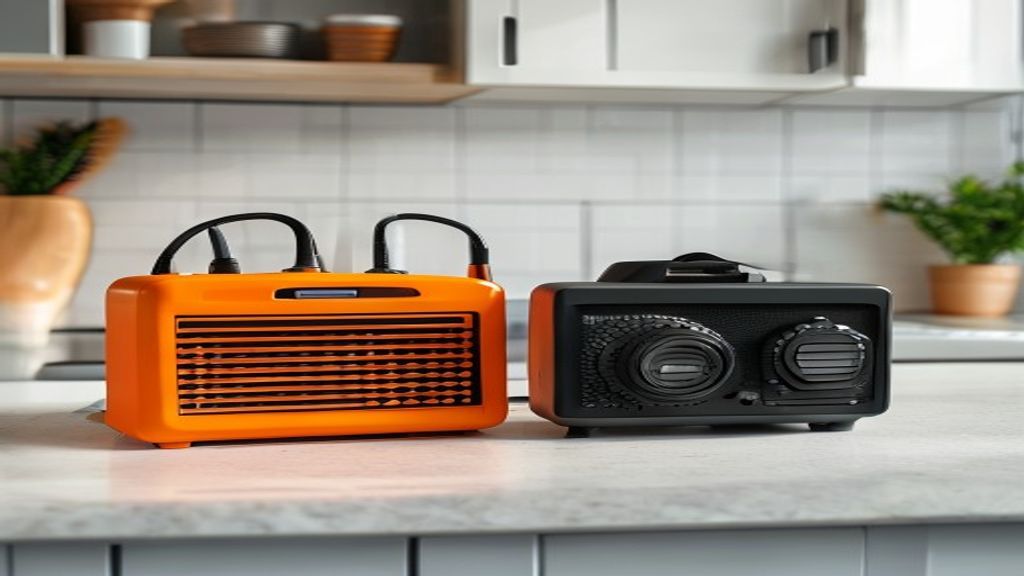
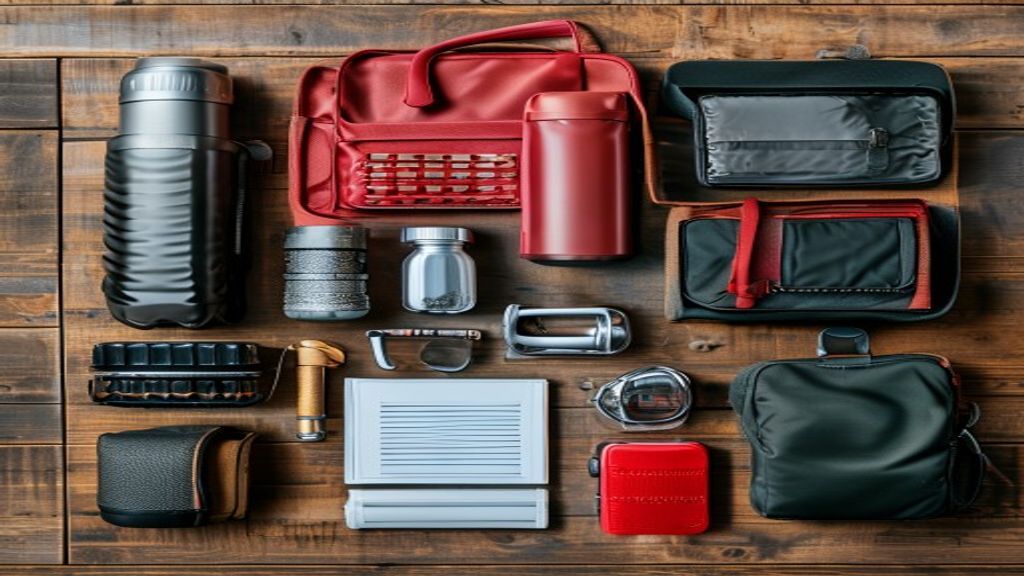
    Urban emergency communication devices comparison showing compact emergency radios for apartments
    Size comparison of compact emergency radios for apartment use

    How to Use a Radio Effectively

    Owning an emergency radio doesn’t help if you don’t know how to operate it under stress. Most people unbox their radio, glance at the instructions, and toss it in a drawer. When the power goes out, they fumble in the dark trying to figure out which button does what. Don’t be that person.

    Program your SAME alerts now, not during an emergency. NOAA radios with SAME technology let you enter your county code so you only receive alerts for your area. If you don’t program this, you’ll get alerts for every county within 50 miles, and you’ll start ignoring them. Most radios make this process unnecessarily complicated — read the manual once with the lights on and your phone nearby to look up your SAME code. Do it today.

    Test your radio monthly. Not just “does it turn on” — actually tune to a station, verify NOAA reception, check that the battery still holds a charge. Set a recurring phone reminder. This is the only way to catch a dead battery or broken antenna before you’re sitting in the dark wondering why nothing works.

    Know which frequencies matter. During disasters, local AM/FM stations often coordinate with emergency management to broadcast critical information: shelter locations, water distribution points, evacuation routes, road closures. Identify your city’s major AM and FM news stations ahead of time and write them down on a card that stays with your radio. When you power it on during a blackout, you’ll know exactly where to tune.

    Keep your radio near a window for better reception. This is especially critical in apartments. Interior rooms surrounded by concrete and metal are RF dead zones. If you can’t get a signal, move to a window or step onto a balcony. The difference can be dramatic — from static to clear audio in three feet of movement.

    Pair it with other communication tools. Your emergency radio isn’t a standalone solution. It works best as part of a layered communication strategy that includes offline maps, written emergency contact lists, and a plan for where to go if you need to evacuate. Radios are for receiving information — not sending it. If you need two-way communication, that’s a different tool entirely (FRS/GMRS handheld radios, which we won’t cover here but are worth researching).

    Quick Comparison Table

    Model Weight Power Options Best For Price Range
    Midland ER310 6.5 oz Battery, crank, solar, rechargeable Best overall apartment radio $50–$70
    Eton FRX5-BT 12 oz Battery, crank, solar, rechargeable Best build quality $80–$100
    Kaito KA500 16 oz AC, battery, crank, solar, rechargeable Best signal reception $60–$75
    RunningSnail MD-090P 9 oz Battery, crank, solar, rechargeable Best budget option $25–$35
    Sangean MMR-88 4.8 oz Battery, crank, solar Most compact $45–$60

    💡 Pro Tips

    Tip 1: Store spare batteries separately. Don’t leave batteries inside your radio for long-term storage. They’ll corrode, leak, and destroy the battery compartment. Keep fresh lithium AA or AAA batteries (depending on your model) in a sealed bag next to your radio. Lithium batteries have a 10+ year shelf life and perform better in temperature extremes than alkaline.

    Tip 2: Label your radio with tuned station frequencies. Use a label maker or piece of tape to mark your local AM/FM news stations directly on the radio. When you’re operating by flashlight during a blackout, you won’t have to hunt through static or try to remember if the news station is 101.5 or 105.1.

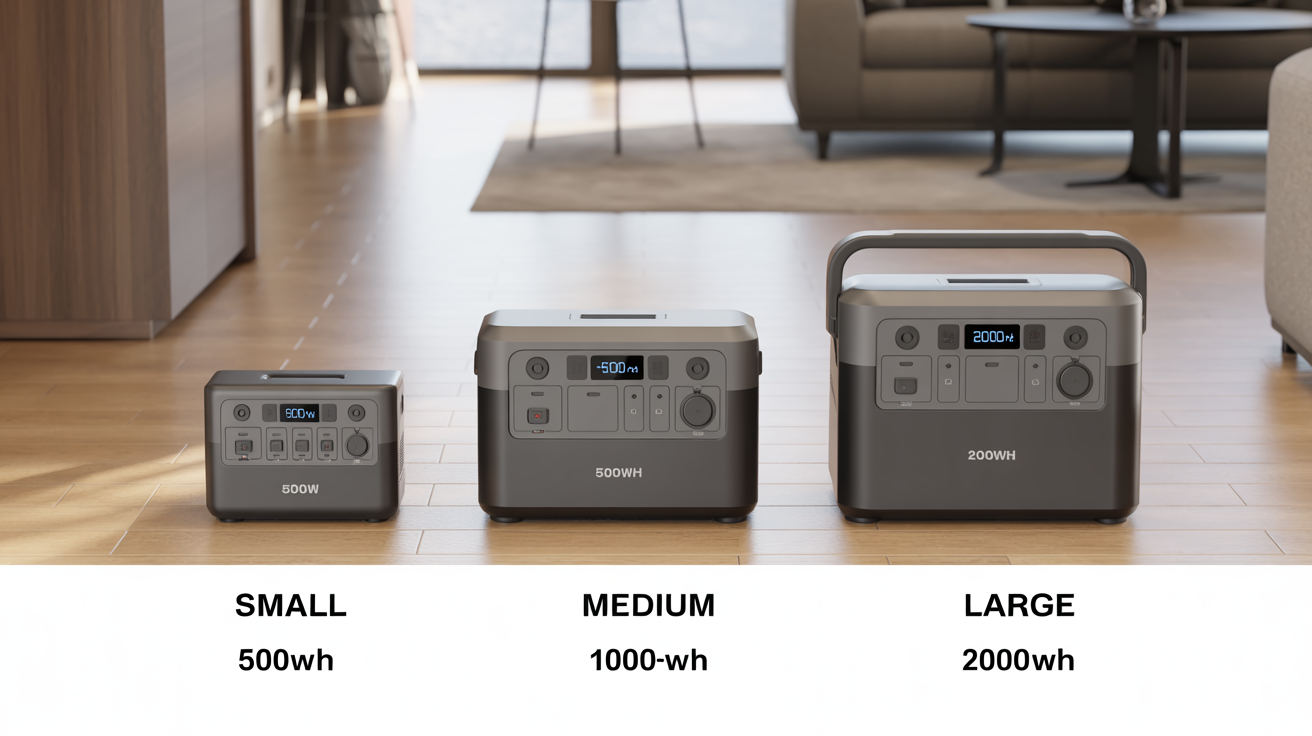
    Tip 3: Pair your radio with a portable power station. If you’ve invested in a portable power station for apartment blackout preparedness, you can keep your emergency radio’s internal battery topped off indefinitely. A 300Wh power station can recharge a radio dozens of times while also keeping your phone, headlamp, and other devices running.

    Conclusion: Your Lifeline When Everything Else Fails

    An emergency radio isn’t sexy. It’s not smart. It won’t integrate with your home automation system or track your sleep. But when the lights go out, the towers go dark, and your phone battery hits zero, that simple battery-powered emergency device becomes the only reliable source of information you have left.

    For apartment dwellers, the constraints are real. You don’t have a garage workshop or a disaster supply room. You have a coat closet, a kitchen drawer, and maybe some space under the bed. That means your emergency communication gear has to be compact, multi-powered, and proven to work when it’s been sitting untouched for six months. Every radio on this list meets that standard.

    The best emergency radio for apartments is the one you actually own, have tested, and can grab in 30 seconds during an evacuation. It doesn’t matter if it’s the most expensive or the one with the most features. What matters is that it’s there, it works, and you know how to use it before you’re standing in a dark stairwell trying to figure out if the fire department is telling people to shelter in place or get out.

    Urban emergency communication isn’t about having the coolest gadget. It’s about eliminating single points of failure. Your phone fails when the battery dies. Wi-Fi fails when the power goes out. Cell towers fail when everyone tries to call at once. A NOAA weather radio apartment setup — battery-powered, hand-crank-capable, stored within arm’s reach — keeps working through all of it.

    Buy your emergency radio today. Test it this weekend. Store it somewhere you’ll remember. You won’t know if it works until you need it — and when you need it, you’ll need it immediately. Don’t wait for the next hurricane season, the next wildfire, or the next blackout. Build your communication layer now, while the lights are still on and the stores are still open.

    Preparedness isn’t paranoia. It’s pattern recognition. Every major city has blackouts. Every region has natural disasters. Every infrastructure system eventually fails. The question isn’t whether you’ll face an emergency that cuts off communication — it’s whether you’ll have the tools to stay informed when it happens.

    The radio sitting in your closet could be the difference between knowing there’s a shelter three blocks west and wandering through a blacked-out city hoping to stumble across help. That’s not dramatic. That’s just the reality of urban emergency response when modern systems collapse.

    Get your radio. Program your alerts. Test your equipment. Everything else can wait. This can’t.
  • Bug Out Bag Checklist: The Ultimate 72-Hour Kit for Apartment Living

    ⚡ Quick Summary

    A Bug Out Bag (BOB) is a pre-packed emergency kit containing everything you need to survive for 72 hours when you have to leave home fast — no planning, no shopping, just grab and go.

    Why 72 hours? That’s the window most emergency management agencies recommend. It covers the critical gap between disaster onset and when organized relief typically arrives. For apartment dwellers, those 72 hours may mean navigating gridlocked streets, overcrowded transit, and urban chaos — not a backcountry trail.

    Your 3 Non-Negotiables:

    • Water & filtration — Dehydration kills faster than hunger. Pack water and a way to purify more.
    • Calories (compact food) — High-energy, no-cook food that won’t weigh you down or take up shelf space.
    • First aid + communication — Treat injuries and stay informed. A radio and a basic urban first aid kit are non-optional.
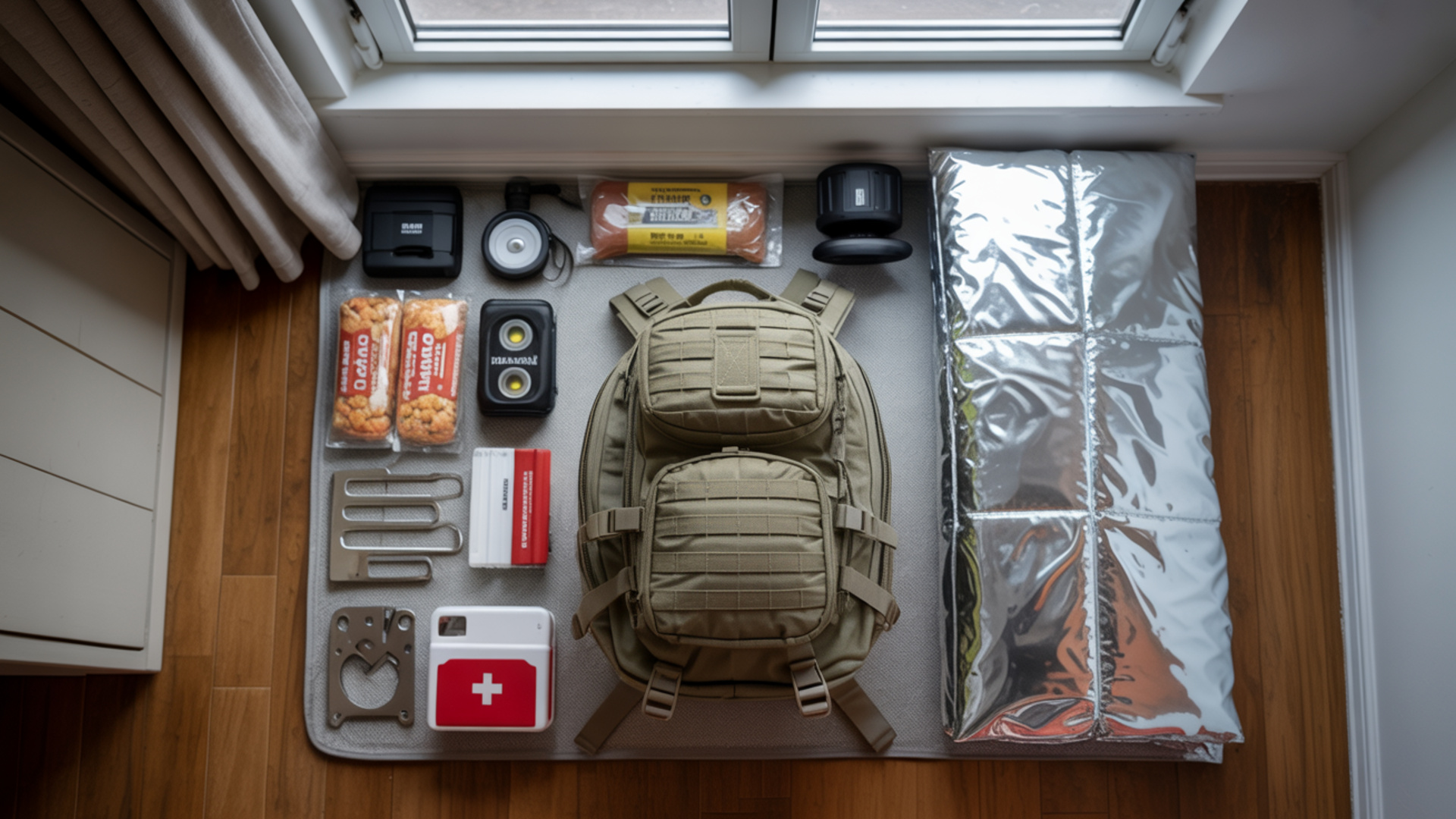
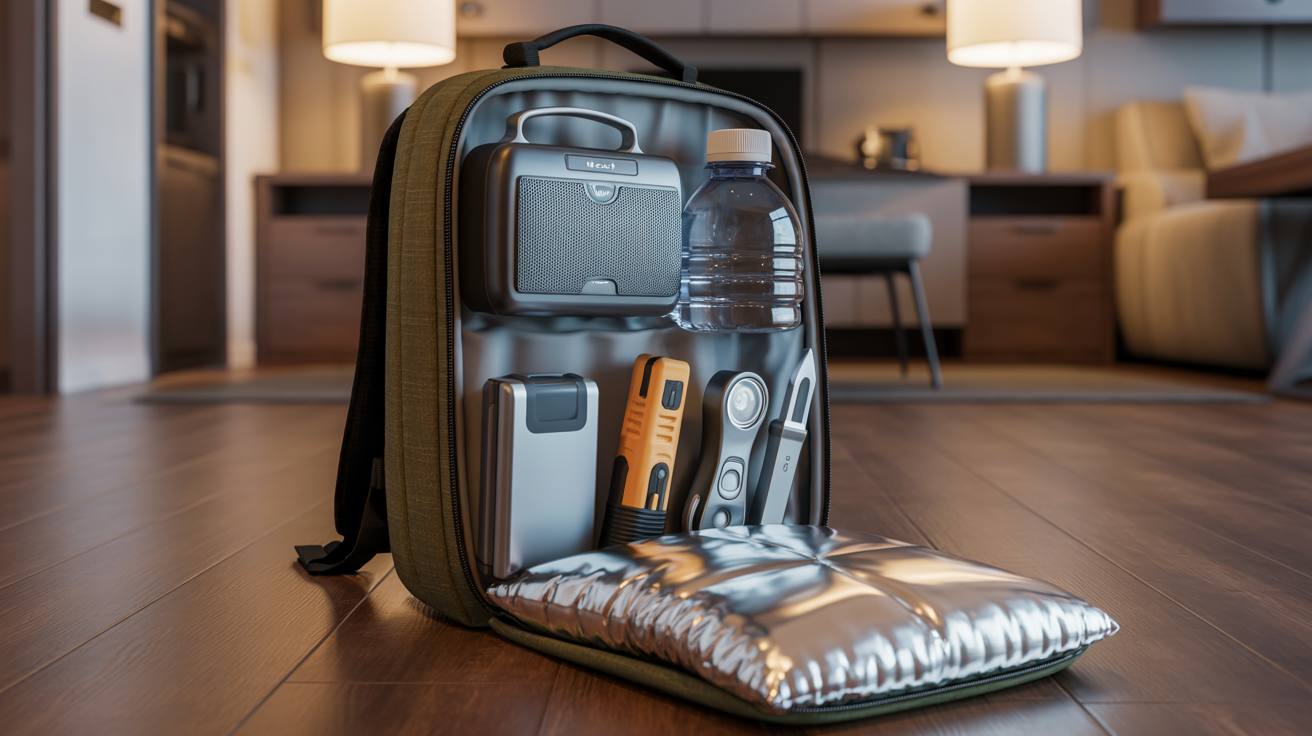
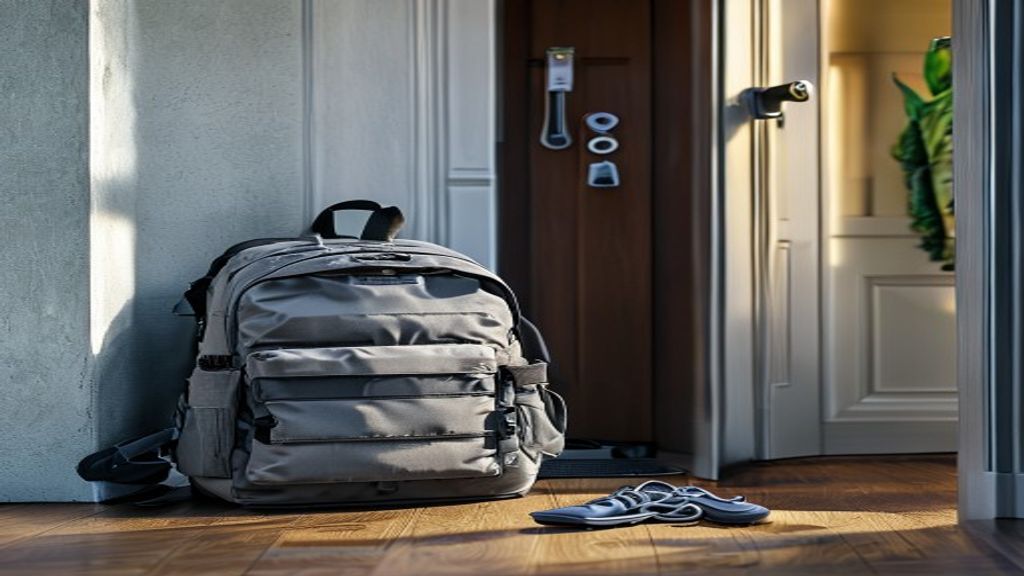
    A compact bug out bag checklist essentials packed in a grey backpack near an apartment entrance
    A compact bug out bag packed and ready near an apartment front door

    Why Apartment Bug Out Bags Are Different

    Most bug out bag checklists online are written for people with garages, basements, and a pickup truck in the driveway. If you live in an apartment, that advice doesn’t translate. Your constraints are fundamentally different — and your bug out bag checklist needs to reflect that reality.

    Limited storage space is the most obvious factor. You don’t have a mudroom or a dedicated gear closet. Your bag has to live in a shared closet, under a bed, or behind a couch — without becoming an eyesore or a conversation piece. That means every item earns its spot or gets cut. If you need help maximizing tight spaces, check out these apartment gear storage hacks.

    Evacuation routes are vertical before they’re horizontal. If you’re on the 8th floor and the power’s out, you’re taking the stairs with everything on your back. An overweight pack isn’t just uncomfortable — it’s dangerous on a crowded stairwell. Elevators are off-limits during fires and most structural emergencies.

    Urban threats look different too. You’re not worried about bear encounters. You’re navigating traffic gridlock, potential civil unrest, infrastructure failures, and crowds of people doing the same thing you are. Your gear should be urban-practical and low-profile — think grey man theory, not tactical cosplay.

    The “3 Layer” Bug Out Bag System

    The fastest way to build a solid bug out bag checklist without overthinking it is the 3-Layer system. Each layer builds on the last, and if you can only grab Layer 1, you’ll still survive. This framework keeps you focused and prevents the most common mistake: packing gear you’ll never use while forgetting things that actually keep you alive.

    🔴 Layer 1: Survival Core

    This is your lifeline. Water, food, and medical supplies — the things that keep your body functioning for 72 hours. If your bag only had this layer, you’d still make it. Pack this first and consider it untouchable. Nothing gets swapped out of Layer 1 to make room for something “cooler.”

    🟡 Layer 2: Mobility & Navigation

    Once survival is covered, you need to move and stay informed. This layer includes lighting (headlamp), navigation (offline maps, compass), communication (emergency radio, whistle), and power (battery bank). Layer 2 turns you from a stationary survivor into someone who can make smart decisions and relocate effectively.

    🟢 Layer 3: Comfort & Redundancy

    Comfort items aren’t luxuries — they maintain morale and prevent small problems from becoming big ones. A change of clothes, basic hygiene supplies, weather protection, and backup copies of critical documents. Layer 3 also holds redundant gear: a second lighter, backup water purification tabs, extra batteries. If weight is an issue, this is the layer you trim first.

    Complete Bug Out Bag Checklist

    Below is the full, apartment-specific bug out bag checklist. Every item is chosen for compact size, multi-use capability, and urban relevance. No hunting knives, no paracord bracelets, no hatchets. Just what actually works when you need to move fast through a city.

    Water & Hydration

    Water is weight — roughly 2.2 pounds per liter. That’s why smart packing means carrying some water and the ability to purify more.

    • 1–2 liters of water — Carry at least 1 liter ready to drink. Two liters is ideal if your pack weight allows it.
    • Collapsible water bottle or bladder — Takes up almost no space when empty. A 1L Platypus SoftBottle or similar rolls flat when not in use.
    • Water filter — The Sawyer Mini or LifeStraw are both under 3 oz and filter down to 0.1 microns. In an urban setting, you may end up pulling water from park fountains, rain barrels, or building rooftop tanks.
    • Water purification tablets — Backup to your filter. Aquatabs or Potable Aqua. Weighs almost nothing, lasts years in storage.

    Food (High Calorie / Low Space)

    You’re fueling 72 hours of high-stress activity. Aim for 1,500–2,000 calories per day in the smallest, lightest form possible. Everything should be no-cook.

    • Energy bars — Clif Bars, RXBAR, or Millennium Energy Bars (5-year shelf life). Pack 6–9 bars total.
    • Freeze-dried meals (1–2 pouches) — Mountain House or Peak Refuel. Add hot water if you can, eat cold if you have to. Lightweight and calorie-dense.
    • Nut butter packets — Justin’s or similar single-serve packs. High fat, high calorie, no prep required.
    • Electrolyte packets — Liquid IV, LMNT, or Drip Drop. Prevents cramping during high-exertion evacuations.
    • Hard candy or glucose tabs — Fast energy when you need a quick boost.

    First Aid (Mandatory)

    A proper trauma-capable first aid kit is non-negotiable. Don’t rely on a pre-made drugstore kit with 40 tiny bandages and nothing useful. Build or buy something that handles real injuries. For a full breakdown, see our urban first aid kit guide.

    • Trauma basics — Israeli bandage or compressed gauze, tourniquet (CAT or SOFTT-W), chest seal if you’ve trained with one.
    • Wound care — Adhesive bandages (various sizes), butterfly closures, medical tape, antiseptic wipes.
    • Medications — Ibuprofen, acetaminophen, antihistamines (Benadryl), anti-diarrheal (Imodium), any personal prescriptions (3-day supply minimum).
    • Extras — Nitrile gloves (2 pairs), tweezers, small scissors, moleskin for blisters.
    Bug out bag checklist items organized by category including water, food, first aid, and documents
    Bug out bag contents organized by category for quick access

    Lighting & Power

    Urban blackouts happen. When the grid goes down, your phone is your map, your communication device, and your flashlight — until the battery dies.

    • Headlamp — Hands-free lighting is critical, especially on dark stairwells. Petzl Tikkina or Black Diamond Spot. Use red light mode to preserve night vision and stay discreet.
    • Spare batteries — Match your headlamp’s battery type. AAA or rechargeable, depending on your model.
    • Power bank — 10,000–20,000 mAh. Anker or Nitecore brands are reliable and compact. This keeps your phone alive for navigation and communication.
    • Charging cables — One cable that matches your phone. Consider a multi-tip cable to cover USB-C and Lightning.

    Communication

    In an emergency, cell towers get overloaded within minutes. You need backup ways to receive information and signal for help.

    • Emergency radio — NOAA weather radio with AM/FM. Hand-crank or solar models eliminate battery dependency. For detailed recommendations, see our emergency radio guide.
    • Whistle — Louder than your voice, works when you can’t shout. A simple pealess whistle (like the Fox 40) carries over 100 dB.
    • Offline phone backup — Download offline maps of your city (Google Maps or OsmAnd). Save emergency contacts as a screenshot in case your contacts app fails. Store a PDF of your evacuation routes.
    • Permanent marker + duct tape — Leave messages on doors, mark safe routes, signal rescue teams. Low-tech communication that never runs out of battery.

    Clothing

    One compact change of clothes. That’s it. You’re not packing for a vacation — you’re packing for function.

    • Base layer — Moisture-wicking underwear and socks (merino wool preferred). Wet feet and chafing will slow you down faster than almost anything.
    • Mid layer — Lightweight, packable fleece or long-sleeve shirt. Something you can stuff into a compression sack.
    • Weather protection — A packable rain jacket (Frogg Toggs are cheap and effective). Doubles as a wind layer. Skip heavy coats — layer strategically instead.
    • Sturdy footwear note — Keep shoes or boots you can walk miles in near your bag. Flip-flops don’t count.

    Documents & Cash

    If your apartment is gone, your identity and financial access need to come with you. Digital backups are great — until your phone dies or gets damaged.

    • Copies of critical IDs — Driver’s license, passport, insurance cards, Social Security card. Laminate them or store in a waterproof pouch.
    • Emergency cash — $200–$500 in mixed bills (twenties and smaller). ATMs go down, card readers need power. Cash works when nothing else does.
    • Insurance documents — Renter’s insurance policy number, health insurance card, vehicle registration if applicable.
    • Emergency contact card — Written, not just in your phone. Include out-of-state contacts (local lines often jam, long-distance calls may still connect).
    • USB drive — Encrypted backup of critical files: scans of documents, medical records, family photos, insurance policies.

    How to Store Your Bug Out Bag in an Apartment

    Your bag is useless if you can’t get to it fast. It’s also a problem if it screams “prepper” to every guest who visits. The goal: accessible, concealed, ready.

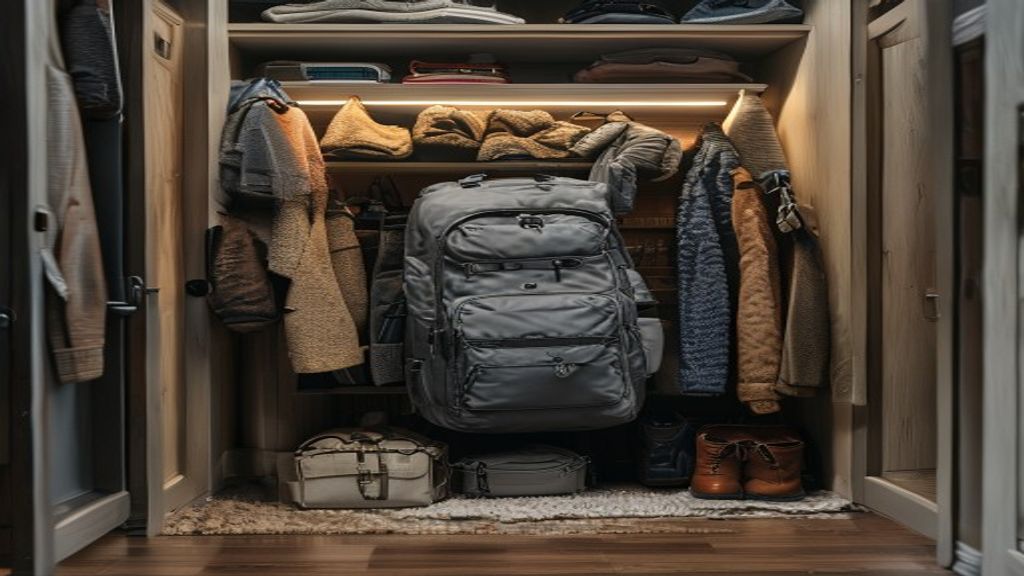
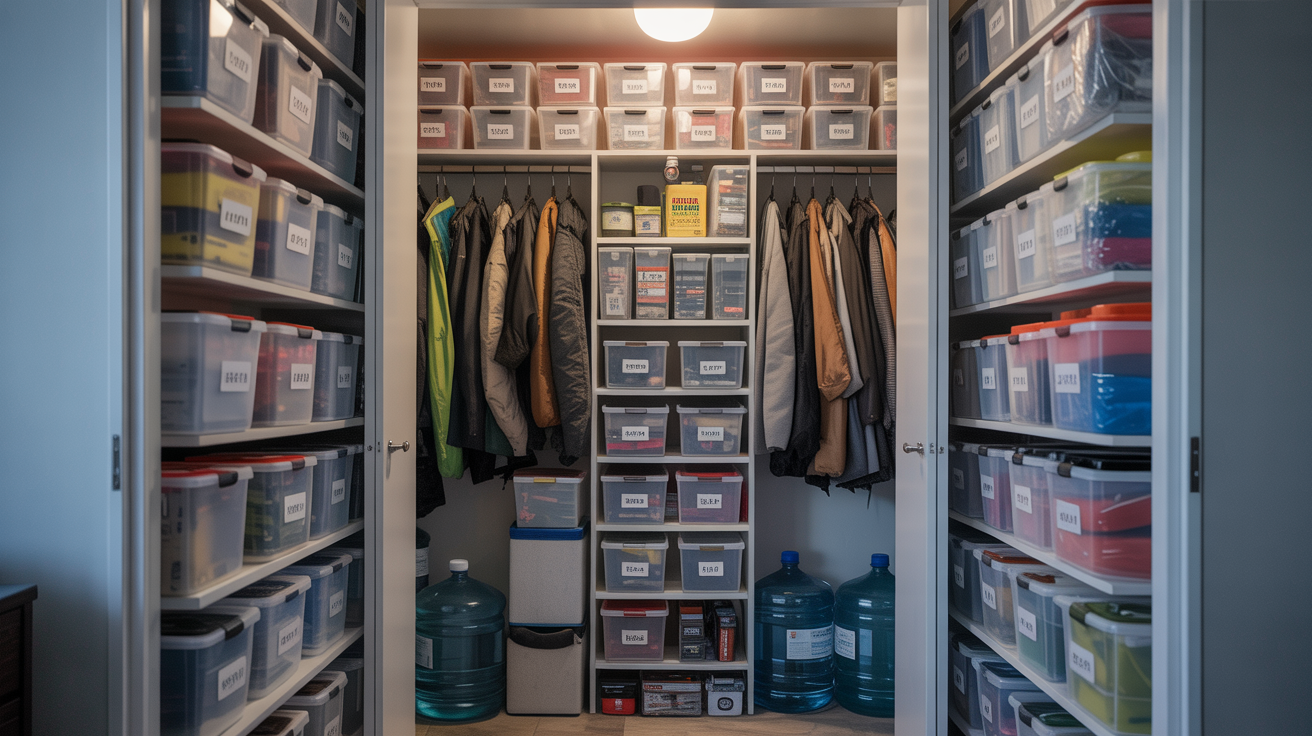
    Closet storage (front hall closet preferred) — This is the gold standard. Your bag sits on the top shelf or floor of the closet nearest your front door. When you leave, it’s the last thing you grab before stepping out. If you use a coat closet, tuck it behind jackets where it’s out of sight but within arm’s reach.

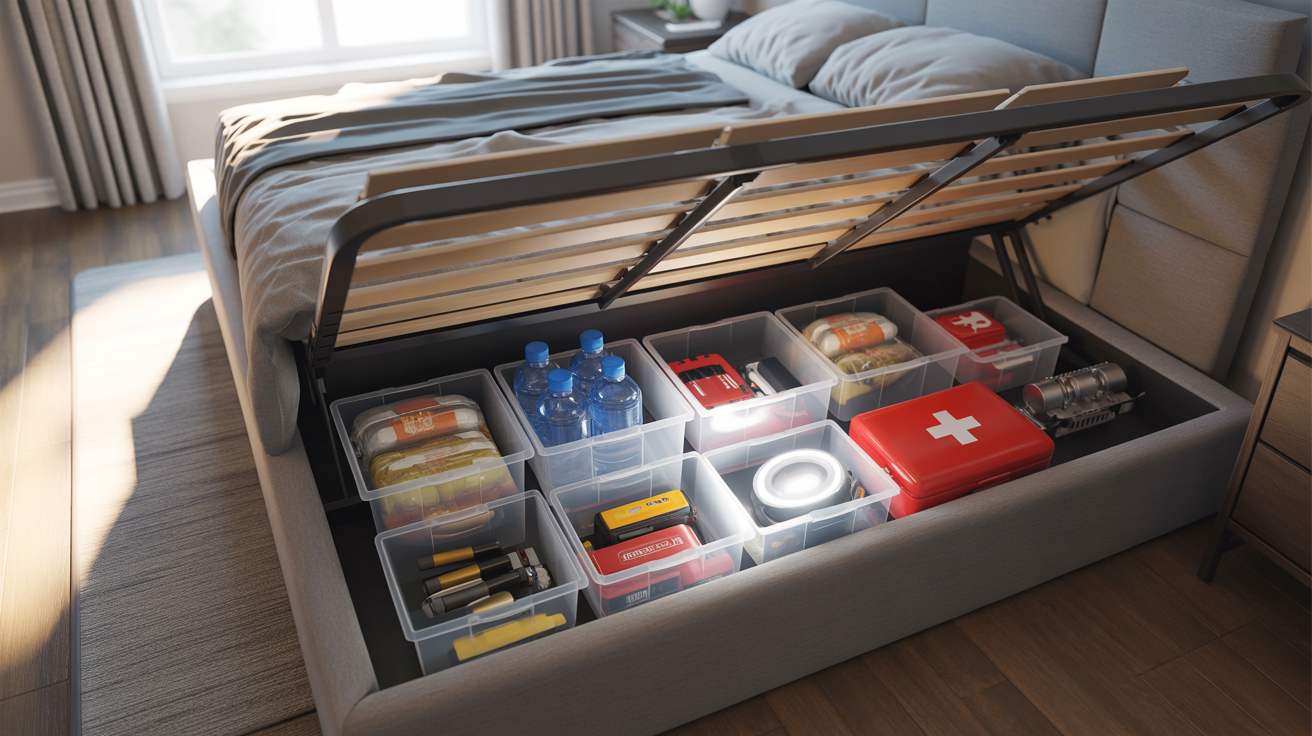
    Under-bed storage — Works if your bedroom isn’t far from the exit. Use a bag with a top handle so you can slide it out and go. This is the best option if you want zero visibility — no guest has ever looked under your bed.

    Avoiding “visible prepper gear” — Skip MOLLE-covered tactical backpacks in coyote tan. Use a normal-looking backpack — a hiking daypack or even a solid commuter bag in black or grey. The goal is to look like everyone else on the street. This aligns directly with grey man theory — don’t advertise what you’re carrying.

    Seasonal rotation spot — Mark your calendar every 6 months to pull the bag out, check expiration dates on food and meds, test batteries, and swap seasonal clothing layers. A bag you packed two years ago and never touched isn’t a survival kit — it’s a time capsule.

    Bug out bag stored discreetly in apartment closet for quick emergency access
    Bug out bag stored discreetly in an apartment closet for quick access

    Common Mistakes

    These are the errors that turn a solid bug out bag into dead weight or a false sense of security.

    1. Overpacking (the #1 killer). If you can’t jog with your bag for 15 minutes, it’s too heavy. Period. Most people pack a 40-pound bag and realize on the third flight of stairs that they’ve made a critical mistake. Target 15–25 pounds total — lighter is almost always better.

    2. Packing “cool gear” instead of essentials. That $300 tactical knife and the fire steel collection look great on Instagram. But if you’ve got those and no water filter, you’ve failed the assignment. Prioritize boring, life-sustaining gear over anything that looks impressive in a flat lay photo.

    3. Forgetting water filtration. Carrying 3 liters of water is heavy and still runs out. Carrying 1 liter plus a Sawyer Mini means you have access to effectively unlimited clean water. The filter weighs 2 ounces. There’s no excuse to skip it.

    4. Not testing your bag. Put your bag on. Walk 3 miles. Take the stairs. Open the pockets under stress. Find out which straps dig into your shoulders, which items you can’t locate quickly, and which things you packed but would never actually use. Do this before an emergency, not during one.

    5. Ignoring document copies. People pack food, water, and gear but forget that without ID, you can’t check into a shelter, file an insurance claim, or prove who you are. Five minutes at a copy machine now saves massive headaches later.

    Quick Loadout Table

    Category Must-Have Optional Upgrade
    Water 1L water + Sawyer Mini filter Collapsible 2L bladder + purification tabs
    Food 6 energy bars + electrolyte packets 2 freeze-dried meals + nut butter packets
    First Aid Bandages, antiseptic, meds, tourniquet Israeli bandage + chest seal + SAM splint
    Lighting Headlamp + spare batteries Compact lantern + glow sticks
    Power 10,000 mAh power bank + cable 20,000 mAh bank + solar panel charger
    Communication NOAA radio + whistle Hand-crank radio + two-way FRS radio
    Clothing Extra socks + rain jacket Full base layer + packable fleece
    Documents Laminated ID copies + $200 cash Encrypted USB drive + $500 cash
    Navigation Offline phone maps Paper city map + compass
    Tools Multi-tool + duct tape wrap Pry bar (compact) + zip ties
    Hygiene Wet wipes + travel toothbrush Dry shampoo + microfiber towel

    💡 Pro Tips

    Tip 1: Keep your bag under 20% of your body weight. If you weigh 160 lbs, your bag should max out at 32 lbs — and honestly, lighter is better. You’re navigating stairs, sidewalks, and potentially running. Every pound matters when adrenaline wears off and fatigue sets in.

    Tip 2: Rotate food and medications every 6 months. Set a recurring calendar reminder. Eat the food you’re rotating out (it’s not wasted — it’s a free dinner). Replace batteries at the same time. Check that your cash is still there. This takes 20 minutes twice a year.

    Tip 3: Test-carry your bag on stairs. Put your full bag on and walk down your building’s stairwell from your floor to the ground. Then walk a mile. If anything hurts, shifts, rattles, or slows you down, fix it now. The worst time to discover your pack isn’t comfortable is during an actual evacuation.

    Conclusion: Build It Today, Refine It Tomorrow

    A bug out bag checklist isn’t a one-time project — it’s a living system. You don’t need to buy everything on this list today. Start with Layer 1 (water, food, first aid), add Layer 2 when your budget allows, and build out Layer 3 over time.

    The most important thing about your bug out bag isn’t what’s in it. It’s that it exists, it’s packed, and you can grab it in 60 seconds. Preparedness, especially in an apartment, equals mobility. You’re not hunkering down in a bunker — you’re moving fast, staying light, and blending into the urban flow.

    Your apartment might be small, but your ability to respond doesn’t have to be. A well-built 72-hour kit in a normal-looking backpack, stored by your front door, puts you ahead of 95% of people who will be scrambling to figure out what to grab when the alarm sounds.

    Build your bag today. Refine it tomorrow. Test it this weekend. The emergency won’t wait for your gear list to be perfect — and it doesn’t have to be. It just has to be ready.

  • Apartment Security Door Upgrades: Renter-Friendly Ways to Harden Your Home

    ⚡ Quick Summary

    • The 3-Second Rule: Apartment security isn’t about building an impenetrable fortress — it’s about delay. Most intruders abandon a break-in attempt if entry takes longer than 3 seconds. Every upgrade you add buys critical time.
    • Renter Reality: Every solution in this guide is “No-Drill” and non-destructive. You can install these upgrades tonight, remove them when you move out, and take your security kit with you to the next apartment.
    • Top 3 Recommended Items: A portable door jammer, 12-mil security film for glass, and battery-powered smart sensors. These three items alone transform a standard apartment into a significantly harder target.

    The “Renter’s Dilemma”

    You want to feel safe in your apartment. But you can’t rip out the hollow-core door and replace it with a steel vault. You can’t bolt a deadbolt into a doorframe your landlord technically owns. And you definitely can’t drill anchor points into rental walls without kissing your security deposit goodbye.

    This is the renter’s dilemma. The good news? “Non-destructive” security means upgrades that require zero drilling, zero screwing into structural elements, and zero permanent changes. Everything installs with adhesive, pressure-fit mechanisms, or gravity — and everything comes with you when you leave.

    Here’s the uncomfortable truth: standard apartment locks are shockingly inadequate. Most entry doors come with a basic Grade 3 knob lock and a builder-grade deadbolt, easily defeated with a credit card shimmy, a bump key, or a single well-placed kick. The strike plate is typically held by two half-inch screws that barely grip the doorframe. One kick, and it’s over. You don’t need your landlord’s permission to fix this.

    Apartment front door with portable security door jammer installed at the base, showing a non-destructive renter-friendly security setup

    Hardening the Front Door (The Critical Entry Point)

    Your front door is where 56% of residential break-ins begin. It’s the first — and often only — barrier between you and an intruder. Hardening this single entry point delivers the highest return on your security investment.

    Reinforcing the Strike Plate (The Hidden Upgrade)

    This modification straddles the line between “renter-friendly” and “minor alteration,” but most landlords approve it because it improves their property.

    • The problem: Factory strike plates use ½-inch screws that only grip soft doorframe wood — not the structural stud behind it.
    • The fix: Replace with 3-inch screws that bite into the wall stud. Same strike plate, dramatically stronger hold.
    • Renter-friendly: Keep the original screws in a labeled bag and swap them back when you move out.
    • Upgrade option: A reinforced strike plate (like Door Armor MAX) distributes kick-force across a wider frame area.

    Using a Security Door Jammer (Portable and Temporary)

    If the strike plate is your passive defense, a door jammer is your active, deployable shield. These devices wedge between the floor and the door handle, creating a mechanical brace that makes inward-swinging doors virtually impossible to kick open.

    • How it works: The jammer’s rubber foot grips the floor while the padded yoke locks under the door handle. An intruder pushing against the door is now fighting the structural resistance of the floor itself.
    • Best for: Nighttime security, hotel travel, and any situation where you’re inside the apartment and want maximum resistance.
    • Limitations: Only works when you’re home, since it installs from the inside. Pair it with other measures for when you’re away.

    Double-Sided Deadbolts vs. Internal Latch Guards

    Double-sided deadbolts (requiring a key on both sides) are not recommended for apartments — they create a fire-escape hazard and most leases prohibit them. Renter-safe alternatives:

    • Flip-lock latch guards: Metal plates that mount over your existing deadbolt area using the same screw holes. When engaged from inside, they prevent the door from opening even if someone has a key.
    • Portable travel locks: Small devices that insert into the door’s strike plate gap and lock from inside. Zero installation, works on virtually any inward-opening door.

    Window and Balcony Security

    Ground-floor and balcony-accessible windows are the second most common entry point for apartment break-ins. If your unit is on the first or second floor — or has a reachable balcony — these upgrades are non-negotiable.

    Security Film (Clear Armor for Glass)

    Security window film is one of the most underrated non-destructive upgrades available to renters:

    • What it is: A thick polyester film (8-mil to 12-mil) applied to the interior surface of glass using water and a squeegee. Completely transparent once installed.
    • What it does: Holds shattered glass together in a web, preventing instant entry. An intruder would need 30-60+ seconds to punch through — time they don’t have.
    • Recommended: 12-mil for balcony doors and large windows, 8-mil for smaller panes.
    • Removal: Peels off cleanly with a heat gun. No residue, no damage.

    Clear 12-mil security film being applied to an apartment balcony sliding glass door, demonstrating the transparent renter-friendly installation process

    Sliding Door Tracks: The “Wooden Dowel” Trick vs. Commercial Bars

    Sliding patio doors have a notorious weakness — they can be lifted off their tracks or simply forced open if the latch is flimsy. Two solutions:

    1. The classic wooden dowel: Cut a hardwood dowel (oak or maple, not pine) to fit the bottom track of your sliding door. When placed in the track, the door physically cannot slide open. Cost: under $5. Effectiveness: surprisingly high.
    2. Commercial security bars: Adjustable steel bars (like the Master Lock Security Bar) that wedge between the sliding door and the opposite frame. More robust than a dowel, with rubber tips that prevent scratching. These also work on sliding windows.

    Pro move: Use both. The dowel in the track and the bar at handle height create two independent failure points an intruder must defeat.

    Window Sensors: Vibration vs. Magnetic

    Modern wireless window sensors require zero wiring and attach with adhesive strips:

    • Magnetic contact sensors: Two-piece devices that trigger when a window is opened. Best for operable windows and doors.
    • Vibration/glass-break sensors: Single-unit devices that detect the shock wave of glass being struck. Best as a complement to security film on fixed panes.
    • Best approach: Use both types together. Battery-powered models from Wyze, Ring, and SimpliSafe integrate with smartphone apps for instant alerts.

    The “Surveillance” Layer

    Physical barriers buy you time. Surveillance gives you awareness — and awareness is the foundation of any serious security posture. The good news: modern surveillance tech is built for renters.

    Best No-Drill Video Doorbells (Peephole Cameras)

    For renters, peephole cameras beat traditional video doorbells that require hardwiring:

    • How they work: Replace your existing peephole — unscrew the old one, thread the camera unit through the same hole. Fully reversible.
    • Features to look for: Motion detection, two-way audio, night vision, and smartphone notifications.
    • Top picks: Ring Peephole Cam and Eques VEIU Mini — designed for standard apartment peephole sizes.

    Internal Wi-Fi Cameras (Stealth Placement)

    A well-placed internal camera provides evidence, enables real-time monitoring, and discourages intruders from lingering.

    • Placement strategy: One camera covering the front door interior, another covering any balcony or secondary entry. Angle cameras to capture faces, not just movement.
    • Power considerations: Use cameras near existing outlets. Battery-powered options like the Blink Mini work well for temporary setups.
    • Privacy note: Only record inside your own unit. Recording shared hallways may violate local privacy laws.

    The Psychological Impact of “Security Signs” in Hallways

    A simple “Premises Monitored by 24/7 Video Surveillance” sign — even a generic one — creates doubt in a potential intruder’s mind. Pair this with the grey man theory approach: your door should look unremarkable, but the sign introduces just enough uncertainty to redirect an opportunistic criminal to an easier target.

    Critical caveat: Never advertise what you’re protecting. No “NRA” stickers, no “Prepper Inside” badges. Quiet deterrence, not inventory broadcast.

    Ring Peephole Cam installed on a standard apartment door, showing the no-drill renter-friendly video doorbell setup with smartphone notification preview

    Top 5 Renter-Friendly Security Products

    These are the five products that deliver the highest security impact with zero permanent modifications. Each one can be installed in under 10 minutes and removed without a trace.

    1. Portable Door Jammer — Master Lock 265D or Doorricade

    Why it works for apartments: Transforms any inward-swinging door into a barricade by bracing against the floor. No screws, no adhesive, no marks. The Master Lock 265D adjusts to fit standard door heights; the Doorricade offers a commercial-grade option.

    Installation ease: ⭐⭐⭐⭐⭐ — Place under the door handle. Done. Takes 3 seconds.

    2. Security Window Film — 12-Mil Thickness

    Why it works for apartments: Invisible once applied. Holds shattered glass together, denying quick entry. Brands like 3M Safety & Security Film and BDF come in pre-cut sizes.

    Installation ease: ⭐⭐⭐⭐ — Spray bottle, squeegee, and patience. Allow 30 minutes per large window.

    3. Peephole Camera — Ring Peephole Cam

    Why it works for apartments: Uses your existing peephole hole — no new drilling. Battery-powered with motion-activated video, two-way audio, and smartphone alerts.

    Installation ease: ⭐⭐⭐⭐ — Unscrew old peephole, thread camera through, tighten bracket. Under 10 minutes.

    4. Battery-Powered Alarm Sensors — Wyze Entry Sensor or Ring Alarm Contact Sensor

    Why it works for apartments: Adhesive-mount magnetic sensors for doors and windows. When contact breaks, you get an instant smartphone alert and optional 104dB siren. No hub required for basic models.

    Installation ease: ⭐⭐⭐⭐⭐ — Peel, stick, pair with app. 5 minutes per sensor.

    5. Heavy-Duty Door Strike Plate Screws — 3-Inch Steel Screws

    Why it works for apartments: The highest-impact upgrade for under $3. Anchors your strike plate into the structural stud, turning a one-kick door into a multiple-attempt barrier.

    Installation ease: ⭐⭐⭐⭐⭐ — Phillips screwdriver, 5 minutes. Save originals for move-out.

    The “Security Audit” Checklist

    Before you spend a single dollar on gear, walk through your apartment with this checklist. Identify every vulnerability first, then prioritize your upgrades based on what you find.

    🔍 Apartment Security Audit

    • Hinge pin exposure: Are your door hinges on the outside (hallway side)? If so, an intruder can pop the pins and remove the door entirely. Non-removable hinge pins or hinge pin setscrews solve this instantly.
    • Peephole visibility: Can you clearly see who’s at your door through the peephole? If it’s scratched, foggy, or too narrow, replace it with a wide-angle peephole (180°) or a peephole camera.
    • Hallway lighting: Is the area outside your door well-lit? Dim hallways give intruders cover. If building management won’t fix it, a motion-activated battery light near your door (adhesive-mount) adds visibility.
    • Strike plate screw depth: Remove one screw and measure it. Under 1 inch? Critical vulnerability — replace with 3-inch screws immediately.
    • Door gap assessment: Can you see light around your closed front door? Large gaps make forced entry easier.
    • Sliding door track integrity: Can your sliding door be lifted off its track? Many can be defeated by simply lifting up and swinging the bottom outward.
    • Window lock functionality: Do all window locks engage fully? Many apartment latches are worn or painted over and provide zero resistance.
    • Spare key audit: Who has copies of your key? If you’re unsure, request a re-key from your landlord.
    • Fire escape access: If your apartment has fire escape access, that window needs the same security attention as your front door.
    • Mail and package visibility: Are packages left in plain sight at your door? Accumulated deliveries signal you’re away.

    🛡️ Pro Tips from the Field

    • Tip 1: Always deploy a floor-based door jammer at night. It takes 3 seconds to set up and is the single most effective barrier against a forced-entry attempt while you’re sleeping. Make it part of your nightly routine — lock, chain, jammer.
    • Tip 2: Apply security film to your balcony sliding glass door first. It’s the largest glass surface and the most attractive entry point for anyone with balcony access. Ground-floor and second-floor units: this is your top priority.
    • Tip 3: Never put a “Prepper” sticker, tactical brand logo, or firearms decal on your apartment door. This violates the grey man theory and tells every passerby exactly what’s worth stealing inside. Your door should look completely ordinary — boring is safe.

    Conclusion: Security Is a Layer-by-Layer Process

    No single product will make your apartment impenetrable — and that’s not the goal. The goal is to stack enough layers that an intruder’s risk-reward calculation shifts decisively against them. A reinforced strike plate adds 10 seconds. A door jammer adds another 30. Security film eliminates the “quick smash” option. A peephole camera means they’re on video before they even try. Each layer compounds, and time is everything.

    Start with the strike plate screws and a door jammer — that’s under $20 and 10 minutes for a dramatic improvement. Then add security film, sensors, and a camera. Build your security kit one layer at a time.

    Start tonight. Grab a door jammer and a set of 3-inch screws. That’s two layers added in under 10 minutes — and your apartment is already harder to breach than 90% of units in your building.

    For more apartment-specific preparedness strategies, explore our guides on apartment blackout preparedness and essential urban survival gear.

  • Grey Man Theory: How to Stay Invisible in Urban Survival Situations

    Quick Summary

    The grey man theory is the practice of making yourself so unremarkable that you effectively become invisible in a crowd — no one notices you, remembers you, or considers you a target.

    Why it matters in cities: Urban environments are dense, chaotic, and full of observers. During a crisis, the person who stands out is the first person who gets targeted — for their supplies, their knowledge, or simply because they look like they have something worth taking.

    3 Key Takeaways:

    • Blend in, don’t stand out — your clothing, behavior, and body language should match the people around you
    • Avoid predictable behavior — vary your routines, routes, and timing so no one can anticipate your movements
    • Carry gear without looking tactical — civilian bags, neutral colors, and smart packing keep your preparedness invisible

    When most people think about survival, they picture wilderness scenarios — building shelters and filtering creek water. But for the majority of us, survival situations will unfold in cities and suburbs.

    Urban survival carries a unique risk: other people. In a dense city, you’re surrounded by thousands of observers. During a crisis — a blackout, civil unrest, a supply chain collapse — those observers become potential threats.

    The equation is simple. Visibility equals vulnerability. If people can see you’re prepared — that you have food, water, or gear — you become a target. You can’t defend against a crowd.

    That’s where the grey man theory comes in. Instead of fighting through a crisis, you walk through it — unnoticed, unremarkable, invisible. This guide breaks down exactly how to do that in an urban apartment setting.

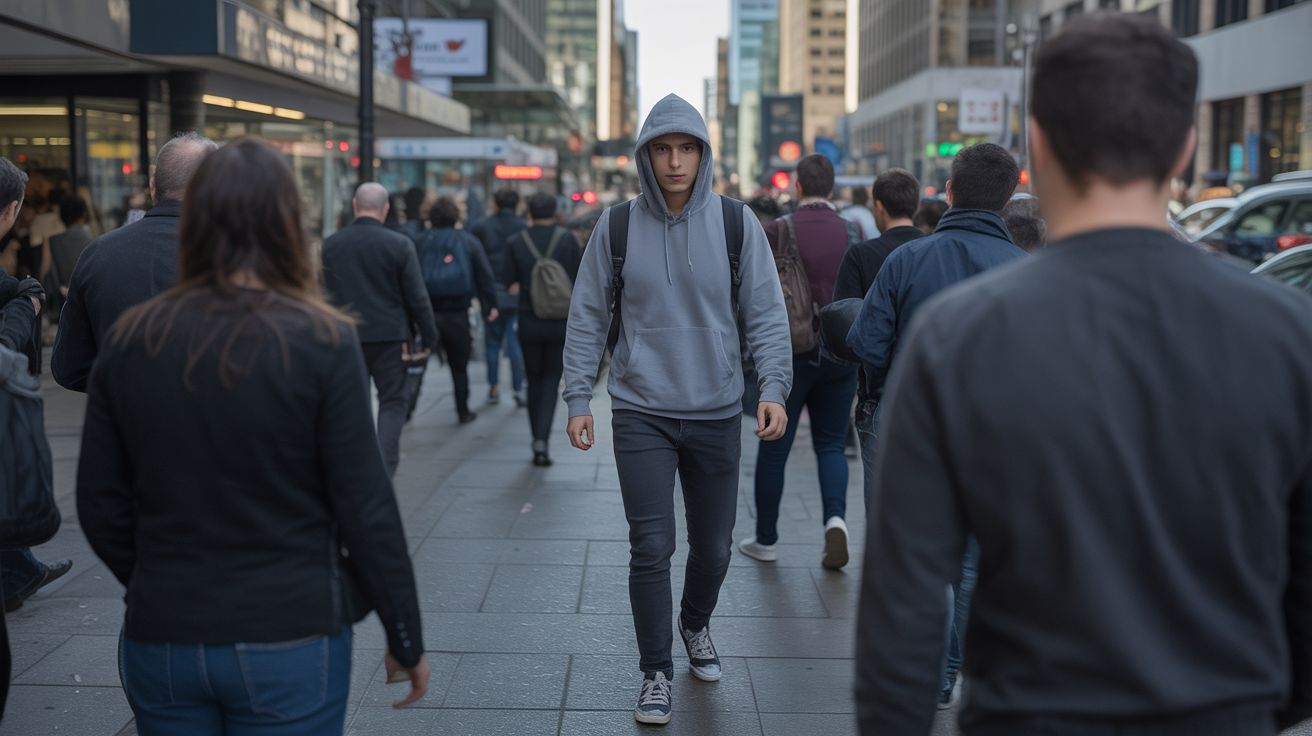
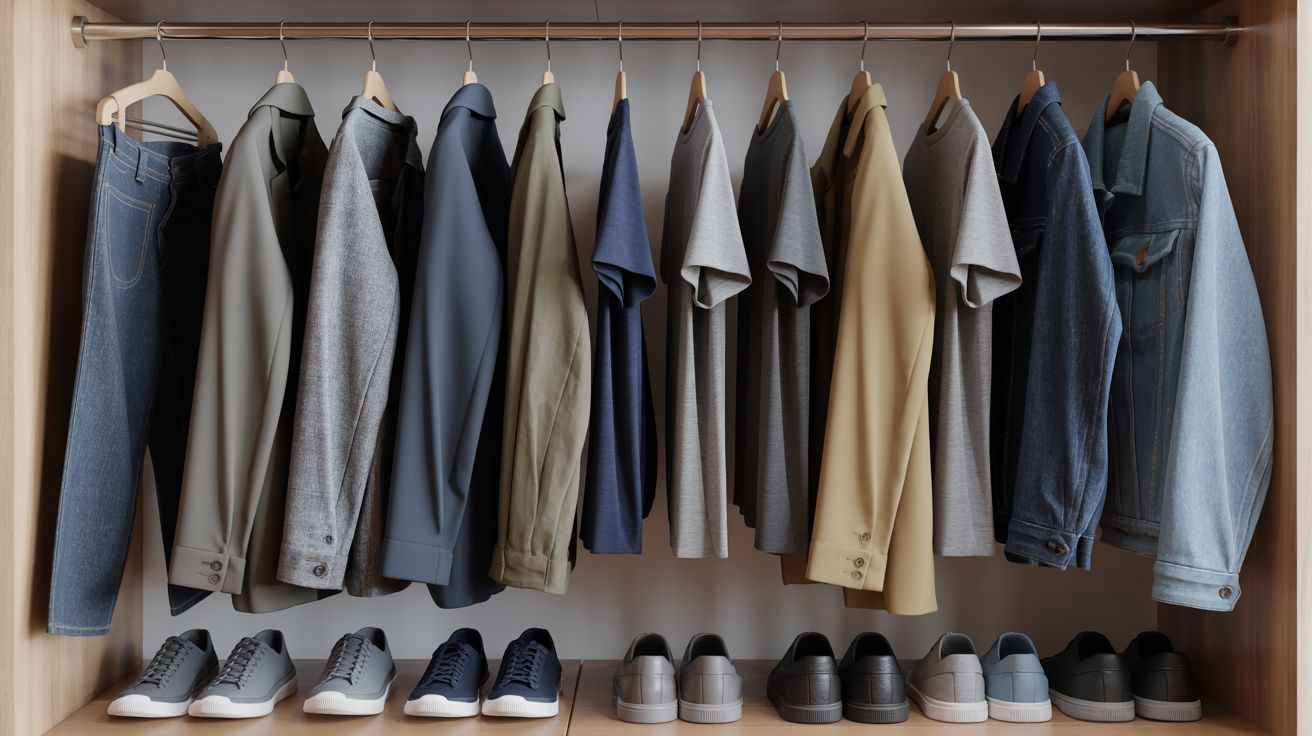
    grey man theory blending in urban environment

    What Is the Grey Man Theory?

    The grey man theory is a survival and security concept built around one idea: the safest person in a crisis is the one nobody notices.

    A “grey man” doesn’t hide. They don’t run. They don’t draw attention by acting nervous or overly confident. Instead, they move through their environment looking exactly like everyone else — unremarkable in every way.

    The concept originates from intelligence tradecraft. Field operatives learned that the best disguise isn’t a costume — it’s normalcy. You don’t need a fake mustache. You need to look like you belong.

    In cities, this works especially well for three reasons:

    • Volume of people: Crowds give you natural cover, but only if you match the crowd
    • Constant observation: Security cameras, neighbors, passersby — someone is always watching in urban areas
    • Social baseline: Every neighborhood has a “normal.” If you fit that normal, your brain gets filtered out by observers as irrelevant background noise

    The grey man theory exploits how human attention works. People notice what’s different. Eliminate the differences, and you essentially disappear in plain sight.

    Why Blending In Is More Important Than Defending

    There’s a common fantasy in prepping culture: the heavily armed, tactically geared survivor who fights through danger. It makes for good movies. It makes for terrible strategy.

    Here’s the problem with looking tactical in an urban environment: you become the biggest target in the room.

    Someone wearing cargo pants, combat boots, and a MOLLE backpack during a power outage doesn’t look prepared — they look like they have supplies worth taking. They attract attention from civilians, criminals, and law enforcement alike.

    Contrast that with someone in jeans, sneakers, and a regular backpack, walking at the same pace as everyone else. No one gives them a second glance.

    Consider these real-world scenarios:

    • Extended power outage: You walk to your car for supplies. In tactical gear, you get stopped and questioned. In normal clothes, nobody cares.
    • Civil unrest: The person in all-black with a military backpack gets singled out. The person in a hoodie and jeans walks right through.
    • Supply shortage: The person loading cases of water while wearing a “prepared” t-shirt gets targeted. The person with two grocery totes walks home without incident.

    Attention is risk. Every set of eyes on you is a potential problem. The grey man approach eliminates that risk at the source.

    Core Principles of the Grey Man Strategy

    Becoming a grey man isn’t about buying special gear. It’s about understanding and applying four core principles in every aspect of how you present yourself.

    Appearance: Clothing, Colors, and Brands

    Your clothing is the first thing people register — and the fastest way to either blend in or stand out.

    • Stick to neutral colors: Grey, navy, olive, tan, and brown. Avoid all-black (looks tactical), bright colors (draws eyes), and camo (screams “prepper”).
    • Wear common brands: Generic, widely available clothing. No tactical brands, no military surplus, no gear company logos.
    • Match your environment: In a business district, khakis and a polo blend in. In a working-class neighborhood, jeans and a work jacket fit better. Context is everything.
    • Avoid new-looking gear: Brand-new boots and a stiff jacket signal that you bought them for a specific purpose. Slightly worn clothing looks lived-in and unremarkable.
    • Skip accessories that signal preparedness: Paracord bracelets, tactical watches with visible compasses, carabiner keychains loaded with tools — all of these are tells.

    Behavior: Movement, Posture, and Eye Contact

    What you do matters more than what you wear. People notice unusual behavior even faster than unusual clothing.

    • Match the pace of those around you: Moving faster or slower than the baseline draws attention.
    • Maintain relaxed posture: Don’t scan rooftops or check over your shoulder. Relax your shoulders and look like you’re heading somewhere boring.
    • Use appropriate eye contact: None looks suspicious. Too much looks aggressive. Brief, natural glances are what people expect.
    • Don’t react to everything: If a car backfires, don’t drop into a crouch. Muted, delayed reactions are what normal people exhibit.
    • Have a plausible purpose: Walk like you’re going somewhere specific. “Just wandering” during a crisis gets noticed.

    Gear Concealment: Bags and Carry Style

    How you carry your supplies is one of the biggest grey man challenges — and one of the most important to get right.

    • Use civilian bags: A standard commuter backpack, a messenger bag, a gym duffel, or reusable grocery totes. Nothing with MOLLE webbing, external pouches, or military styling.
    • Don’t overload: A backpack straining at the seams tells everyone you’re carrying something important. If you need to move a lot, make multiple trips.
    • Distribute weight across bags: Two medium bags look more normal than one huge rucksack. A backpack plus a grocery bag is invisible.
    • Avoid external attachments: Nothing clipped to the outside. No gear dangling from straps. Everything goes inside.
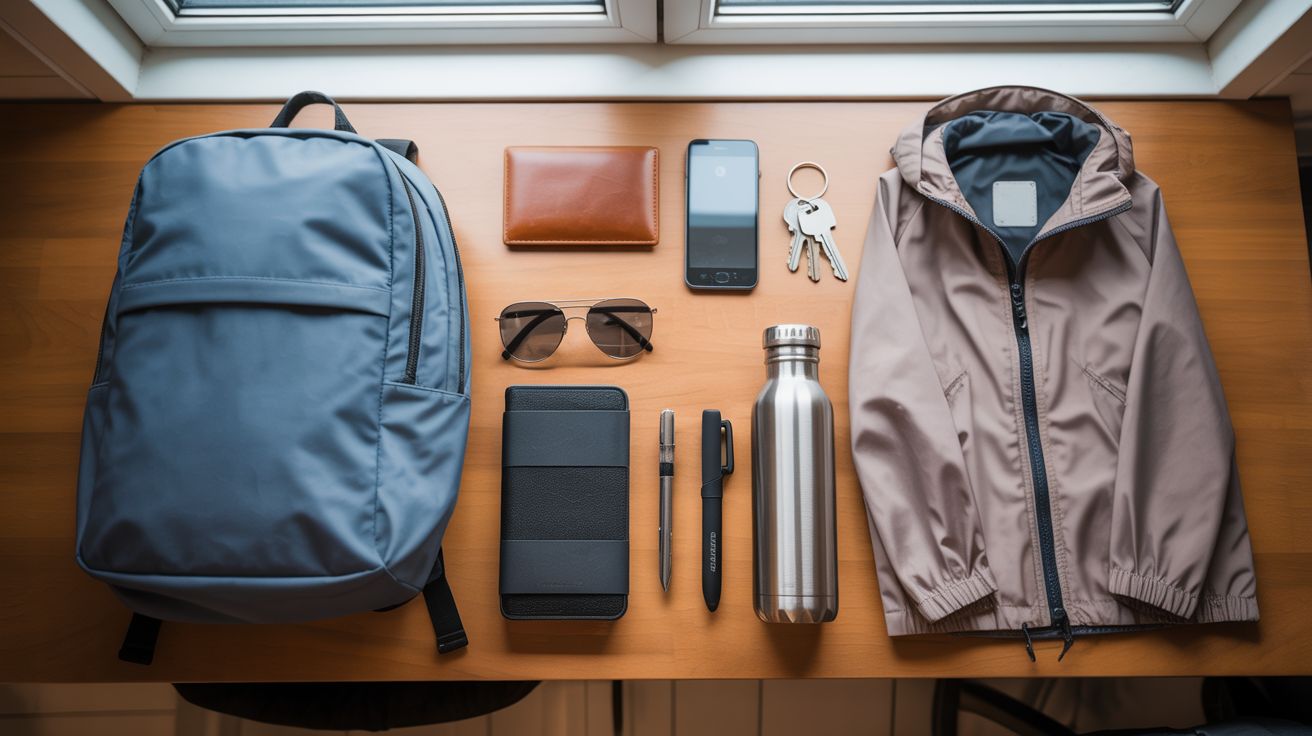
    low profile urban survival gear everyday carry

    Routine Randomness

    Patterns make you predictable. Predictability makes you vulnerable.

    • Vary your routes: Don’t walk the same path to the store every time. Alternate between two or three routes so no one can anticipate where you’ll be.
    • Change your timing: If you always leave at 7 AM, shift it. Go at 6:30 one day, 7:15 the next. Break the pattern.
    • Rotate your appearance: Wear different jackets. Switch between a backpack and a messenger bag. Small changes prevent people from building a recognizable profile of you.
    • Don’t establish a “supply schedule”: If neighbors notice you bringing in supplies every Saturday morning, they’ll know exactly who to approach — or target — when things go sideways.

    Urban-Specific Grey Man Tactics

    City living — especially apartment living — adds unique grey man challenges. You’re sharing walls, hallways, and elevators with dozens or hundreds of other people. Privacy is limited by design.

    Apartment considerations:

    • Elevator behavior: Take the stairs when carrying supplies. If you must use the elevator, go during off-peak hours.
    • Hallway awareness: Sound carries. Don’t shuffle heavy boxes at midnight or leave your door open while organizing gear.
    • Neighbor management: Be friendly but vague. Don’t volunteer information about your preparations.
    • Trash management: MRE wrappers, bulk packaging — your trash tells a story. Break down boxes and mix prepping trash with regular garbage.

    Moving supplies discreetly:

    • Use common delivery boxes. An Amazon box is invisible in any apartment hallway.
    • Bring in supplies with regular groceries. One bag of rice mixed in with normal food doesn’t register.
    • If ordering bulk items, time deliveries for when hallways are empty.
    • Use a wheeled cart or dolly — it looks like you’re moving everyday items, not stockpiling.

    Common Mistakes That Expose You

    Even experienced preppers make grey man mistakes. Here are the most common ones — and they’re all avoidable.

    Wearing tactical clothing in everyday life. Cargo pants, tactical boots, a rigger’s belt with a visible knife clip. Together, they form a uniform that says “I’m prepared” — and invites questions.

    Carrying bulk gear openly. Transporting a 72-hour bag, a water jug, and MREs in broad daylight draws attention. People remember. In a crisis, memories become threats.

    Over-prepping visibly. Your balcony shouldn’t look like a garden center. Your car shouldn’t have survival stickers. Your visible bookshelf shouldn’t be lined with prepper titles.

    Talking too much. This is the biggest grey man violation. Telling coworkers about your water storage, posting gear hauls on social media — every disclosure is a liability. The first rule of grey man theory: don’t talk about it.

    Looking too comfortable during a crisis. If everyone is stressed and you’re calm and well-fed, you stand out. Mirror the emotional state of your environment even if you don’t feel it.

    Practical Examples

    Theory is useful. Application is everything. Here are three specific scenarios where grey man principles keep you safe.

    Scenario 1: Grocery Run During Panic Buying

    A major storm is forecast. Grocery stores are mobbed. Shelves are emptying fast.

    The grey man approach:

    • Bring regular reusable grocery bags — the kind everyone has
    • Shop at the same pace as everyone else, even if you know exactly what you need
    • Buy a mix of “normal” items alongside priority supplies — chips, a magazine — to look like a regular shopper
    • Don’t clear shelves of any single item. Take reasonable quantities.
    • Chat briefly in line about the weather. You’re just another person stocking up.

    Scenario 2: Leaving Your Apartment During a Blackout

    Power has been out for 48 hours. You need to move to a secondary location.

    The grey man approach:

    • Dress in whatever your neighbors would typically wear
    • Use a phone flashlight instead of a headlamp — everyone uses their phone
    • Carry a single everyday backpack, moderately full
    • If anyone asks, you’re heading to stay with family. Simple, boring, believable.
    • Walk with the same uncertain pace as everyone else

    Scenario 3: Carrying a Bug Out Bag Unnoticed

    You need to move your go-bag from your apartment to your vehicle without drawing attention.

    The grey man approach:

    • Use a standard-looking backpack in a common color — grey, black, or navy
    • Carry a coffee cup in your other hand. Nothing says “normal morning routine” like a coffee cup.
    • Make the trip during a time when other residents are leaving for work
    • Walk at a natural pace. No urgency, no looking around nervously.
    • If the bag is heavy, don’t adjust the straps constantly. Wear it like you carry it every day.
    grey man strategy neutral clothing urban survival

    Gear Without Looking Like Gear

    One of the biggest grey man challenges is carrying survival gear that doesn’t scream “survival gear.” The goal is functional equipment that passes as ordinary, everyday items.

    Every piece of gear you carry should have a plausible civilian explanation. If someone looked in your bag, they should see a normal person’s daily carry — not a survival kit.

    Civilian-looking backpacks:

    • Commuter-style laptop backpacks with internal organization
    • Standard school or college backpacks in neutral colors
    • Messenger bags or tote bags for lighter loads

    Neutral clothing that performs:

    • Merino wool base layers that look like regular shirts but regulate temperature
    • Hiking pants that pass as casual chinos
    • Trail runners that look like everyday sneakers
    • A softshell jacket in grey or navy — functional but unremarkable

    Your urban first aid kit should be compact enough to fit inside a regular bag without creating suspicious bulk. Small, flat pouches work better than traditional first aid containers with red crosses on them.

    When building your bug out bag checklist, prioritize items that serve double duty. A bandana is a filter, a tourniquet, a signal, and a fashion accessory. A metal water bottle is gear and a normal thing people carry every day.

    Items that look civilian but serve survival purposes:

    • A power bank (everyone carries one)
    • A small LED flashlight on a keychain
    • A lighter (common pocket item)
    • Zip-lock bags (snack bags that double as waterproofing)
    • A plain baseball cap (sun protection, partial face concealment, normalcy)

    How Grey Man Connects to Total Preparedness

    The grey man theory doesn’t exist in isolation. It’s one layer in a complete urban preparedness strategy. Being invisible is critical — but you also need the systems and supplies behind that invisibility to actually survive.

    The connected preparedness framework:

    • Physical security: While grey man keeps you invisible outside, apartment security upgrades keep your supplies safe inside. Reinforced doors and secondary locks are your first line of defense at home.
    • Power and infrastructure: Blackouts are a common crisis trigger where grey man skills matter most. Your blackout preparedness plan determines whether you’re forced outside or can shelter in place while others scramble.
    • Communication: When cell networks go down, an emergency radio communication setup lets you monitor developments and make informed decisions from inside your apartment.

    Each system supports the others. Strong apartment security means you stay inside longer, reducing exposure. Blackout preparedness means fewer trips outside. A reliable radio means you know when it’s safe to move — and when to stay put.

    The grey man approach ties it all together — the connective tissue between your prepared home and the unprepared world outside your door.

    💡 Pro Tips
    • Always mirror your environment. Before stepping outside, glance out a window. What are people wearing? How are they moving? Match that energy exactly. If everyone has umbrellas, you need an umbrella — even if you have a waterproof jacket.
    • Avoid brand-new gear signals. New boots squeak. New jackets are stiff. New backpacks have a sheen. Break in your gear before you need it. Worn equipment looks like it belongs to someone who’s had it for years — not someone who just raided a survival store.
    • Practice “invisible movement.” On your daily commute or errands, consciously practice being unmemorable. Walk at crowd speed. Avoid making eye contact with security cameras. Take different routes. After a week, ask someone if they noticed you at a specific time and place. If they didn’t, you’re doing it right.

    Final Thoughts: The Best Defense Is Not Being Noticed

    Survival in an urban environment isn’t about who has the most gear, the biggest stockpile, or the toughest attitude. It’s about who gets through a crisis without becoming a target.

    The grey man theory is deceptively simple: look normal, act normal, be forgettable. But executing it consistently — in your clothing, your behavior, your gear choices, and your daily routines — requires practice and discipline.

    Start now, before you need it. Practice blending in during everyday life. Build your kit with concealment in mind. Pay attention to what “normal” looks like in your neighborhood, and match it.

    The person who survives an urban crisis isn’t the one with the biggest gun. It’s the one who walked right past the danger — and nobody even looked up.

    Explore the linked guides throughout this article to build a complete preparedness plan. The grey man approach is your strategy. The rest is infrastructure.

  • Prepping on a Budget: The Ultimate Apartment Survival Guide (2026)

    Prepping on a Budget: The Ultimate Apartment Survival Guide (2026)

    Quick Summary: Prepping on a budget apartment doesn’t mean cutting corners on safety. With smart prioritization, dollar store finds, and a strategic $100 starter kit, you can build a reliable emergency supply system — no garage, no bunker, and no big paycheck required.
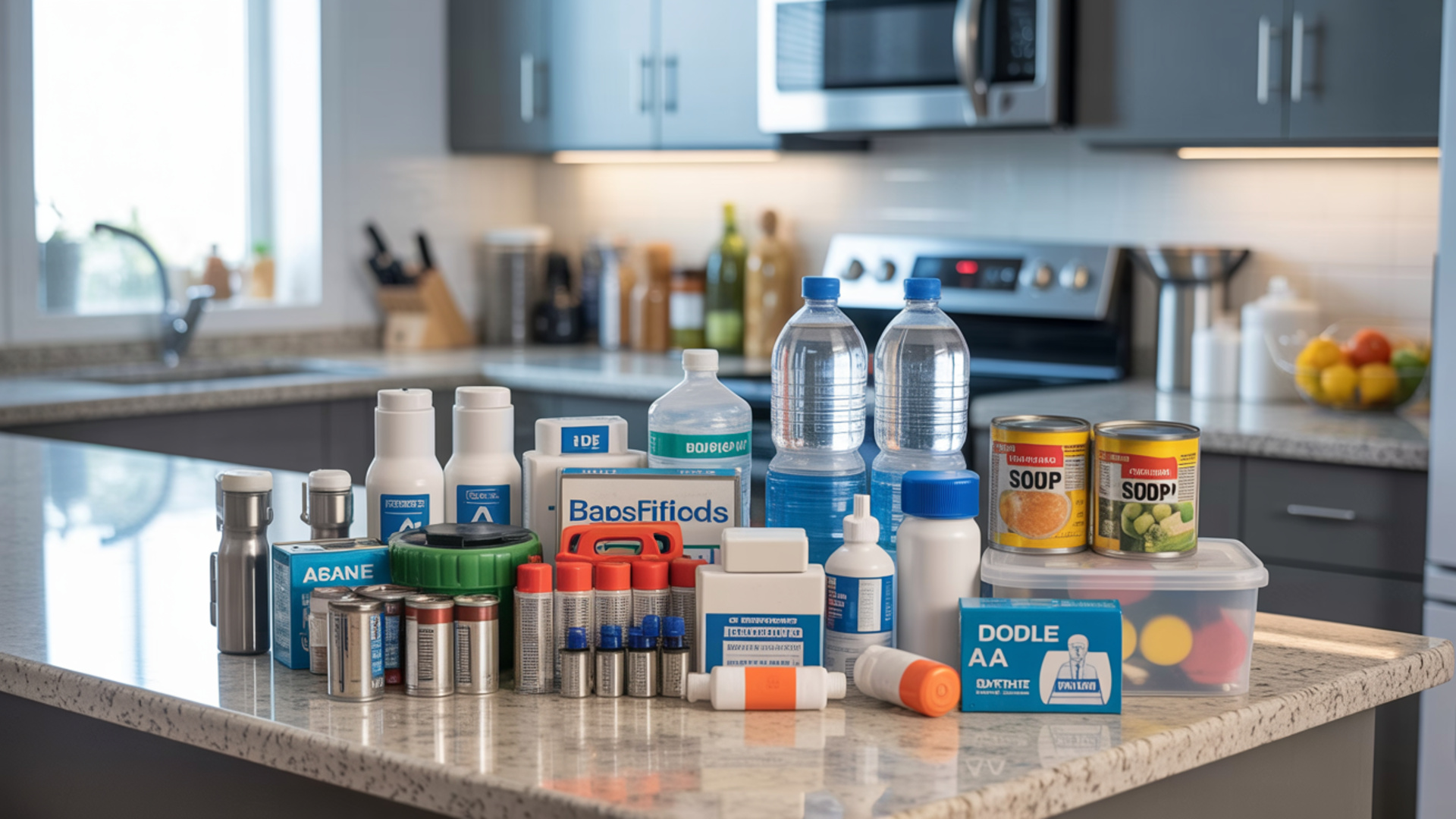
    dollar store emergency supplies for apartment prepping

    Who This Guide Is For

    This guide is written for apartment renters and small-space dwellers who want to start prepping on a budget apartment style — without overwhelming their wallets or their closets. Whether you’re a college student, a young professional, or a family living paycheck to paycheck, emergency preparedness shouldn’t be a luxury. If you’ve been putting off prepping because you think it requires a basement full of gear and thousands of dollars in supplies, this guide will change your mind. You can start today with what you already have, build gradually, and still be far more prepared than 90% of your neighbors. For a complete overview of what to prioritize, start with our urban prepper checklist.

    Why Budget Prepping Works for Apartments

    There’s a persistent myth in the prepping community that real preparedness requires a rural homestead, a six-month food stockpile, and thousands of dollars in tactical gear. The truth is far more practical. Apartment preppers actually have several advantages when working with a tight budget.

    First, smaller spaces force smarter decisions. When you can’t hoard everything, you learn to prioritize the supplies that deliver the most value per square foot and per dollar. A studio apartment prepper with $200 in carefully chosen gear can outperform a suburban prepper with $2,000 in random impulse buys.

    Second, apartments are inherently more energy-efficient. Smaller volumes of air are easier to heat or cool during power outages, and shared walls provide insulation. Your blackout preparedness apartment plan becomes simpler and cheaper when you’re not trying to heat 2,500 square feet.

    Third, urban locations mean closer proximity to resources — hospitals, fire stations, community distribution centers, and mutual aid networks. Budget prepping in an apartment isn’t about surviving alone in the wilderness. It’s about bridging the gap between a disruption and when help or normalcy returns, which in urban settings is typically 3 to 14 days.

    The $100 Starter Kit: What to Buy First

    If you only have $100 to spend on emergency preparedness, here’s exactly how to allocate it for maximum impact. This kit covers the critical survival priorities: water, food, light, first aid, and communication.

    Item Estimated Cost Priority Level Why It Matters
    7 gallons of water (store-bought jugs) $8–$10 Critical Covers 1 person for 3–4 days of drinking and basic hygiene
    Canned food assortment (beans, tuna, soup, vegetables) $20–$25 Critical Shelf-stable protein and calories for 5–7 days
    Manual can opener $3 Critical Useless cans without it — the most forgotten prep item
    LED flashlight + extra batteries $8–$12 High Primary light source during power outages
    Basic first aid kit $10–$15 High Bandages, antiseptic, pain relievers, medical tape
    Battery-powered or hand-crank radio $15–$20 High Information access when cell towers and internet fail
    Portable phone charger (10,000 mAh) $12–$15 High Keeps your most important communication tool alive
    Duct tape + trash bags + zip ties $5–$7 Medium Multi-purpose repair, sealing, and sanitation tools
    Copies of important documents in waterproof bag $3–$5 Medium Insurance, ID, and medical records protected and portable

    Total: $84–$112. This isn’t a fantasy list — it’s a single trip to Walmart or Target. For detailed recommendations on which gear brands hold up best, check our best urban survival gear 2026 roundup. You can also expand on the food portion with our emergency food supply apartment guide.

    Dollar Store Emergency Supplies That Actually Work

    Dollar stores are a budget prepper’s secret weapon. Not everything on those shelves is worth buying, but certain items are identical or nearly identical to what you’d pay three to five times more for elsewhere. Here’s what’s genuinely worth grabbing:

    Winners at the dollar store:

    • Emergency candles — Long-burn candles for $1.25 are functionally identical to hardware store versions at $4–$6.
    • Lighters and matches — Buy several. Distribute them across your apartment and go-bag.
    • Latex or nitrile gloves — Essential for first aid and sanitation. Quality is perfectly adequate.
    • Zip-lock storage bags — Waterproofing documents, organizing small supplies, storing opened food.
    • Bandages and gauze — Basic wound care supplies that meet the same standards as pharmacy brands.
    • Aluminum foil — Cooking, signaling, heat reflection, and food storage.
    • Spray bottles — Fill with diluted bleach for sanitizing surfaces post-disaster.
    • Notebook and pencils — Communication and record-keeping when digital tools fail.

    Skip at the dollar store: Batteries (often near-dead shelf life), flashlights (unreliable LEDs), and multi-tools (break under minimal pressure). Invest in quality versions of these from reputable retailers.

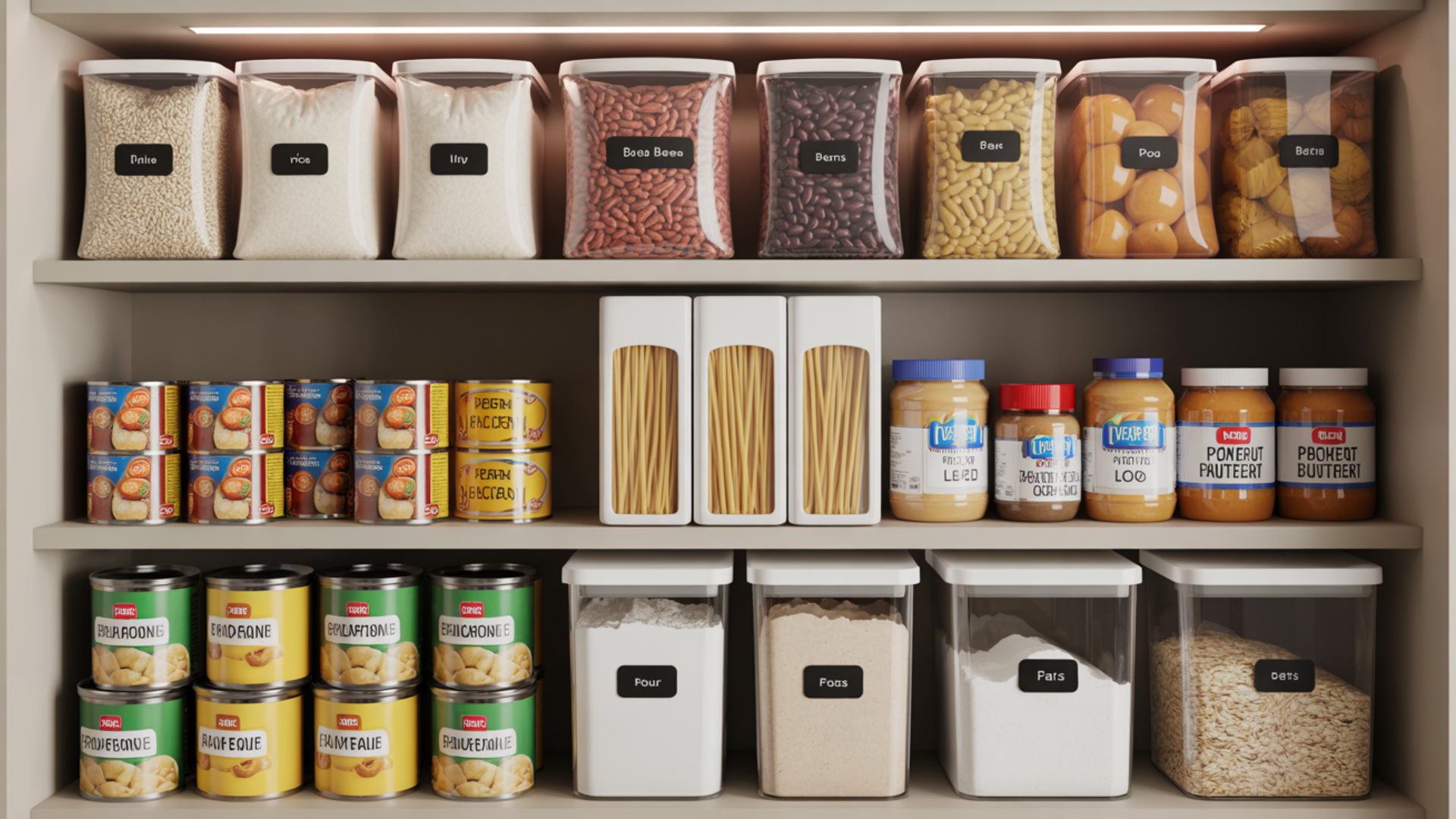
    cheap prepper pantry organization apartment

    Building a Cheap Prepper Pantry

    Your food stockpile doesn’t need to consist of expensive freeze-dried meals and MREs. The most cost-effective prepper pantry is built from everyday grocery items purchased strategically over time.

    The “copy canning” method is the simplest approach: every time you go grocery shopping, buy one extra of each non-perishable item you normally purchase. Within two months, you’ll have a 2-week food buffer without any single shopping trip feeling the strain.

    Best budget staples for apartment preppers:

    • Dried rice and beans — Cheapest calories-per-dollar available. Store in sealed containers to prevent pests.
    • Canned proteins — Tuna, chicken, sardines, and beans. Watch for sales and stock up when prices drop below $1 per can.
    • Peanut butter — Calorie-dense, protein-rich, and requires no cooking or refrigeration.
    • Oatmeal — Versatile, filling, and incredibly cheap in bulk. Can be eaten with cold water in a pinch.
    • Pasta and jarred sauce — Comfort food that stores for 1–2 years easily.
    • Honey — Never expires, provides quick energy, and has mild antibacterial properties.
    • Powdered milk — Calcium and protein source that doesn’t require refrigeration.
    • Multivitamins — Fills nutritional gaps when fresh produce isn’t available.

    Store your pantry items using the first-in-first-out (FIFO) rotation method. Place new purchases behind older ones so nothing expires forgotten in the back of a cabinet. For a deeper dive into building a complete food reserve, see our full emergency food supply apartment planning guide.

    Budget Water Storage Solutions

    Water is the single most critical prep, and it’s also one of the cheapest. The standard recommendation is one gallon per person per day, covering drinking, cooking, and basic hygiene. For a 7-day supply for one person, you need just 7 gallons.

    Cheapest storage options for apartments:

    • Store-bought gallon jugs — At roughly $1 per gallon, this is the simplest and cheapest way to start. Stack them in a closet corner or under the bed.
    • Cleaned 2-liter soda bottles — Free if you already drink soda. Rinse thoroughly, fill with tap water, add 2 drops of unscented bleach per liter, and store in a cool, dark place.
    • 5-gallon food-grade jugs — Available at camping stores or online for $8–$15. Efficient use of space and easy to rotate.
    • WaterBOB bathtub bladder — Fills your bathtub with 100 gallons of clean water when you know a storm or disruption is coming. Around $30 and stores flat.

    Avoid storing water in milk jugs — the residual proteins promote bacterial growth even after thorough cleaning. Also avoid direct sunlight and heat, which degrade plastic containers and encourage algae growth. Our complete urban water storage guide covers purification methods and long-term storage strategies for every apartment layout. If you’re seriously limited on space, that urban water storage guide also includes creative solutions for micro-apartments and shared living situations.

    Affordable Survival Gear Recommendations

    Beyond food and water, certain gear items provide outsized value for apartment preppers on a budget. Focus on multi-use tools that serve multiple emergency scenarios.

    Under $15:

    • Headlamp with red-light mode — hands-free illumination for $8–$12
    • Emergency Mylar blankets (pack of 10) — lightweight warmth for $7–$9
    • Ferro rod fire starter — works wet, lasts thousands of strikes, $6–$10
    • Water purification tablets — treats up to 25 gallons for $7–$9

    Under $30:

    • Portable water filter (Sawyer Mini or similar) — filters up to 100,000 gallons, $20–$25
    • Solar-powered phone charger — renewable power source for $20–$30
    • Fixed-blade knife (Morakniv Companion) — arguably the best budget survival knife made, $15–$20

    Under $50:

    • Hand-crank emergency radio with flashlight and USB charging — $25–$40
    • Quality multi-tool (Leatherman Wingman or Gerber Suspension) — $30–$45
    • Compact sleeping bag rated to 40°F — $30–$45

    The key principle is buy once, cry once — even on a budget. A $20 knife that lasts a decade is cheaper than three $8 knives that break. Review our urban prepper checklist to see where each of these items fits into a comprehensive preparation plan.

    affordable survival gear budget apartment prepping

    Free and Low-Cost Prepping Strategies

    Some of the most valuable preparation steps cost nothing at all. Before spending another dollar, make sure you’ve completed these zero-cost actions:

    • Map your exits — Walk every stairwell and exit route in your building. Know at least two ways out from your unit.
    • Digitize documents — Photograph or scan IDs, insurance policies, prescriptions, and lease agreements. Store copies in encrypted cloud storage and on a USB drive.
    • Learn basic skills — YouTube has thousands of free tutorials on first aid, fire starting, water purification, basic sewing, and food preservation.
    • Fill containers before storms — When severe weather is forecast, fill every pot, clean container, and your bathtub with water. Zero cost, massive payoff.
    • Build relationships — Know your neighbors. In every major disaster, mutual aid between neighbors has been the single most effective survival factor.
    • Conduct a home inventory — You probably already own useful prep items: matches, candles, blankets, tools, medications, batteries. Organize what you have before buying more.
    • Create a communication plan — Designate an out-of-area contact person. Agree on a meetup point with family members if phones go down.
    • Download offline resources — Save first aid guides, local maps, and emergency frequency lists to your phone for offline access.

    These free strategies often matter more than any physical supply. Return to our homepage for more guides covering each of these skills in detail.

    Common Budget Prepping Mistakes

    Spending wisely matters as much as spending at all. These are the most frequent — and most expensive — mistakes budget apartment preppers make:

    1. Buying gear before mastering basics — A $200 survival knife is worthless if you don’t have 3 days of water stored. Always follow the priority order: water, food, light, first aid, communication, then tools.
    2. Ignoring expiration dates — Budget preppers often buy in bulk and then forget to rotate stock. Expired food and dead batteries create a false sense of security. Set calendar reminders every 6 months to audit your supplies.
    3. Storing everything in one location — If a fire, flood, or forced evacuation hits your apartment, a single stockpile location means you lose everything. Split critical supplies between your apartment, your vehicle (if applicable), and a go-bag near your door.
    4. Skipping water for food — New preppers gravitate toward food stockpiles because they’re more visible and satisfying to build. But dehydration will incapacitate you within 3 days while you can survive weeks without food. Water storage is always priority one.
    5. Falling for marketing hype — Tactical branding adds a 200–400% markup. A “tactical flashlight” is just an LED flashlight. A “survival straw” is a water filter. Buy function, not branding.
    6. Neglecting physical fitness and skills — No amount of gear compensates for an inability to walk down 15 flights of stairs or perform basic first aid. Free bodyweight exercises and YouTube first aid courses are preps too.
    7. Prepping in secret instead of community — Lone-wolf prepping is less effective and more expensive than building a small network of prepared neighbors who can share skills, tools, and supplies.

    FAQ

    How much does it cost to start prepping in an apartment?

    You can build a solid 72-hour emergency kit for $80–$120. The key is prioritizing water, shelf-stable food, a light source, basic first aid, and a way to charge your phone. Use the $100 starter kit table above as your shopping list, and expand from there as your budget allows each month.

    What are the best dollar store items for emergency prepping?

    Emergency candles, lighters, matches, nitrile gloves, zip-lock bags, aluminum foil, bandages, and spray bottles are all excellent dollar store purchases. Avoid dollar store batteries, flashlights, and multi-tools — these items need higher quality to be reliable in an actual emergency.

    How do I store emergency water in a small apartment?

    Use a combination of store-bought gallon jugs, cleaned 2-liter bottles, and 5-gallon food-grade containers. Store them under beds, in closet corners, behind furniture, and on top of kitchen cabinets using our apartment storage hacks. Our urban water storage guide provides apartment-specific layouts and space-saving strategies for every size unit.

    Can I build a prepper pantry without buying freeze-dried food?

    Absolutely. The most cost-effective prepper pantry uses ordinary grocery items: canned beans, tuna, soup, dried rice, pasta, oatmeal, peanut butter, and honey. Use the copy canning method — buy one extra of each non-perishable item per grocery trip — and you’ll have a 2-week food buffer within two months without any large single expense.

    What should I prioritize if I can only spend $20 per month on prepping?

    Month one: water storage (gallon jugs and a few 2-liter bottles). Month two: canned food and a manual can opener. Month three: flashlight, batteries, and a portable phone charger. Month four: first aid kit. Month five: hand-crank radio. By month five, you’ve spent $100 total and have a solid emergency foundation. Check our urban prepper checklist for a complete month-by-month buildout plan.

    🛒 Build Your Emergency Kit Today

    You don’t need a big budget to start — just a plan and $20. Download our printable Urban Prepper Checklist to track your progress week by week, or jump to our homepage for the full library of apartment prepping guides.

  • Apartment Gear Storage Hacks: How to Store Survival Supplies in Small Spaces (2026)

    Apartment Gear Storage Hacks: How to Store Survival Supplies in Small Spaces (2026)

    Apartment Gear Storage Hacks: How to Store Survival Supplies in Small Spaces (2026)

    Quick Summary: You don’t need a basement or garage to build a serious emergency supply cache. This guide reveals proven apartment gear storage hacks — from hidden compartments and vertical shelving systems to multi-use furniture — that let you stockpile survival essentials without sacrificing livable square footage.

    Living in an apartment doesn’t mean you have to choose between being prepared and having a functional home. The average one-bedroom apartment in the U.S. measures around 750 square feet — and after furniture, daily-use items, and personal belongings, the usable storage space shrinks dramatically. For urban preppers, this presents a genuine challenge: where do you put three months of food, water, medical supplies, and emergency gear?

    The answer isn’t to give up on preparedness. It’s to get strategic. After years of helping apartment-dwelling preppers optimize their spaces, I’ve compiled the most effective apartment gear storage hacks that work in studios, one-bedrooms, and shared living situations alike. Whether you’re just starting with our urban prepper checklist or expanding an existing setup, these techniques will transform dead space into survival readiness.

    apartment survival gear storage under bed

    Who This Guide Is For

    This guide is built specifically for:

    • Apartment and condo dwellers with limited square footage who want to build a meaningful emergency supply cache
    • Urban preppers living in cities where space comes at a premium and visibility matters (you don’t want neighbors asking questions)
    • Renters who can’t modify walls, floors, or built-in structures but still need workable storage solutions
    • Couples and roommates sharing space who need storage that stays discreet and organized
    • Anyone following our urban prepper checklist who’s hit the wall on where to actually put everything

    Why Smart Storage Matters for Apartment Preppers

    Gear you can’t find in an emergency is gear you don’t have. That’s the fundamental principle behind apartment gear storage hacks — it’s not just about cramming things into closets. Effective prepper storage in small spaces must meet three criteria:

    1. Accessibility: Critical items (first aid, flashlights, water) must be reachable within 60 seconds, even in the dark.
    2. Discretion: Your supplies should be invisible to guests, landlords, and maintenance workers. Visible stockpiles invite theft, judgment, and unwanted attention.
    3. Preservation: Temperature fluctuations, moisture, and pests can destroy stored food, batteries, and medical supplies. Storage locations must protect your investment.

    When you’re preparing for scenarios like a prolonged blackout in your apartment, knowing exactly where every item is — and being able to reach it fast — can make the difference between a manageable inconvenience and a genuine crisis.

    Storage Solutions at a Glance

    Storage Solution Capacity Cost Range Visibility Best For
    Under-bed rolling bins 50–80 lbs per bin $15–$40 Completely hidden Food, water pouches, clothing
    Ottoman / bench with storage 30–60 lbs $60–$200 Hidden (furniture) First aid, documents, small gear
    Over-door organizers 10–25 lbs $10–$25 Low (behind doors) Flashlights, batteries, tools
    Vertical wall shelving 100+ lbs (system) $40–$150 Visible (stylizable) Canned goods, books, gear bins
    Closet shelf risers / stackers 40–70 lbs per shelf $20–$50 Hidden (in closet) Bulk dry goods, medical supplies
    Bed riser + under-space 100+ lbs $20–$35 (risers) Mostly hidden Water bricks, ammo cans, bins
    Ceiling-mounted pulley shelves 50–75 lbs $30–$80 Low (overhead) Seasonal gear, bug-out bags
    Hollow-book safes / decoy containers 2–5 lbs each $10–$30 Invisible Cash, USB drives, small valuables

    Hidden Storage Techniques That Actually Work

    The best apartment gear storage hacks are the ones nobody notices. Here are the methods that experienced urban preppers swear by:

    Under-Bed Storage Systems

    Your bed is sitting on top of roughly 20–30 square feet of prime real estate. With 8-inch bed risers, you can create enough clearance for heavy-duty rolling bins that hold water bricks, freeze-dried food pouches, and medical kits. Use vacuum-sealed bags for clothing and blankets to maximize density. Label each bin by category with color-coded tape so you can grab the right container even by flashlight.

    False Panels and Hollow Spaces

    Many apartments have dead space behind kitchen kick plates, inside closet walls, and beneath bathroom vanities. A removable magnetic kick plate under your kitchen cabinets can conceal flat items like water purification tablets, emergency cash, and document copies. Just be careful not to make any permanent modifications if you’re renting — adhesive-mounted solutions are your friend.

    Decoy and Camouflage Storage

    Storage containers disguised as everyday objects are surprisingly effective. Think: a coat closet where the “floor” is actually a hinged panel over a supply cache, or a bookshelf where several spines are actually hollow-book safes containing USB drives with digital copies of important documents. Wall clocks with hidden compartments, faux electrical outlets with small safes, and storage-equipped picture frames all serve double duty.

    prepping in a small apartment storage setup

    Maximizing Vertical Space for Gear

    In a small apartment, your most underused dimension is height. Most people store everything below eye level, ignoring the 3–5 feet of usable wall space between shoulder height and the ceiling. Here’s how to claim it:

    Wall-Mounted Shelving Systems

    Industrial-style floating shelves or track-mounted systems can hold canned goods, sealed water containers, and gear bins while doubling as design features. If your landlord allows wall anchors, a single wall of floor-to-ceiling shelving can hold the equivalent of an entire closet’s worth of supplies. Style them with a mix of everyday items and prep gear in matching containers — nobody will look twice.

    Over-Door and Back-of-Door Organizers

    Every door in your apartment is an untapped storage surface. Heavy-duty over-door organizers on closet doors, bathroom doors, and pantry doors can hold flashlights, batteries, lighters, multi-tools, first aid supplies, and hygiene items. The back of your bedroom door alone can accommodate 15–20 pounds of gear that remains invisible when the door is open.

    Ceiling and Upper-Wall Solutions

    Ceiling-mounted pulley shelves, typically used in garages, work surprisingly well in apartments with 9-foot or higher ceilings. Install one in a walk-in closet to store your blackout preparedness kit or seasonal bug-out bag overhead. Tension-mounted corner shelves in closets can also exploit dead vertical space without drilling.

    Multi-Use Furniture for Dual-Purpose Prep

    Every piece of furniture in your apartment should earn its floor space twice. The smartest apartment gear storage hacks involve furniture that serves your daily life and your preparedness goals simultaneously.

    Storage Ottomans and Benches

    A quality storage ottoman in your living room can hold a 72-hour emergency kit, complete with food, water, a first aid kit, a flashlight, a battery bank, and even a compact portable power station. Entryway storage benches can conceal a grab-and-go bag with shoes, gloves, and a poncho right by the door — exactly where you’d need them during an evacuation.

    Bed Frames with Built-In Drawers

    Platform bed frames with integrated drawers offer organized, dust-protected storage for bulk supplies. Four full-size drawers beneath a queen bed can hold 200+ pounds of gear. Assign each drawer a purpose: Drawer 1 for water and hydration, Drawer 2 for food supplies (coordinate with your apartment emergency food supply plan), Drawer 3 for tools and lighting, Drawer 4 for medical and hygiene items.

    Coffee Tables and Side Tables with Compartments

    Lift-top coffee tables provide a hidden compartment large enough for maps, radios, batteries, and a secondary first aid kit. Choose pieces that look like normal furniture — the goal is functional concealment. Side tables with enclosed cabinets or drawers offer similar utility in bedrooms and hallways.

    Best Places to Store Survival Gear in an Apartment

    After testing dozens of configurations in apartments ranging from 400 to 1,100 square feet, these are the highest-value storage zones ranked by capacity, accessibility, and discretion:

    • Under the bed: The single best location for bulk storage. Use risers to gain clearance. Can hold water bricks, food bins, and medical kits. Always accessible and completely hidden.
    • Bedroom closet (upper shelves and floor): Ideal for stacking sealed bins. Add shelf risers to double your usable layers. Store heavier items on the floor, lighter items up high.
    • Kitchen pantry (deep shelves and back wall): Perfect for rotating food stocks. Place emergency rations behind everyday pantry items for seamless integration with your emergency food supply for apartment living.
    • Coat closet: Often underutilized. The floor can hold a bug-out bag, and over-door organizers can store flashlights and tools. Add a top-shelf bin for seasonal preparedness items.
    • Bathroom vanity cabinet: Store hygiene kits, water purification tablets, and medications. The space under the sink is often wasted — add a small stacking shelf to double it.
    • Behind furniture: The gap between a bookshelf or dresser and the wall can hold flat items like water bladders, rolled emergency blankets, and document tubes.
    • Inside suitcases and luggage: Stored luggage is empty space waiting to be used. Fill suitcases with gear that you’d grab in an evacuation anyway — this doubles as a pre-packed go-bag.
    • Above kitchen cabinets: The soffit space above cabinets in many apartments is accessible with a step stool. Use matching bins to store lightweight items like paper goods, freeze-dried meals, and backup hygiene supplies.

    Storing Water and Food in Tight Quarters

    Water and food are the bulkiest categories in any prepper’s inventory, and they’re the ones that trip up apartment dwellers the most. Here’s how to handle both without turning your apartment into a warehouse.

    Water Storage Solutions

    Forget the 55-gallon barrel — that’s not happening in a third-floor walkup. Instead, focus on modular, stackable solutions: water bricks (3.5 gallons each, stackable like LEGOs), slim-profile water bladders that fit under beds or behind furniture, and WaterBOBs for emergency bathtub filling. For a deeper breakdown, read our full urban water storage guide which covers apartment-specific methods in detail. A target of one gallon per person per day for 14 days is ambitious but achievable in most apartments using these modular systems.

    Rotate your water supply every 6–12 months. Use your stored water for cooking and drinking, then refill. This keeps your stock fresh and integrates preparedness into your daily routine. Our water storage guide for urban dwellers includes a complete rotation schedule you can follow.

    Food Storage Strategies

    Freeze-dried meals, dehydrated ingredients, and vacuum-sealed dry goods offer the best calorie-to-volume ratio for apartment storage. A single under-bed bin can hold 30+ days of freeze-dried meals for one person. Supplement with canned goods stored on vertical shelving and energy bars tucked into door organizers. Keep your rotation system active — first in, first out — and coordinate with your overall apartment emergency food plan to avoid waste.

    hidden survival storage furniture apartment

    Rotation and Inventory Management

    Storage without a system is just hoarding. Every apartment prepper needs a simple, repeatable inventory process that prevents expired food, dead batteries, and outdated medications from undermining their preparedness.

    The Quarterly Audit Method

    Set a calendar reminder for the first Saturday of every quarter. Walk through each storage zone with a checklist. Check expiration dates, test batteries and electronics, verify seal integrity on vacuum-packed items, and ensure water containers haven’t developed leaks. This 30-minute process four times a year keeps your entire system reliable.

    Digital Inventory Tracking

    A simple spreadsheet or inventory app beats memory every time. Track each item’s location, quantity, expiration date, and last-checked date. When something gets used or expires, update the list immediately. Some preppers use QR codes on bins that link to a shared document — scan the bin, see exactly what’s inside. This is particularly valuable in a shared space where a partner or roommate needs to find supplies during an emergency.

    The “Use and Replace” Rotation System

    The most sustainable approach to food and supply rotation is building it into daily life. Cook with your stored rice, beans, and canned goods regularly. Use your stored batteries in everyday devices. Drink your stored water and refill. This “eat what you store, store what you eat” philosophy eliminates waste and ensures you’re always stocked with fresh supplies.

    Common Mistakes Apartment Preppers Make with Storage

    Even experienced preppers fall into these traps. Avoid them to keep your system effective and your apartment livable:

    • Storing everything in one location. If a pipe bursts above your closet or a fire blocks your bedroom, a single-point storage strategy means you lose everything. Distribute supplies across at least three zones in your apartment.
    • Ignoring temperature and humidity. That closet against the exterior wall might get brutally hot in summer. Heat destroys food shelf life, degrades medications, and drains stored batteries. Use a cheap hygrometer to monitor conditions in your storage zones.
    • Buying gear before planning storage. It’s tempting to order a month’s supply of freeze-dried meals before you’ve figured out where they’ll go. Measure your available spaces first, then purchase supplies to fit. Our ModernUrbanPrepper.com homepage has planning resources to help you think storage-first.
    • Forgetting accessibility under stress. You’ll be fumbling in the dark, possibly panicked. Don’t store your flashlight behind 40 pounds of canned goods. Critical items — light, water, first aid — should be within arm’s reach from your bed and your front door.
    • Neglecting opsec (operational security). Telling neighbors, posting on social media, or leaving supplies visible during maintenance visits compromises your security. In a real crisis, people remember who was “that prepper in 4B.”
    • Skipping the inventory system. Without tracking what you have and when it expires, you’re guaranteed to discover spoiled food and dead batteries exactly when you need them most.
    • Making permanent modifications as a renter. Drilling into load-bearing walls, cutting into cabinetry, or modifying built-in fixtures can cost you your security deposit — or your lease. Stick to tension-mounted, adhesive, and freestanding solutions.

    Frequently Asked Questions

    How much survival gear can you realistically store in a one-bedroom apartment?

    More than you’d think. A well-organized one-bedroom apartment (roughly 650–800 sq ft) can hold a 90-day supply for two people when you fully leverage under-bed space, vertical shelving, multi-use furniture, and closet optimization. The key is modular, stackable containers and a disciplined inventory system. Water is the biggest challenge by volume — consult our urban water storage guide for apartment-specific quantities and solutions.

    What are the best storage containers for apartment prepping?

    Clear, stackable, airtight bins in standard sizes (think 16-quart and 66-quart) are the workhorses of apartment prepping. For food, use Mylar bags inside hard-sided bins. For water, modular water bricks (3.5 gal) outperform jugs because they stack and fit under furniture. Avoid non-standard shapes and sizes — they waste space and won’t stack efficiently.

    How do I store survival supplies without my landlord or neighbors noticing?

    Discretion is about integration, not deception. Use furniture with built-in storage (ottomans, platform beds, lift-top tables) so your prep gear looks like normal home furnishing. Keep supplies in matching containers on shelves alongside books and décor. Avoid having deliveries of obvious “survival” branded packages left in common areas — ship to an Amazon locker or PO box if needed.

    Can I store emergency water in an apartment safely?

    Yes, with the right approach. Use food-grade, BPA-free water containers designed for long-term storage. Store them away from direct sunlight and heat sources. Distribute weight — don’t put 200 pounds of water on a single shelf. Water bricks, slim bladders, and purpose-built containers are all safe for apartment use. Check our urban water storage guide for the full apartment protocol.

    What should I grab first if I have to evacuate my apartment quickly?

    Your pre-packed go-bag, which should live by the front door or inside your entryway closet — never deep in a back closet. It should contain 72 hours of food and water, ID and document copies, a first aid kit, cash, a phone charger, a flashlight, and seasonal clothing. If you have 60 extra seconds, grab the single bin or bag you’ve designated as your “second grab” — typically medications, additional water, and a battery-powered radio.

    Ready to Build Your Apartment Prep Kit?

    Start with our step-by-step checklist designed specifically for apartment dwellers. Every item, every quantity, every storage recommendation — mapped to small-space living.

    Get the Urban Prepper Checklist →

    Final thought: The best time to organize your apartment storage was before the last emergency. The second-best time is right now. Start with one zone — under your bed is the easiest win — and expand from there. Small, consistent effort beats a single overwhelming haul every time. Your future self, fumbling for a flashlight at 2 AM during a blackout, will thank you.

    For more apartment-specific preparedness strategies, explore our guides on emergency food supply for apartments, urban water storage, and the complete ModernUrbanPrepper.com resource library.

  • Best Water Filters for Apartments (2026 Emergency Guide)

    Best Water Filters for Apartments (2026 Emergency Guide)

    The best water filters for apartments include gravity-fed systems (Berkey, ProPur), portable squeeze filters (Sawyer, LifeStraw), and countertop options (Epic Pure, Brita). Gravity filters offer the highest capacity for emergencies, portable filters provide backup during evacuations, and countertop units serve as daily-use systems with emergency backup capability. All three types address water contamination, infrastructure failure, and supply disruptions common in urban environments.

    Water security is one of the most overlooked aspects of urban emergency preparedness. In apartments, where tenants often lack control over building infrastructure or storage space, choosing the right water filtration system becomes critical. Whether facing temporary contamination, supply disruptions, or extended outages, apartment dwellers need flexible, space-efficient solutions that don’t require plumbing modifications. This guide walks you through the best filtration options specifically designed for apartment living in 2026.

    Comparison Table: Water Filter Systems for Apartments

    Filter Type Capacity Cost Best For Setup Time
    Gravity-Fed (Berkey) 2-6 gallons $300-$400 Emergency reserves 5 minutes
    Portable Squeeze (Sawyer) 32-100 oz $20-$50 Evacuation backup Instant
    Countertop (Epic Pure) 750 gallons $200-$300 Daily + emergency use 10 minutes
    Pitcher (Brita) 10 gallons/month $25-$40 Budget daily option 2 minutes
    Faucet-Mounted (PUR) 100 gallons/month $30-$60 Permanent installation 15 minutes

    Who This Guide Is For

    This guide is essential if you:

    • Live in an apartment without access to well water or alternative supplies
    • Have experienced water main breaks, boil-water notices, or contamination alerts in your area
    • Want to reduce dependence on bottled water during emergencies
    • Face limited storage space and need compact filtration solutions
    • Are concerned about chemical contaminants, bacteria, or sediment in municipal supply
    • Plan to create a complete water security strategy as part of your urban water storage guide

    Gravity-Fed Filtration Systems: Maximum Emergency Capacity

    Gravity-fed filters represent the gold standard for apartment emergency preparedness. Systems like the Big Berkey and ProPur combine large capacity with zero maintenance, requiring no electricity, batteries, or replacement cartridges during initial setup. These systems filter water passively by stacking upper and lower chambers, allowing gravity to push water through ceramic filters that remove bacteria, protozoa, and many chemical contaminants.

    The Big Berkey processes 2-3 gallons daily without electricity and can store several gallons of filtered water, providing reserves for multi-day disruptions. The system fits under most apartment kitchen sinks and operates at room temperature. Replacement filters cost $40-60 and last 2-5 years depending on water quality. For apartment dwellers stockpiling for emergencies, gravity systems offer the highest filtered-water capacity without ongoing logistics.

    best gravity water filter for apartment emergency

    Installation requires zero modifications: place the system on a countertop or shelf, fill the upper chamber with tap water, and gravity handles the rest. Some models include tamper-evident seals and portability handles for evacuations. The primary limitation is slow processing speed (typically 2-3 gallons daily) and the learning curve around filter maintenance, but this investment pays dividends during extended water supply disruptions common in urban infrastructure failures.

    Portable Squeeze Filters: Evacuation-Ready Backup

    Portable squeeze filters like Sawyer PointONE and LifeStraw offer apartment renters an evacuable backup that weighs ounces and costs under $50. These systems use hollow-fiber membranes to filter bacteria, protozoa, and sediment from any water source—tap water, bottles collected before evacuation, or outdoor sources. The PointONE removes 99.99% of bacteria and protozoa with minimal maintenance.

    Keep a squeeze filter in your best urban survival gear 2026 collection and on your person during evacuations. The Sawyer PointONE attaches directly to water bottles, allowing you to filter and drink during transit. Each filter processes up to 100,000 gallons, meaning one backup filter covers an entire year of emergency water needs. The learning curve is zero—attach, squeeze, drink—making these ideal for family members with minimal preparedness training. At under $50, every apartment resident should own one for their urban survival gear collection.

    Disadvantages include slow squeeze-rate (requires hand pressure for each drink) and single-person design. Squeezers don’t store filtered water; they filter as you drink. During sheltering scenarios where you need large volumes for washing or cooking, squeeze filters become impractical. Combine squeeze filters with gravity systems or countertop units to cover both evacuation and shelter-in-place scenarios.

    Countertop Filtration: Daily Use Meets Emergency Backup

    Countertop filters like Epic Pure and TAPP Water bridge the gap between daily convenience and emergency capacity. These systems sit permanently on your counter, integrate with your existing tap, and filter 750-1000 gallons before cartridge replacement. Unlike under-sink or whole-home systems requiring plumbing modification (impossible in most rental apartments), countertop filters involve zero installation headaches and immediate portability if you evacuate.

    portable water purification urban use

    Epic Pure systems remove chlorine, sediment, and most volatile organic compounds (VOCs) while maintaining water pressure suitable for cooking, drinking, and filling emergency containers. The cartridges last 6-12 months and cost $50-80 per replacement. During extended water disruptions, you can pre-fill storage containers using your countertop system before supply becomes compromised. This proactive filling approach turns daily-use systems into emergency reserve generators.

    Choose countertop systems if you rent, value daily convenience, and want seamless emergency integration. When combined with gravity-fed backup and portable squeeze filters, countertop units complete a comprehensive apartment water security strategy. For detailed storage planning, reference the urban water storage guide to calculate capacity across all three system types.

    Budget Options: Pitcher and Faucet-Mounted Filters

    Brita and PUR offer budget-conscious entry points for apartment water filtration. Pitcher filters cost $25-40 with cartridges at $10-15 each, making them accessible to renters on tight budgets. They reduce chlorine, sediment, and some heavy metals while improving taste. Faucet-mounted filters attach directly to your existing tap (removing easily for evacuation) and provide 100+ gallons of filtered water monthly at similar price points.

    These options excel for daily use and chlorine reduction but lack the microbial filtration of gravity or squeeze systems. During contamination events requiring bacterial removal, pitcher and faucet filters prove insufficient. However, stacking budget filters with portable squeeze backups creates an affordable, layered approach. Use daily pitcher or faucet systems for routine chlorine reduction; deploy squeeze filters if contamination events occur.

    Combining Systems: Your Apartment Water Security Strategy

    Apartment water security demands multiple redundant systems addressing different scenarios. A comprehensive approach combines:

    Tier 1: Daily Use

    Pitcher filters or countertop systems handle routine drinking and cooking while reducing chlorine and sediment. These normalize filtered water consumption, making emergency usage seamless. Running your daily system ensures you’re familiar with maintenance before disruptions occur.

    Tier 2: Shelter-in-Place Reserves

    Gravity-fed systems like Berkey provide multi-day capacity when municipal supply becomes compromised but evacuation isn’t necessary. Pre-fill your gravity system during alert periods, storing filtered water in food-grade containers. For comprehensive storage planning, consult the emergency food supply apartment guide which addresses water integration within broader preparedness.

    Tier 3: Evacuation Backup

    Keep portable squeeze filters in your evacuation kit, vehicle, and work location. These weigh ounces but provide 100,000+ gallons of filtration, ensuring you can access clean water during displacement. Including these in your blackout preparedness apartment kit ensures water access even during power failures affecting municipal treatment facilities.

    countertop water filter emergency apartment

Filtration Effectiveness: What Each System Removes

Different contaminants require different filtration approaches. Activated carbon filters (most pitcher and countertop systems) remove chlorine, sediment, and volatile organic compounds but struggle with bacteria and viruses. Ceramic filters (gravity systems) remove bacteria and protozoa but don’t address chemical contaminants. Hollow-fiber membranes (squeeze filters) excel at microbial removal but require pressure applied by users.

For comprehensive protection, combine filtration types: use daily carbon filters for taste and chemical removal; deploy ceramic gravity systems when bacterial contamination occurs; carry squeeze filters for evacuation scenarios. Understanding each system’s limitations prevents false confidence. No single apartment filtration system removes all contaminants; layering approaches provides robust protection against diverse water threats.

Maintenance and Storage Best Practices

Filtration systems require basic maintenance to remain effective. Gravity-fed filters need cleaning every 2-3 months in high-sediment areas; ceramic filters can develop mold if stored wet. Squeeze filters deteriorate if frozen or allowed to dry completely. Store all systems in cool, dry locations away from direct sunlight. Keep replacement cartridges stockpiled at minimum one year’s worth, recognizing that supply chains may disrupt during extended emergencies.

Test your systems quarterly during normal conditions. Run water through gravity filters, squeeze a test bottle through portable systems, and verify countertop units produce filtered water at normal pressure. Familiarity during calm periods prevents frustration and errors during actual emergencies when decision-making suffers under stress.

Common Mistakes in Apartment Water Filtration

Mistake #1: Choosing Single-System Solutions

The Problem: Relying on one filtration type leaves you vulnerable to specific failure scenarios. A pitcher filter won’t provide bacterial protection; gravity systems fail if you evacuate mid-disruption.

The Fix: Implement layered systems addressing daily use, shelter-in-place, and evacuation scenarios.

Mistake #2: Ignoring Cartridge Inventory

The Problem: Exhausted filter cartridges render systems useless. Supply chain disruptions during emergencies make replacements unavailable.

The Fix: Maintain 12-24 months of cartridge inventory. Check expiration dates annually and rotate stock.

Mistake #3: Not Testing Systems Before Emergencies

The Problem: Discovering your system fails during an actual emergency means delayed access to clean water and increased sickness risk.

The Fix: Quarterly testing ensures systems function before crisis moments and familiarizes your household with operation.

Mistake #4: Over-Trusting Single-Micron Filters

The Problem: Some marketed “micron ratings” prove misleading; 1-micron filters don’t catch all bacteria or viruses depending on design.

The Fix: Verify NSF certifications and third-party testing before purchase. Gravity and hollow-fiber systems provide documented microbial protection.

Mistake #5: Neglecting Filter Storage Conditions

The Problem: Ceramic filters stored wet develop mold; squeeze filters frozen in vehicles lose effectiveness.

The Fix: Store filters dry and cool. Dry gravity ceramic filters completely before extended storage; keep squeeze filters in temperature-controlled locations.

FAQ: Water Filtration for Apartments

What’s the difference between micron ratings and actual bacterial removal?
Micron rating measures pore size, but actual contaminant removal depends on filter media type and design. A 1-micron filter might not remove all bacteria if water flows too quickly. Gravity-fed ceramic filters and hollow-fiber membranes provide certified removal percentages (typically 99.99%) verified through NSF or third-party testing. Always check certifications rather than trusting micron ratings alone.
Can I use a apartment water filter with collected rainwater during emergencies?
Yes, most systems can filter collected rainwater, but pre-filtration helps. For gravity systems, pour rainwater through a cloth or coffee filter first to remove large sediment, extending ceramic filter life. Squeeze filters can directly filter rainwater without pre-treatment. Never filter urban rainwater without filtration—atmospheric pollutants and roof debris make pre-filters essential.
How much water should I store for emergencies in an apartment with limited space?
FEMA recommends 1 gallon per person daily for 2 weeks (14 gallons per person). In space-limited apartments, combine storage with active filtration: maintain 7-10 days of stored water plus two filtration systems (gravity and squeeze) to extend reserves indefinitely if water sources remain accessible. Store water in food-grade containers rotated annually.
Do I need different filters for hard water areas?
Standard carbon and ceramic filters work with hard water, though sediment buildup increases maintenance frequency. Systems with sediment pre-filters extend ceramic and carbon cartridge life in hard water areas. If mineral content extremely high, consider adding a separate sediment filter stage or selecting systems designed for hard water conditions.
What happens if my filter freezes during winter storage?
Frozen ceramic filters can crack, making them ineffective. Hollow-fiber membranes tolerate freezing better but may lose some efficiency. Store all filters in climate-controlled apartment interiors, away from exterior walls during winter. If storage temperatures drop below freezing, move filters indoors immediately. Pressure-test frozen filters before using by running water through them slowly to verify integrity.

Building Your Complete Apartment Water Kit

Start with a single daily-use system matching your budget (pitcher filter or countertop unit). Use it regularly, validating your willingness to maintain it through normal times. Month two, add a gravity-fed system and begin pre-filling storage containers during alert periods. Month three, acquire squeeze filter backups for each household member plus your vehicle. This staggered approach spreads costs while building confidence in each system before relying on them during emergencies.

Document your system specifications, cartridge sizes, and replacement schedules in a printed binder. Include photos of your systems set up correctly. When stress peaks during actual disruptions, written instructions remove decision-making burden. Share this documentation with family members or roommates so anyone can operate filters during your absence or illness.

For broader apartment preparedness context, explore ModernUrbanPrepper.com resources covering integrated water, food, and power security. Water represents just one pillar of apartment emergency readiness; comprehensive preparedness addresses food storage, lighting, heat, and communication simultaneously.

Build Your Complete Water Security Kit Today

Don’t wait for a contamination event or infrastructure failure to realize you lack adequate filtration. Start with a single system this month, add redundancy next month, and complete your three-tier strategy within 90 days.

Your apartment water security depends on decisions made today—when you have time to research, test, and practice. Start now.

Explore Apartment Preparedness Resources
  • Best Portable Power Stations for Apartments (2026 Review)

    Best Portable Power Stations for Apartments (2026 Review)

    Best Portable Power Stations for Apartments (2026 Review)

    QUICK SUMMARY for Urban Preppers:
    Portable power stations are the safest indoor alternative to gas generators for apartments. They produce zero emissions, run silently, and offer 500–2,000Wh battery capacity. Top 2026 picks include the Jackery Explorer 1000 Plus, EcoFlow Delta 2, and Bluetti AC70—all apartment-safe, solar-compatible, and powerful enough to sustain lights, phones, and fridges during extended blackouts.

    Finding the best power station for apartments is one of the most critical decisions any urban prepper will make. When the grid goes down—whether from a severe storm, infrastructure failure, or rolling blackouts—apartment dwellers can’t rely on traditional gas generators. They’re loud, produce deadly carbon monoxide, and violate virtually every lease agreement and building code in the country. Portable power stations solve every one of these problems.

    This comprehensive 2026 review covers the top indoor generators for apartments, including budget options, high-capacity units for extended outages, and solar-compatible systems that can recharge from your apartment window. Whether you’re a first-time prepper or upgrading your emergency setup, this guide will help you choose the right portable power for blackout situations. For a complete overview of apartment-specific preparedness, visit our urban preparedness hub.

    Best Power Station for Apartments Comparison (2026)

    Category Best Pick Why It’s Best
    Power Station Jackery Explorer 1000 Plus Best overall for apartments
    Budget Option Bluetti AC70 Affordable, compact, reliable
    Heavy Duty EcoFlow Delta 2 Max Longest runtime for extended outages

    Who This Power Station Guide Is For

    • Apartment dwellers who cannot use gas generators
    • City residents preparing for blackouts and grid failures
    • Beginners looking for their first indoor backup power source
    • Preppers upgrading their emergency power setup in 2026

    Why You Need a Power Station (NOT a Gas Generator) in an Apartment

    Traditional generators burn gasoline or propane to produce electricity. That combustion process creates carbon monoxide—a colorless, odorless gas that kills hundreds of Americans every year. In an enclosed apartment, even running a gas generator on a balcony creates a serious risk of CO poisoning.

    Portable power stations use lithium-ion or lithium iron phosphate (LiFePO4) batteries to store electricity. They produce:

    • Zero emissions: No carbon monoxide, no exhaust fumes, completely safe indoors
    • Zero noise: Silent operation—no engine rumble disturbing neighbors at 2 AM
    • Zero fire risk from fuel: No gasoline storage, no fuel spills, no flammable liquids
    • Zero lease violations: Building managers can’t object to a battery sitting in your closet

    The tradeoff is runtime. A gas generator can run indefinitely with fuel. A power station has a fixed capacity measured in watt-hours (Wh). But for apartment preppers, the safety advantages far outweigh the runtime limitations—especially when paired with solar panels for renewable charging. For a deeper dive into apartment blackout preparedness, read our complete blackout preparedness guide.

    Top 3 Picks: Best Power Station for Apartments (Detailed Review)

    After testing dozens of units and analyzing 2026 market data, these are the three best portable power stations for apartment living:

    1. Jackery Explorer 1000 Plus — Best Overall

    Spec Detail
    Capacity 1,264 Wh
    Output 2,000W (4,000W surge)
    Battery Type LiFePO4
    Weight 31.5 lbs
    Lifecycle 4,000+ cycles to 70% capacity
    Solar Input 800W max
    Price Range $1,099–$1,299

    The Jackery Explorer 1000 Plus hits the sweet spot for apartment preppers. Its 1,264Wh capacity can power a full-size refrigerator for 1.5 hours, charge a smartphone 100+ times, or run LED lighting for 4+ days straight. The LiFePO4 battery chemistry means it’s safer than older lithium-ion units—no thermal runaway risk—and it lasts 4,000+ charge cycles, meaning daily use for over a decade.

    The 2,000W continuous output handles everything from microwaves to CPAP machines. Its expandable battery ecosystem lets you add extra battery packs (up to 5,000Wh total) without buying a whole new unit. For most apartment preppers, this is the one to buy.

    2. EcoFlow Delta 2 Max — Best for Extended Blackouts

    Spec Detail
    Capacity 2,048 Wh (expandable to 6,144 Wh)
    Output 2,400W (4,800W surge)
    Battery Type LiFePO4
    Weight 50.6 lbs
    Lifecycle 3,000+ cycles to 80% capacity
    Solar Input 1,000W max
    Price Range $1,599–$2,099

    If you live in an area prone to multi-day outages—ice storms, hurricanes, or grid instability—the EcoFlow Delta 2 Max is the heavy-duty option. Its massive 2,048Wh base capacity can expand to 6,144Wh with add-on batteries, providing enough power to run essential apartment systems for 3–5 days without any recharging.

    The unit features ultra-fast AC charging (0–80% in 68 minutes), WiFi app control for monitoring battery status remotely, and X-Boost technology that lets it power devices up to 3,000W by intelligently managing wattage. The downside is weight—at 50.6 lbs, it’s not easily portable. But for a stationary apartment backup system, it’s unmatched.

    3. Bluetti AC70 — Best Budget Option

    Spec Detail
    Capacity 768 Wh
    Output 1,000W (2,000W surge)
    Battery Type LiFePO4
    Weight 22.5 lbs
    Lifecycle 3,000+ cycles to 80% capacity
    Solar Input 500W max
    Price Range $499–$599

    For preppers on a budget, the Bluetti AC70 delivers exceptional value. At under $600, you get a LiFePO4 battery with 768Wh capacity—enough to charge smartphones 60+ times, run LED lights for 3+ days, or keep a small fan running for 15+ hours. It weighs just 22.5 lbs, making it one of the lightest units in its class and easy to move between rooms or take during evacuation.

    The 1,000W continuous output handles most apartment essentials: lights, fans, phone chargers, laptops, and small cooking appliances. It won’t run a full-size fridge or microwave, but for basic emergency power during a 24–48 hour blackout, it’s the best value in 2026.

    What to Look for: Capacity, Lifecycles, and Safety

    Choosing the best power station for apartments comes down to four critical factors:

    Battery Capacity (Wh)

    Watt-hours determine how long your power station lasts. Here’s a practical reference:

    • 500 Wh: Charges 50 smartphones, runs LED lights for 40+ hours, powers a laptop for 8+ hours
    • 1,000 Wh: Runs a mini-fridge for 10+ hours, powers a CPAP machine for 2+ nights, charges a laptop 15+ times
    • 2,000 Wh: Runs a full-size fridge for 20+ hours, powers essential apartment systems for 2–3 days

    For most apartment preppers, 1,000Wh is the minimum recommended capacity. It provides enough power for 24–48 hours of essential use without rationing.

    Battery Chemistry

    • LiFePO4 (Lithium Iron Phosphate): RECOMMENDED. 3,000–4,000 cycle life, extremely stable, minimal fire risk, heavier but safer
    • NMC (Lithium-Ion): Lighter, cheaper, but only 500–800 cycle life and higher thermal runaway risk

    For indoor apartment use, always choose LiFePO4. The safety margin is non-negotiable when you’re sleeping 10 feet from the battery.

    Output Wattage

    Continuous output determines what devices you can run simultaneously:

    • 500W: Phones, lights, fans, laptops
    • 1,000W: Above + small appliances, CPAP, routers
    • 2,000W+: Above + microwave, full-size fridge, power tools

    Solar Compatibility

    Any power station worth buying in 2026 should accept solar panel input. This transforms a finite battery into a renewable power source—critical for extended outages. Look for units with 200W+ solar input for practical recharging speeds.

    These specs matter even more when you’re selecting gear as part of a broader emergency setup. Our best urban survival gear guide covers how power stations fit into your overall apartment preparedness strategy.

    Best High-Capacity Power Station for Long Blackouts

    Extended blackouts lasting 3–7 days require serious power reserves. Beyond the EcoFlow Delta 2 Max, consider these high-capacity systems:

    Bluetti AC200MAX — The Expandable Workhorse

    • Capacity: 2,048Wh base, expandable to 8,192Wh with B230 batteries
    • Output: 2,200W continuous
    • Solar Input: 900W
    • Price: $1,699–$1,999

    The AC200MAX shines in its expandability. Start with the base unit and add B230 expansion batteries as budget allows. A fully expanded system (8,192Wh) can power essential apartment systems for an entire week without solar recharging—or indefinitely with adequate solar input.

    Goal Zero Yeti 3000X — Premium Reliability

    • Capacity: 2,982Wh
    • Output: 2,000W continuous
    • Solar Input: 600W
    • Price: $3,199–$3,499

    Goal Zero commands a premium price but delivers military-grade build quality and exceptional customer support. The Yeti 3000X is built for people who want to buy once and never worry again. Its WiFi monitoring app provides real-time power consumption data so you can optimize usage during emergencies. For those who are serious about long-term blackout preparedness, this unit provides unmatched peace of mind.

    Best Compact Power Station for Budget Survival

    Not everyone needs 2,000Wh of capacity. If you’re prepping on a budget, these compact units provide essential power without the premium price tag:

    Jackery Explorer 300 Plus — Ultra-Portable

    • Capacity: 288Wh
    • Output: 300W
    • Weight: 7.7 lbs
    • Price: $229–$279

    At under $280, the Explorer 300 Plus is the entry point for apartment preppers. It weighs less than a gallon of water and can charge your phone 25+ times or run LED lights for 30+ hours. Perfect for short outages and as a grab-and-go evacuation power source.

    Anker 521 PowerHouse — Everyday Value

    • Capacity: 256Wh
    • Output: 200W
    • Weight: 8.2 lbs
    • Price: $199–$249

    Anker’s reputation for quality electronics extends to their power stations. The 521 PowerHouse is rock-solid, charges via USB-C (use your laptop charger), and includes a built-in LED light. It’s an excellent secondary unit to complement a larger primary power station.

    Remember that your power station is just one component of a complete urban survival gear setup. Pair it with the right lighting, communication, and cooking tools for full coverage.

    Solar Charging in an Apartment: Is It Possible?

    The short answer: yes, but with realistic expectations. Apartment solar charging won’t match a rooftop installation, but it can meaningfully extend your power station’s runtime during emergencies.

    Where to Place Solar Panels in an Apartment

    • South-facing windows: Best option. Place foldable panels on windowsills or hang them using suction cups. Expect 60–70% of rated output due to glass filtering UV.
    • Balconies: Ideal if you have one. Lean panels against railing for maximum sun exposure. Secure against wind.
    • Rooftop access: If your building allows rooftop access, this provides the best solar exposure. Run an extension cable to your apartment.

    Recommended Solar Panels for Apartments

    • Jackery SolarSaga 100W: Foldable, 23% efficiency, weighs 10 lbs, fits in a window easily
    • Renogy E.FLEX 100W: Ultra-thin, flexible, can hang from windows with included hooks
    • BigBlue 63W: Budget-friendly at under $150, USB outputs for direct device charging

    Realistic Solar Charging Times

    With a single 100W panel in a south-facing window (accounting for glass, angle, and weather):

    • 500Wh station: Full charge in 10–12 hours of sunlight
    • 1,000Wh station: Full charge in 20–24 hours (2 days of sun)
    • 2,000Wh station: Full charge in 40+ hours (4–5 days)—consider two panels

    Solar won’t fully replace grid charging, but it provides a critical lifeline during extended outages. Even partial daily recharging (200–300Wh) can keep essential devices running indefinitely.

    Safety Tips for Using Large Batteries Indoors

    While LiFePO4 power stations are inherently safe, following these guidelines minimizes risk:

    • Temperature management: Store and operate between 32°F–113°F. Avoid direct sunlight on the unit. Don’t place near radiators or heating vents.
    • Ventilation: While power stations don’t produce exhaust, they generate heat during charging and heavy discharge. Ensure 6+ inches of clearance on all sides.
    • Water protection: Keep away from sinks, bathtubs, and windows where rain could enter. Water + high-voltage batteries = danger.
    • Charging discipline: Don’t leave units charging unattended overnight until you’ve confirmed they auto-shutoff at 100%. Most modern units do, but verify.
    • Weight awareness: A 50-lb power station on a high shelf is a crushing hazard during earthquakes. Store on floor level or low, sturdy furniture.
    • Fire extinguisher: Keep a Class B fire extinguisher (rated for electrical fires) within reach. A 5-lb ABC extinguisher costs under $30 and covers all fire types.

    For more apartment safety protocols during emergencies, check our urban prepper checklist which includes a complete safety gear inventory.

    Common Mistakes When Buying Portable Power Stations

    • Choosing NMC batteries over LiFePO4 for indoor use—safety should always come first
    • Buying too little capacity and running out during the first real blackout
    • Forgetting to buy solar panels for renewable recharging
    • Not testing the unit under real load before an actual emergency
    • Ignoring weight—a 60-lb unit on a high shelf is dangerous in an earthquake
    • Buying cheap off-brand units with no UL/FCC certification

    FAQ: Common Questions About Apartment Power Stations

    Can I use a gas generator in my apartment during a blackout?

    Absolutely not. Gas generators produce carbon monoxide, which is lethal in enclosed spaces. Even using one on a balcony or near an open window is extremely dangerous. Portable power stations are the only safe indoor alternative. They use battery power with zero emissions, zero noise, and zero fire risk from fuel combustion.

    How long will a power station keep my fridge running?

    A typical apartment refrigerator draws 100–200W while running (compressor cycles on and off). With a 1,000Wh power station, expect 8–15 hours of fridge runtime depending on the model and ambient temperature. A 2,000Wh unit extends that to 20–30 hours. Keep the fridge closed as much as possible to maximize efficiency.

    Is it worth buying solar panels for an apartment?

    Yes, if you have a south-facing window or balcony. A single 100W panel can recover 300–500Wh per day in favorable conditions—enough to keep phones charged, lights on, and critical devices running during an extended outage. Solar panels transform a power station from a finite resource into a renewable system.

    What’s the difference between watts (W) and watt-hours (Wh)?

    Watts measure power draw (how much energy a device uses per moment). Watt-hours measure total energy capacity (how much energy the battery stores). A 100W light bulb running for 10 hours consumes 1,000Wh. So a 1,000Wh power station could run that bulb for exactly 10 hours.

    How often should I charge my power station when not in use?

    Maintain your power station between 50–80% charge during storage. Check and top off every 3–4 months. LiFePO4 batteries self-discharge very slowly (about 2–3% per month), so they hold charge well. Never store at 0% for extended periods—deep discharge damages battery cells permanently.

    Build Your Apartment Power Backup Today

    Don’t wait for the next blackout to realize you need backup power. Start with a reliable power station, add solar panels when budget allows, and test your system regularly. Use our urban prepper checklist to build your complete apartment emergency system step-by-step.

    best power station for apartments in use
    portable power for blackout features
    apartment backup power options
  • Best Urban Survival Gear for 2026: The Ultimate City Prepper List

    Best Urban Survival Gear for 2026: The Ultimate City Prepper List

    Quick Summary

    Urban survival gear in 2026 has evolved beyond bulky bug-out bags. Today’s best gear is compact, apartment-friendly, and designed for real city emergencies — from extended blackouts to water contamination events. This guide covers the essential tools every urban prepper needs, with honest recommendations based on real-world testing.

    Best Urban Survival Gear Comparison (2026)

    Category Best Pick Why It’s Best
    Water Filter Sawyer Squeeze Compact, reliable, affordable
    Power Station Jackery 500 Perfect for apartments
    Lighting Rechargeable LED Lantern Long runtime + safe indoors

    Who This Urban Survival Gear Guide Is For

    • Apartment dwellers with limited space
    • City residents preparing for blackouts
    • Beginners building a survival kit
    • Preppers upgrading their gear in 2026

    Why Urban Survival Gear Is Different in 2026

    City preppers face unique challenges that rural survivalists don’t. You’re dealing with limited storage space, building regulations, and emergencies that look very different from wilderness scenarios. The best urban survival gear needs to be compact enough for an apartment closet, quiet enough to avoid drawing attention, and versatile enough to handle multiple emergency scenarios.

    In 2026, we’re seeing more frequent power grid failures, supply chain disruptions, and extreme weather events hitting major cities. Having the right gear isn’t paranoia — it’s practical planning. If you’re just getting started, check out our complete urban prepper checklist for a step-by-step foundation.

    best urban survival gear for apartments

    Essential Water Filtration and Storage

    Portable Water Filters

    Water is your number one priority in any emergency. Municipal water systems can fail during natural disasters, infrastructure attacks, or prolonged power outages. A quality portable water filter is non-negotiable for urban preppers.

    The Sawyer Squeeze and LifeStraw Peak Series remain top choices in 2026. Both filter down to 0.1 microns, removing 99.99% of bacteria and protozoa. For apartment dwellers, gravity-fed systems like the Platypus GravityWorks offer hands-free filtration without needing electricity.

    For a complete comparison of filtration options, see our best water filters for apartments guide.

    For a deeper dive into water preparedness, read our urban water storage guide covering everything from bathtub bladders to stackable containers.

    Water Storage Solutions for Apartments

    Storing water in a small apartment requires creative solutions. WaterBricks are stackable, space-efficient containers that fit under beds or in closets. Aim for at least one gallon per person per day, with a minimum 72-hour supply. Serious preppers should target a two-week reserve.

    For comprehensive strategies on storing and managing water supplies in tight spaces, see our urban water storage guide.

    urban emergency kit apartment setup

    Emergency Power Stations and Solar Chargers

    Portable Power Stations

    When the grid goes down, a portable power station keeps your devices charged, your food cold, and your communication lines open. The Jackery Explorer series, EcoFlow Delta, and Bluetti AC models lead the market in 2026 with improved battery capacity and faster solar charging.

    For apartment preppers, look for units between 500Wh and 1500Wh — enough to run essential devices for 24-48 hours without being too heavy to move. Pair with a foldable solar panel for indefinite recharging capability.

    Extended power outages are becoming more common in cities. Our blackout preparedness guide for apartments covers complete strategies beyond just backup power.

    Solar Charging Options

    Foldable solar panels between 100W and 200W offer the best balance of portability and output for urban environments. Look for panels that can hang from a balcony railing or sit in a south-facing window. Brands like Renogy, BougeRV, and Goal Zero offer reliable options tested in real-world conditions.

    Learn more about preparing your apartment for extended power outages in our complete blackout preparedness guide.

    Emergency Food and Cooking Gear

    Compact Emergency Food Supplies

    Freeze-dried meals have improved dramatically in taste and nutrition. Mountain House, ReadyWise, and Peak Refuel offer 72-hour to 30-day kits that store in minimal space. For apartment preppers, focus on foods that require minimal water and no cooking if possible.

    Energy bars, nut butters, and canned proteins round out a practical urban food cache. See our detailed emergency food supply guide for apartments for complete meal planning strategies.

    Compact Cooking Solutions

    When you can’t use your kitchen, a compact butane stove or solid fuel cooker becomes essential. The Iwatani series remains the gold standard for indoor-safe portable cooking. Always ensure proper ventilation and keep a carbon monoxide detector active.

    Pair these cooking tools with a well-stocked pantry using our emergency food supply guide for apartments.

    Communication and Navigation Tools

    Emergency Radios

    When cell towers go down, a hand-crank emergency radio with NOAA weather alerts becomes your lifeline to information. The Midland ER310 and Eton FRX5-BT offer AM/FM/NOAA reception with multiple charging methods including hand crank, solar, and USB.

    Two-Way Radios

    For communicating with family members or neighbors during an emergency, quality two-way radios are invaluable. The Motorola T800 and Midland GXT1000 series offer reliable range in urban environments with buildings and interference.

    Personal Safety and Security Gear

    Lighting

    A reliable headlamp and tactical flashlight are essential. The Nitecore NU25 headlamp and Fenix PD36R flashlight offer excellent brightness, runtime, and USB-C charging. Keep multiple light sources — darkness in a city emergency creates real safety risks.

    First Aid and Medical

    A comprehensive first aid kit goes beyond basic bandages. Include a tourniquet (CAT or SOFTT-W), Israeli bandage, chest seals, and a quality trauma shears. Take a Stop the Bleed course to know how to use these tools effectively.

    Multi-Tools and Everyday Carry Essentials

    A quality multi-tool is the Swiss Army knife of urban survival. The Leatherman Signal and Victorinox SwissTool Spirit X pack dozens of functions into pocket-sized packages. Pair with a reliable fixed-blade knife like the ESEE 4 or Morakniv Companion for heavier tasks.

    Other EDC essentials include a ferro rod, paracord bracelet, emergency whistle, and a compact pry bar. These small items can make an enormous difference when you need them most.

    apartment prepper gear storage organization

    Building Your Urban Survival Kit: Where to Start

    Don’t try to buy everything at once. Start with the basics and build systematically:

    1. Water — Filter and 72-hour supply
    2. Light — Headlamp and backup flashlight
    3. Power — Portable power station and solar panel
    4. Food — 72-hour emergency food supply
    5. Communication — Emergency radio and two-way radios
    6. Medical — Trauma-capable first aid kit
    7. Tools — Multi-tool and fixed blade

    Visit our homepage for more guides on building your urban preparedness plan step by step.

    Use our comprehensive urban prepper checklist to ensure you have all essential items organized efficiently.

    Common Mistakes When Buying Urban Survival Gear

    • Buying oversized gear that doesn’t fit apartments
    • Ignoring power backup options
    • Not testing gear before emergencies
    • Overpaying for unnecessary items

    Frequently Asked Questions

    What is the most important urban survival gear to buy first?

    Water filtration and storage should be your first purchase. You can survive weeks without food but only about three days without water. A quality portable filter like the Sawyer Squeeze costs under $30 and could save your life.

    How much survival gear do I need for an apartment?

    Start with a 72-hour kit that fits in one closet or under a bed. This should include water (1 gallon per person per day), food, a portable power station, lighting, a first aid kit, and communication tools. Expand to a two-week supply as budget allows.

    Are portable power stations worth it for urban preppers?

    Absolutely. A portable power station between 500Wh and 1500Wh can keep phones charged, run a small fan or heater, and power medical devices during an outage. Paired with a solar panel, it provides indefinite power capability.

    What’s the best multi-tool for urban survival?

    The Leatherman Signal is purpose-built for survival situations with a ferro rod, whistle, and hammer. For everyday carry, the Leatherman Wave+ offers the most versatile tool selection. Both are built to last decades with proper care.

    How do I store emergency food in a small apartment?

    Use vertical space — stackable containers, over-door organizers, and under-bed storage. Freeze-dried meals in Mylar bags take up minimal space. Rotate stock using the FIFO (first in, first out) method to prevent waste.

    Build Your Urban Survival Kit Today

    Start with the essentials: water, food, and power.
    Use our urban prepper checklist
    to build your complete system step-by-step.

  • Blackout Preparedness for Apartments

    Blackout Preparedness for Apartments

    The lights flicker once, twice, then everything goes dark. The hum of your refrigerator dies. Your Wi-Fi router blinks out. In an apartment, a power outage hits differently than in a house—you can’t fire up a generator on the balcony, you share walls with neighbors, and your cooking and heating options shrink considerably. That’s why blackout preparedness for apartments demands its own focused approach.

    With a modest investment in supplies and a clear plan, you can ride out a blackout safely—whether it lasts two hours or two days. This guide from Modern Urban Prepper walks you through every step, from the right gear to a 24-hour blackout survival plan tailored to apartment living.

    What Happens During a Power Outage

    When the grid goes down in an apartment building, here’s what typically unfolds:

    • Lighting: All lights go out instantly. Hallways may have emergency lighting for 90 minutes—your unit will not.
    • Refrigeration: Your fridge keeps food safe for roughly 4 hours with the door closed. A full freezer holds for about 48 hours (24 if half-full), per Ready.gov.
    • Water: Buildings with electric pumps lose pressure on upper floors. Above the sixth floor, water may stop entirely.
    • HVAC: Heating and AC shut down. Interior apartments heat up fast in summer and cool rapidly in winter.
    • Communication: Wi-Fi dies immediately. Cell tower backups last 4 to 8 hours, then service degrades.
    • Elevators: Non-functional. Plan for stair access only.
    • Security: Electronic locks and cameras may lose power. Know your building’s manual overrides.

    A brief outage on a mild evening is manageable. A 48-hour outage in extreme heat or cold is a genuine safety concern—and exactly what you should prepare for.

    Essential Blackout Supplies for Your Apartment

    Space is limited, so every item must earn its place. Here’s your power outage survival apartment kit, organized by priority:

    Tier 1: Non-Negotiable Basics

    • Water: One gallon per person per day, minimum three-day supply. See our urban water storage guide for apartment-friendly solutions.
    • Flashlights: At least two quality LED flashlights. Headlamps are even better—they free up your hands.
    • Batteries: Stock AA and AAA lithium batteries (10-year shelf life vs. 5 years for alkaline). Match quantities to your devices.
    • Battery bank / portable charger: A 20,000 mAh power bank charges most smartphones 4 to 5 times.
    • Battery-powered or hand-crank radio: NOAA Weather Radio capability is essential for receiving emergency broadcasts.
    • First aid kit: Include any prescription medications (with a 7-day buffer supply).
    • Cash: ATMs and card readers don’t work without power. Keep $100 to $200 in small bills.

    Tier 2: Comfort and Extended Outages

    • Non-perishable food: Three-day minimum. See our emergency food supply apartment guide for recommendations.
    • Manual can opener
    • Portable cooking device (butane stove or Sterno—details below)
    • Insulated cooler and ice packs
    • Warm blankets or sleeping bags (winter) / battery-powered fans (summer)
    • Whistle and important documents in a waterproof bag

    Store everything in one spot—a hall closet, under a bed, or a labeled bin. Don’t scramble for supplies in the dark.

    Lighting Options for Apartments During a Blackout

    Effective emergency lighting for your apartment balances brightness, safety, and runtime. Here are the best options for apartment dwellers:

    LED Flashlights and Headlamps

    Your primary source. Modern LED flashlights run 20 to 100+ hours on a single set of batteries. Headlamps are ideal for cooking, reading, or navigating hands-free. Keep one by your bed and another in your supply kit.

    Battery-Powered LED Lanterns

    A single LED lantern illuminates an entire room. Look for adjustable brightness with a low-power mode stretching runtime to 100+ hours. Models with a built-in hook hang from cabinet handles to cast light across the room.

    Candles (With Caution)

    Candles are the leading cause of home fires during power outages. If you use them: place on stable, heat-resistant surfaces; never leave unattended or sleep with one lit; keep away from curtains and bedding; use wide-base holders or glass jars; and extinguish before leaving the room.

    Glow Sticks

    Inexpensive, zero fire risk, and great for marking paths at night. They last 8 to 12 hours and are safe for children. Keep a dozen in your kit.

    What to Avoid

    Never use propane lanterns, kerosene lamps, or any fuel-burning light source indoors. The carbon monoxide and fire risk in an enclosed apartment is too high.

    Cooking Without Power in Your Apartment

    When the stove and microwave are dead, you still have safe no-power cooking methods available. Ventilation and fire safety are the priorities.

    Butane Portable Stove

    The best indoor option for apartments. Butane stoves are compact, produce minimal CO (far less than propane), and use inexpensive canisters. A single 8-ounce canister provides 1 to 1.5 hours of cooking. Stock 4 to 6 for a multi-day outage. Always crack a window.

    Sterno Canned Heat

    Sterno cans burn clean and are safe indoors with ventilation. Ideal for warming food and boiling small amounts of water. Each can burns for approximately 2 hours. Pair with a folding Sterno stove for stability.

    No-Cook Meal Strategy

    The simplest approach requires zero equipment:

    • Canned beans, tuna, chicken, and soups (many are ready-to-eat at room temperature)
    • Peanut butter with crackers or bread
    • Trail mix, nuts, dried fruit, and protein bars
    • Shelf-stable milk and juice boxes

    What Never to Use Indoors

    The American Red Cross and FEMA are clear: never use charcoal grills, propane camping stoves, or any open-flame grill inside an apartment. These produce dangerous levels of carbon monoxide in enclosed spaces. No hot meal is worth the risk.

    Staying Warm or Cool Without Power

    Temperature control is the most underestimated challenge in apartment blackout preparedness. Strategy depends on the season.

    Staying Warm (Cold Weather Outages)

    • Layer clothing: Thermal underwear, fleece, wool socks, and a knit hat indoors.
    • Consolidate into one room: Close doors to unused rooms. Body heat warms a smaller space faster.
    • Use sleeping bags: A bag rated to 20°F is far warmer than stacked blankets.
    • Insulate windows: Tape bubble wrap or heavy blankets over windows to slow heat loss.
    • Hot water bottles: Boil water on your butane stove, fill a bottle, and place it in your sleeping bag before bed.
    • Block drafts: Roll towels against the base of exterior doors.

    Critical safety warning: Never use a gas oven or stovetop for heating. Never bring a grill indoors. Carbon monoxide is odorless and deadly—it kills hundreds of people every year during power outages.

    Staying Cool (Hot Weather Outages)

    • Battery-powered fans: A rechargeable fan runs 8 to 20 hours depending on model and speed setting.
    • Wet towel technique: Drape a damp towel over your neck or forehead for evaporative cooling.
    • Close blinds during the day: Block direct sunlight to reduce interior temperature by several degrees.
    • Open windows at night: Create cross-ventilation by opening windows on opposite sides after sundown.
    • Stay hydrated: Drink water consistently, even if you don’t feel thirsty.

    Communication and Safety During an Apartment Blackout

    Staying connected and staying safe go hand in hand during an extended outage.

    Communication

    • Conserve phone battery: Use airplane mode when idle. Disable Bluetooth, location services, and background apps. Lower brightness to minimum.
    • Text instead of call: Texts use less bandwidth and battery. During outages, congested networks deliver texts more reliably than calls.
    • NOAA Weather Radio: Battery-powered or hand-crank models receive emergency broadcasts independent of cell towers or internet.
    • Charge from your car: Run the engine for 15 to 20 minutes in a ventilated area (never in an enclosed garage) to charge devices via USB.
    • Buddy system: Check on vulnerable neighbors. Agree with someone outside the area on a regular check-in schedule.

    Safety Priorities

    • Carbon monoxide: Install a battery-powered CO detector. Symptoms of CO poisoning include headache, dizziness, nausea, and confusion.
    • Fire safety: Keep a fire extinguisher accessible. Never leave candles or Sterno unattended.
    • Food safety: Discard any refrigerated food above 40°F for more than 2 hours.
    • Unplug electronics: Protect against power surges when electricity returns. Leave one light switched on as an indicator.
    • Know your exits: Elevators will not work. Know stairwell locations and keep a flashlight by the front door.
    • Lock up: Security systems may be offline. Engage your deadbolt and secure windows.

    Your 24-Hour Apartment Blackout Plan

    A step-by-step 24-hour blackout plan eliminates panic and wasted effort:

    Hour 0–1: Immediate Response

    1. Stay calm. Check if the outage is your unit only (breaker panel) or building-wide (look out the window).
    2. Grab your primary flashlight or headlamp.
    3. Unplug sensitive electronics to protect against power surges.
    4. Leave one light switch “on” so you know when power returns.
    5. Check your phone for utility alerts or outage maps.
    6. Do not open the refrigerator or freezer.

    Hours 1–4: Assess and Settle In

    1. Retrieve your blackout supply kit if the outage appears extended.
    2. Set up a lantern in your main living area.
    3. Switch your phone to battery-saving mode.
    4. Text your emergency contact: location, status, and battery level.
    5. Begin temperature management if needed (close off rooms, layer up, or set up fans).
    6. Eat perishable foods first—leftovers, dairy, fresh produce.

    Hours 4–12: Sustain and Conserve

    1. Transfer perishables from the fridge to a cooler with ice packs (the 4-hour window is closing).
    2. Prepare a no-cook or stove-cooked meal.
    3. Check on neighbors, especially elderly or those with medical needs.
    4. Ration your battery bank—charge your phone only below 20%.
    5. Use the NOAA radio for outage updates.
    6. As evening approaches, place glow sticks to mark paths to the bathroom and kitchen.

    Hours 12–24: Extended Outage Mode

    1. Maintain a consistent check-in schedule with your emergency contact.
    2. Keep the freezer closed—it’s still holding temperature if it was full.
    3. Rotate to Tier 2 food supplies (canned goods, trail mix, protein bars).
    4. Conserve water if pressure has dropped on upper floors. Use stored water for drinking only.
    5. If temperatures become dangerous (below 50°F or above 95°F indoors), relocate to a community warming or cooling center.
    6. Before sleeping, extinguish all candles, confirm your CO detector is active, and keep a flashlight within reach.

    Blackout Quick Checklist

    Print this and keep it with your supply kit:

    • ☐ Flashlights and headlamps — minimum 2, with extra batteries (lithium AA/AAA)
    • ☐ LED lantern — adjustable brightness, 100+ hour runtime
    • ☐ Portable power bank — 20,000 mAh minimum, fully charged
    • ☐ NOAA weather radio — battery-powered or hand-crank
    • ☐ Water supply — 1 gallon per person per day, 3-day minimum
    • ☐ Non-perishable food — 3-day supply with manual can opener
    • ☐ Butane stove or Sterno — with 4–6 fuel canisters
    • ☐ Cooler with ice packs — for perishable food transfer
    • ☐ First aid kit — plus 7-day prescription medication buffer
    • ☐ Cash — $100–$200 in small bills
    • ☐ Warm layers or sleeping bag (winter) / Battery fan (summer)
    • ☐ Carbon monoxide detector — battery-powered
    • ☐ Fire extinguisher — accessible and inspected
    • ☐ Important documents — in a waterproof bag
    • ☐ Glow sticks — for safe nighttime navigation
    • ☐ Whistle — for emergency signaling

    Frequently Asked Questions

    How long can an apartment stay safe without power?

    Most apartments remain safe for 24 to 72 hours without power, provided you have water, food, and temperature management. The primary risks are extreme heat (above 95°F), extreme cold (below 50°F), and loss of water pressure on upper floors. If conditions become dangerous, relocate to a community shelter or a friend’s home with power.

    Can I use a portable generator on my apartment balcony?

    No. Generator exhaust contains carbon monoxide, which can enter your unit or neighbors’ units through windows and vents. FEMA recommends generators operate at least 20 feet from any building opening—impossible on most balconies. Most leases prohibit generator use. Stick to power banks, solar chargers, and battery stations instead.

    What is the safest way to cook during a power outage in an apartment?

    A portable butane stove is the safest indoor option. Butane produces significantly less carbon monoxide than propane, and the stoves are compact with inexpensive fuel canisters. Always crack a window for ventilation. Sterno canned heat is another safe choice. Never use charcoal grills or propane camping stoves indoors—the CO risk in an enclosed apartment is extreme.

    How do I keep my phone charged during an extended blackout?

    Start with a fully charged 20,000 mAh portable power bank, which provides 4 to 5 full smartphone charges. Extend battery life with airplane mode, low brightness, and disabled background apps. A car can charge devices via USB (run 15–20 minutes in a ventilated area). For multi-day outages, a foldable solar panel (10–20 watts) can recharge your power bank during daylight.

    Should I open or close my windows during a power outage?

    It depends on the season. In hot weather, open windows on opposite sides after sundown for cross-ventilation, but keep blinds closed during the day. In cold weather, keep windows closed and insulated with blankets or bubble wrap. When cooking with a butane stove or Sterno, always crack a window regardless of outdoor temperature.

    Final Thoughts

    Blackout preparedness for apartments isn’t about expecting the worst—it’s about eliminating uncertainty so you stay calm when the lights go out. The supplies are affordable, the plan is simple, and the confidence is worth every minute of preparation.

    Start with flashlights, water, a power bank, and a three-day food supply. Build from there. Keep that checklist where you can find it in the dark. The next blackout isn’t a question of if—it’s when. Be ready.