Apartment Gear Storage Hacks: How to Store Survival Supplies in Small Spaces (2026)
Quick Summary: You don’t need a basement or garage to build a serious emergency supply cache. This guide reveals proven apartment gear storage hacks — from hidden compartments and vertical shelving systems to multi-use furniture — that let you stockpile survival essentials without sacrificing livable square footage.
Living in an apartment doesn’t mean you have to choose between being prepared and having a functional home. The average one-bedroom apartment in the U.S. measures around 750 square feet — and after furniture, daily-use items, and personal belongings, the usable storage space shrinks dramatically. For urban preppers, this presents a genuine challenge: where do you put three months of food, water, medical supplies, and emergency gear?
The answer isn’t to give up on preparedness. It’s to get strategic. After years of helping apartment-dwelling preppers optimize their spaces, I’ve compiled the most effective apartment gear storage hacks that work in studios, one-bedrooms, and shared living situations alike. Whether you’re just starting with our urban prepper checklist or expanding an existing setup, these techniques will transform dead space into survival readiness.
- Who This Guide Is For
- Why Smart Storage Matters for Apartment Preppers
- Storage Solutions at a Glance
- Hidden Storage Techniques That Actually Work
- Maximizing Vertical Space for Gear
- Multi-Use Furniture for Dual-Purpose Prep
- Best Places to Store Survival Gear in an Apartment
- Storing Water and Food in Tight Quarters
- Rotation and Inventory Management
- Common Mistakes Apartment Preppers Make
- Frequently Asked Questions
Who This Guide Is For
This guide is built specifically for:
- Apartment and condo dwellers with limited square footage who want to build a meaningful emergency supply cache
- Urban preppers living in cities where space comes at a premium and visibility matters (you don’t want neighbors asking questions)
- Renters who can’t modify walls, floors, or built-in structures but still need workable storage solutions
- Couples and roommates sharing space who need storage that stays discreet and organized
- Anyone following our urban prepper checklist who’s hit the wall on where to actually put everything
Why Smart Storage Matters for Apartment Preppers
Gear you can’t find in an emergency is gear you don’t have. That’s the fundamental principle behind apartment gear storage hacks — it’s not just about cramming things into closets. Effective prepper storage in small spaces must meet three criteria:
- Accessibility: Critical items (first aid, flashlights, water) must be reachable within 60 seconds, even in the dark.
- Discretion: Your supplies should be invisible to guests, landlords, and maintenance workers. Visible stockpiles invite theft, judgment, and unwanted attention.
- Preservation: Temperature fluctuations, moisture, and pests can destroy stored food, batteries, and medical supplies. Storage locations must protect your investment.
When you’re preparing for scenarios like a prolonged blackout in your apartment, knowing exactly where every item is — and being able to reach it fast — can make the difference between a manageable inconvenience and a genuine crisis.
Storage Solutions at a Glance
| Storage Solution | Capacity | Cost Range | Visibility | Best For |
|---|---|---|---|---|
| Under-bed rolling bins | 50–80 lbs per bin | $15–$40 | Completely hidden | Food, water pouches, clothing |
| Ottoman / bench with storage | 30–60 lbs | $60–$200 | Hidden (furniture) | First aid, documents, small gear |
| Over-door organizers | 10–25 lbs | $10–$25 | Low (behind doors) | Flashlights, batteries, tools |
| Vertical wall shelving | 100+ lbs (system) | $40–$150 | Visible (stylizable) | Canned goods, books, gear bins |
| Closet shelf risers / stackers | 40–70 lbs per shelf | $20–$50 | Hidden (in closet) | Bulk dry goods, medical supplies |
| Bed riser + under-space | 100+ lbs | $20–$35 (risers) | Mostly hidden | Water bricks, ammo cans, bins |
| Ceiling-mounted pulley shelves | 50–75 lbs | $30–$80 | Low (overhead) | Seasonal gear, bug-out bags |
| Hollow-book safes / decoy containers | 2–5 lbs each | $10–$30 | Invisible | Cash, USB drives, small valuables |
Hidden Storage Techniques That Actually Work
The best apartment gear storage hacks are the ones nobody notices. Here are the methods that experienced urban preppers swear by:
Under-Bed Storage Systems
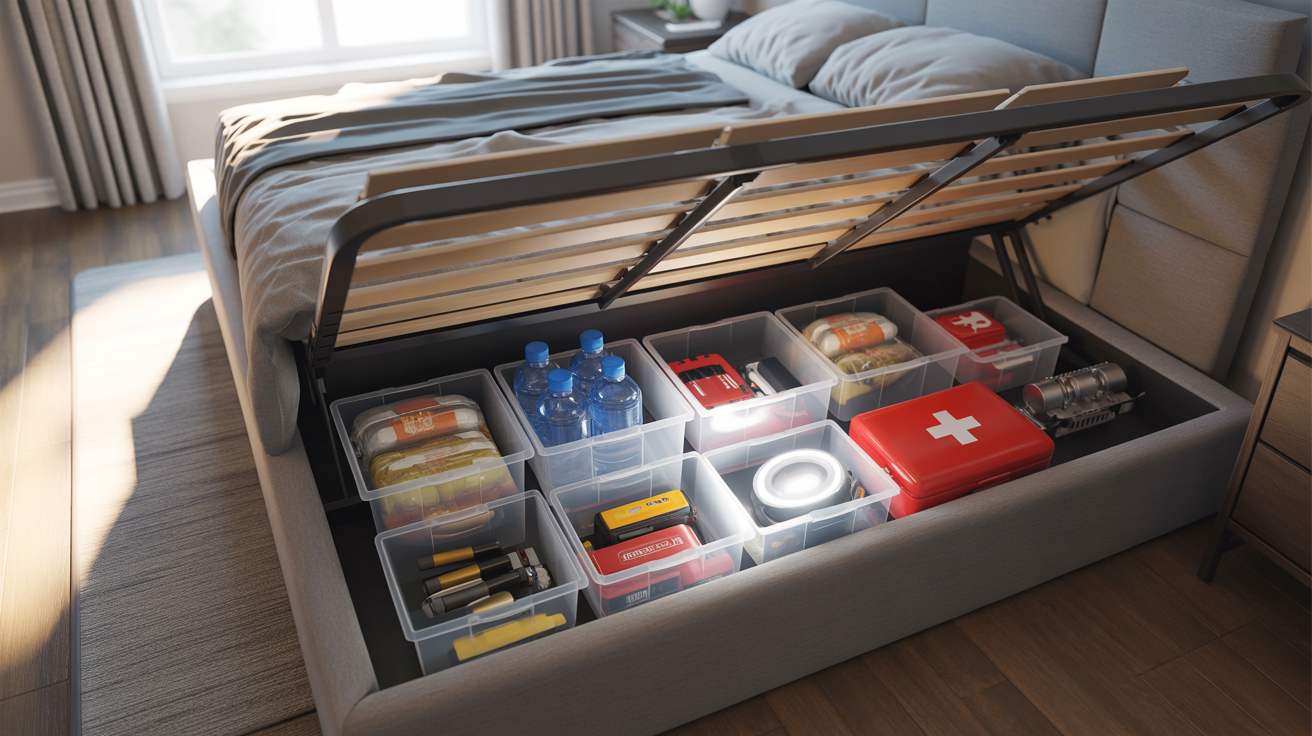
Your bed is sitting on top of roughly 20–30 square feet of prime real estate. With 8-inch bed risers, you can create enough clearance for heavy-duty rolling bins that hold water bricks, freeze-dried food pouches, and medical kits. Use vacuum-sealed bags for clothing and blankets to maximize density. Label each bin by category with color-coded tape so you can grab the right container even by flashlight.
False Panels and Hollow Spaces
Many apartments have dead space behind kitchen kick plates, inside closet walls, and beneath bathroom vanities. A removable magnetic kick plate under your kitchen cabinets can conceal flat items like water purification tablets, emergency cash, and document copies. Just be careful not to make any permanent modifications if you’re renting — adhesive-mounted solutions are your friend.
Decoy and Camouflage Storage
Storage containers disguised as everyday objects are surprisingly effective. Think: a coat closet where the “floor” is actually a hinged panel over a supply cache, or a bookshelf where several spines are actually hollow-book safes containing USB drives with digital copies of important documents. Wall clocks with hidden compartments, faux electrical outlets with small safes, and storage-equipped picture frames all serve double duty.
Maximizing Vertical Space for Gear
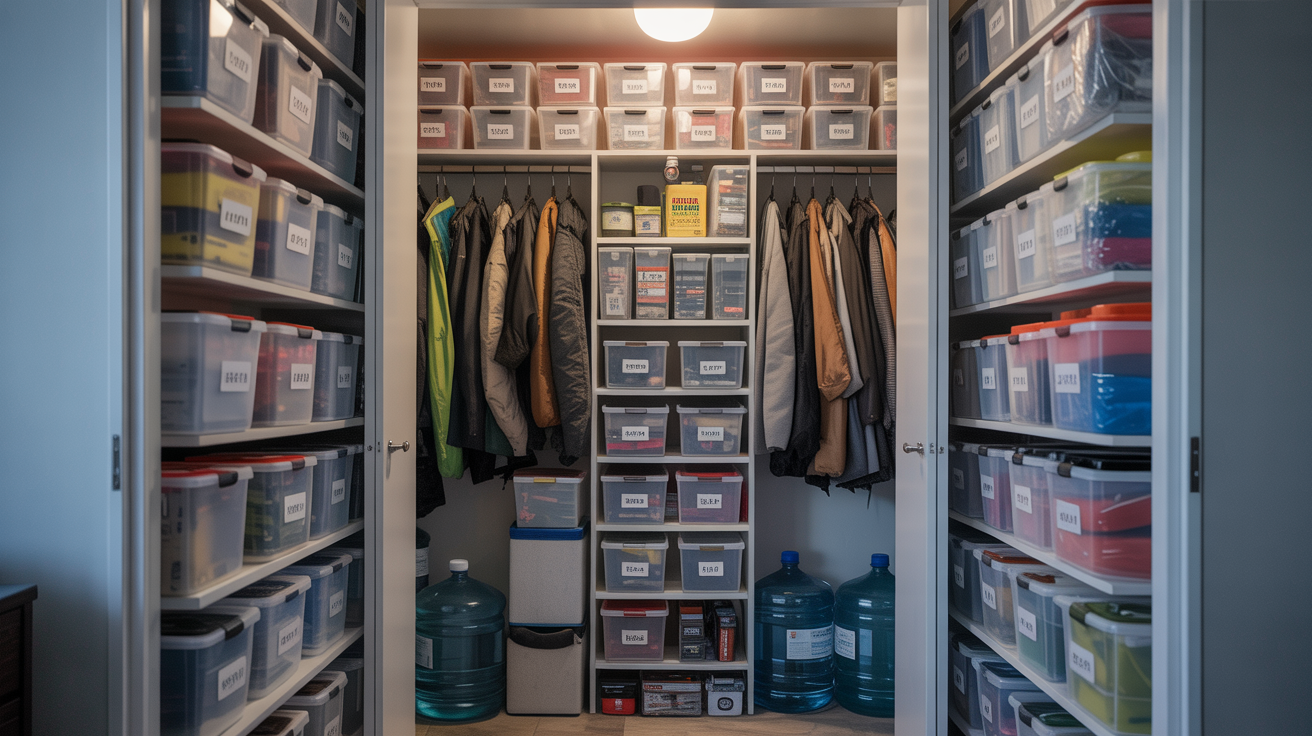
In a small apartment, your most underused dimension is height. Most people store everything below eye level, ignoring the 3–5 feet of usable wall space between shoulder height and the ceiling. Here’s how to claim it:
Wall-Mounted Shelving Systems
Industrial-style floating shelves or track-mounted systems can hold canned goods, sealed water containers, and gear bins while doubling as design features. If your landlord allows wall anchors, a single wall of floor-to-ceiling shelving can hold the equivalent of an entire closet’s worth of supplies. Style them with a mix of everyday items and prep gear in matching containers — nobody will look twice.
Over-Door and Back-of-Door Organizers
Every door in your apartment is an untapped storage surface. Heavy-duty over-door organizers on closet doors, bathroom doors, and pantry doors can hold flashlights, batteries, lighters, multi-tools, first aid supplies, and hygiene items. The back of your bedroom door alone can accommodate 15–20 pounds of gear that remains invisible when the door is open.
Ceiling and Upper-Wall Solutions
Ceiling-mounted pulley shelves, typically used in garages, work surprisingly well in apartments with 9-foot or higher ceilings. Install one in a walk-in closet to store your blackout preparedness kit or seasonal bug-out bag overhead. Tension-mounted corner shelves in closets can also exploit dead vertical space without drilling.
Multi-Use Furniture for Dual-Purpose Prep
Every piece of furniture in your apartment should earn its floor space twice. The smartest apartment gear storage hacks involve furniture that serves your daily life and your preparedness goals simultaneously.
Storage Ottomans and Benches
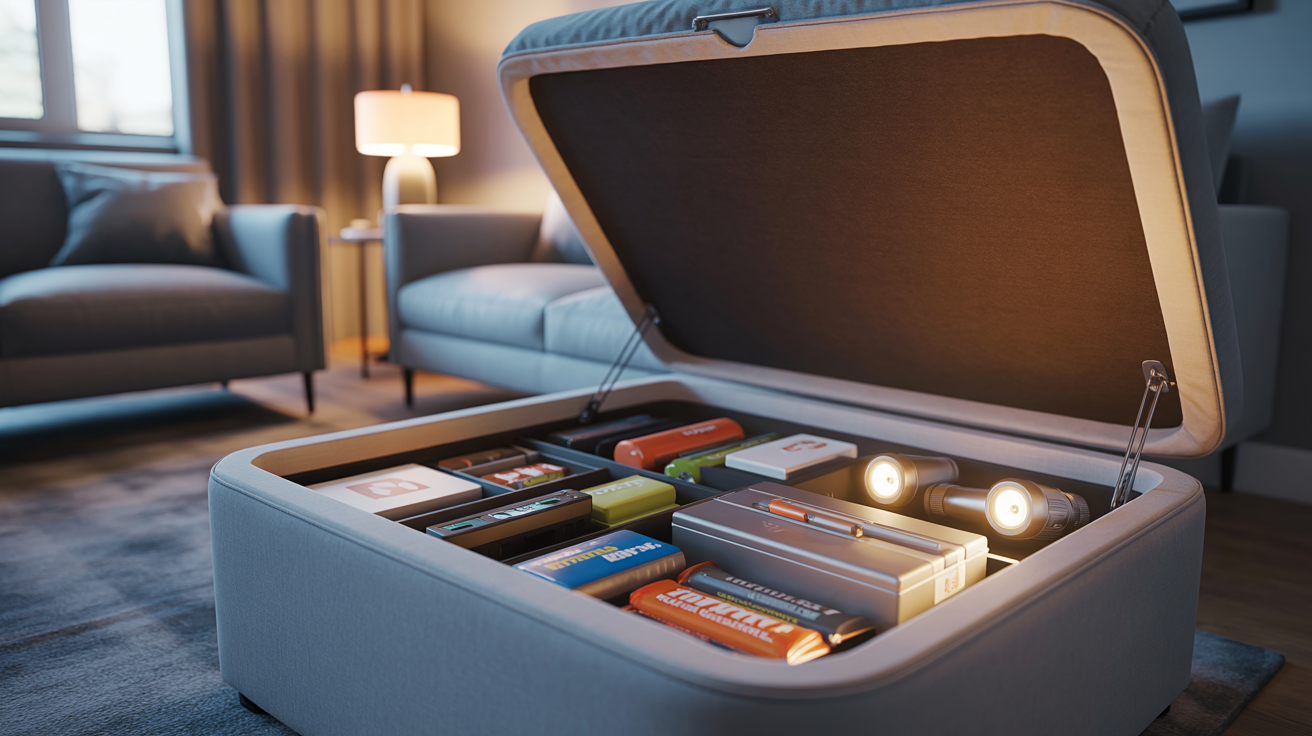
A quality storage ottoman in your living room can hold a 72-hour emergency kit, complete with food, water, a first aid kit, a flashlight, a battery bank, and even a compact portable power station. Entryway storage benches can conceal a grab-and-go bag with shoes, gloves, and a poncho right by the door — exactly where you’d need them during an evacuation.
Bed Frames with Built-In Drawers
Platform bed frames with integrated drawers offer organized, dust-protected storage for bulk supplies. Four full-size drawers beneath a queen bed can hold 200+ pounds of gear. Assign each drawer a purpose: Drawer 1 for water and hydration, Drawer 2 for food supplies (coordinate with your apartment emergency food supply plan), Drawer 3 for tools and lighting, Drawer 4 for medical and hygiene items.
Coffee Tables and Side Tables with Compartments
Lift-top coffee tables provide a hidden compartment large enough for maps, radios, batteries, and a secondary first aid kit. Choose pieces that look like normal furniture — the goal is functional concealment. Side tables with enclosed cabinets or drawers offer similar utility in bedrooms and hallways.
Best Places to Store Survival Gear in an Apartment
After testing dozens of configurations in apartments ranging from 400 to 1,100 square feet, these are the highest-value storage zones ranked by capacity, accessibility, and discretion:
- Under the bed: The single best location for bulk storage. Use risers to gain clearance. Can hold water bricks, food bins, and medical kits. Always accessible and completely hidden.
- Bedroom closet (upper shelves and floor): Ideal for stacking sealed bins. Add shelf risers to double your usable layers. Store heavier items on the floor, lighter items up high.
- Kitchen pantry (deep shelves and back wall): Perfect for rotating food stocks. Place emergency rations behind everyday pantry items for seamless integration with your emergency food supply for apartment living.
- Coat closet: Often underutilized. The floor can hold a bug-out bag, and over-door organizers can store flashlights and tools. Add a top-shelf bin for seasonal preparedness items.
- Bathroom vanity cabinet: Store hygiene kits, water purification tablets, and medications. The space under the sink is often wasted — add a small stacking shelf to double it.
- Behind furniture: The gap between a bookshelf or dresser and the wall can hold flat items like water bladders, rolled emergency blankets, and document tubes.
- Inside suitcases and luggage: Stored luggage is empty space waiting to be used. Fill suitcases with gear that you’d grab in an evacuation anyway — this doubles as a pre-packed go-bag.
- Above kitchen cabinets: The soffit space above cabinets in many apartments is accessible with a step stool. Use matching bins to store lightweight items like paper goods, freeze-dried meals, and backup hygiene supplies.
Storing Water and Food in Tight Quarters
Water and food are the bulkiest categories in any prepper’s inventory, and they’re the ones that trip up apartment dwellers the most. Here’s how to handle both without turning your apartment into a warehouse.
Water Storage Solutions
Forget the 55-gallon barrel — that’s not happening in a third-floor walkup. Instead, focus on modular, stackable solutions: water bricks (3.5 gallons each, stackable like LEGOs), slim-profile water bladders that fit under beds or behind furniture, and WaterBOBs for emergency bathtub filling. For a deeper breakdown, read our full urban water storage guide which covers apartment-specific methods in detail. A target of one gallon per person per day for 14 days is ambitious but achievable in most apartments using these modular systems.
Rotate your water supply every 6–12 months. Use your stored water for cooking and drinking, then refill. This keeps your stock fresh and integrates preparedness into your daily routine. Our water storage guide for urban dwellers includes a complete rotation schedule you can follow.
Food Storage Strategies
Freeze-dried meals, dehydrated ingredients, and vacuum-sealed dry goods offer the best calorie-to-volume ratio for apartment storage. A single under-bed bin can hold 30+ days of freeze-dried meals for one person. Supplement with canned goods stored on vertical shelving and energy bars tucked into door organizers. Keep your rotation system active — first in, first out — and coordinate with your overall apartment emergency food plan to avoid waste.
Rotation and Inventory Management
Storage without a system is just hoarding. Every apartment prepper needs a simple, repeatable inventory process that prevents expired food, dead batteries, and outdated medications from undermining their preparedness.
The Quarterly Audit Method
Set a calendar reminder for the first Saturday of every quarter. Walk through each storage zone with a checklist. Check expiration dates, test batteries and electronics, verify seal integrity on vacuum-packed items, and ensure water containers haven’t developed leaks. This 30-minute process four times a year keeps your entire system reliable.
Digital Inventory Tracking
A simple spreadsheet or inventory app beats memory every time. Track each item’s location, quantity, expiration date, and last-checked date. When something gets used or expires, update the list immediately. Some preppers use QR codes on bins that link to a shared document — scan the bin, see exactly what’s inside. This is particularly valuable in a shared space where a partner or roommate needs to find supplies during an emergency.
The “Use and Replace” Rotation System
The most sustainable approach to food and supply rotation is building it into daily life. Cook with your stored rice, beans, and canned goods regularly. Use your stored batteries in everyday devices. Drink your stored water and refill. This “eat what you store, store what you eat” philosophy eliminates waste and ensures you’re always stocked with fresh supplies.
Common Mistakes Apartment Preppers Make with Storage
Even experienced preppers fall into these traps. Avoid them to keep your system effective and your apartment livable:
- Storing everything in one location. If a pipe bursts above your closet or a fire blocks your bedroom, a single-point storage strategy means you lose everything. Distribute supplies across at least three zones in your apartment.
- Ignoring temperature and humidity. That closet against the exterior wall might get brutally hot in summer. Heat destroys food shelf life, degrades medications, and drains stored batteries. Use a cheap hygrometer to monitor conditions in your storage zones.
- Buying gear before planning storage. It’s tempting to order a month’s supply of freeze-dried meals before you’ve figured out where they’ll go. Measure your available spaces first, then purchase supplies to fit. Our ModernUrbanPrepper.com homepage has planning resources to help you think storage-first.
- Forgetting accessibility under stress. You’ll be fumbling in the dark, possibly panicked. Don’t store your flashlight behind 40 pounds of canned goods. Critical items — light, water, first aid — should be within arm’s reach from your bed and your front door.
- Neglecting opsec (operational security). Telling neighbors, posting on social media, or leaving supplies visible during maintenance visits compromises your security. In a real crisis, people remember who was “that prepper in 4B.”
- Skipping the inventory system. Without tracking what you have and when it expires, you’re guaranteed to discover spoiled food and dead batteries exactly when you need them most.
- Making permanent modifications as a renter. Drilling into load-bearing walls, cutting into cabinetry, or modifying built-in fixtures can cost you your security deposit — or your lease. Stick to tension-mounted, adhesive, and freestanding solutions.
Frequently Asked Questions
How much survival gear can you realistically store in a one-bedroom apartment?
More than you’d think. A well-organized one-bedroom apartment (roughly 650–800 sq ft) can hold a 90-day supply for two people when you fully leverage under-bed space, vertical shelving, multi-use furniture, and closet optimization. The key is modular, stackable containers and a disciplined inventory system. Water is the biggest challenge by volume — consult our urban water storage guide for apartment-specific quantities and solutions.
What are the best storage containers for apartment prepping?
Clear, stackable, airtight bins in standard sizes (think 16-quart and 66-quart) are the workhorses of apartment prepping. For food, use Mylar bags inside hard-sided bins. For water, modular water bricks (3.5 gal) outperform jugs because they stack and fit under furniture. Avoid non-standard shapes and sizes — they waste space and won’t stack efficiently.
How do I store survival supplies without my landlord or neighbors noticing?
Discretion is about integration, not deception. Use furniture with built-in storage (ottomans, platform beds, lift-top tables) so your prep gear looks like normal home furnishing. Keep supplies in matching containers on shelves alongside books and décor. Avoid having deliveries of obvious “survival” branded packages left in common areas — ship to an Amazon locker or PO box if needed.
Can I store emergency water in an apartment safely?
Yes, with the right approach. Use food-grade, BPA-free water containers designed for long-term storage. Store them away from direct sunlight and heat sources. Distribute weight — don’t put 200 pounds of water on a single shelf. Water bricks, slim bladders, and purpose-built containers are all safe for apartment use. Check our urban water storage guide for the full apartment protocol.
What should I grab first if I have to evacuate my apartment quickly?
Your pre-packed go-bag, which should live by the front door or inside your entryway closet — never deep in a back closet. It should contain 72 hours of food and water, ID and document copies, a first aid kit, cash, a phone charger, a flashlight, and seasonal clothing. If you have 60 extra seconds, grab the single bin or bag you’ve designated as your “second grab” — typically medications, additional water, and a battery-powered radio.
Ready to Build Your Apartment Prep Kit?
Start with our step-by-step checklist designed specifically for apartment dwellers. Every item, every quantity, every storage recommendation — mapped to small-space living.
Final thought: The best time to organize your apartment storage was before the last emergency. The second-best time is right now. Start with one zone — under your bed is the easiest win — and expand from there. Small, consistent effort beats a single overwhelming haul every time. Your future self, fumbling for a flashlight at 2 AM during a blackout, will thank you.
For more apartment-specific preparedness strategies, explore our guides on emergency food supply for apartments, urban water storage, and the complete ModernUrbanPrepper.com resource library.