Best Portable Power Stations for Apartments (2026 Review)
QUICK SUMMARY for Urban Preppers:
Portable power stations are the safest indoor alternative to gas generators for apartments. They produce zero emissions, run silently, and offer 500–2,000Wh battery capacity. Top 2026 picks include the Jackery Explorer 1000 Plus, EcoFlow Delta 2, and Bluetti AC70—all apartment-safe, solar-compatible, and powerful enough to sustain lights, phones, and fridges during extended blackouts.
Finding the best power station for apartments is one of the most critical decisions any urban prepper will make. When the grid goes down—whether from a severe storm, infrastructure failure, or rolling blackouts—apartment dwellers can’t rely on traditional gas generators. They’re loud, produce deadly carbon monoxide, and violate virtually every lease agreement and building code in the country. Portable power stations solve every one of these problems.
This comprehensive 2026 review covers the top indoor generators for apartments, including budget options, high-capacity units for extended outages, and solar-compatible systems that can recharge from your apartment window. Whether you’re a first-time prepper or upgrading your emergency setup, this guide will help you choose the right portable power for blackout situations. For a complete overview of apartment-specific preparedness, visit our urban preparedness hub.
Best Power Station for Apartments Comparison (2026)
| Category | Best Pick | Why It’s Best |
|---|---|---|
| Power Station | Jackery Explorer 1000 Plus | Best overall for apartments |
| Budget Option | Bluetti AC70 | Affordable, compact, reliable |
| Heavy Duty | EcoFlow Delta 2 Max | Longest runtime for extended outages |
Who This Power Station Guide Is For
- Apartment dwellers who cannot use gas generators
- City residents preparing for blackouts and grid failures
- Beginners looking for their first indoor backup power source
- Preppers upgrading their emergency power setup in 2026
Why You Need a Power Station (NOT a Gas Generator) in an Apartment
Traditional generators burn gasoline or propane to produce electricity. That combustion process creates carbon monoxide—a colorless, odorless gas that kills hundreds of Americans every year. In an enclosed apartment, even running a gas generator on a balcony creates a serious risk of CO poisoning.
Portable power stations use lithium-ion or lithium iron phosphate (LiFePO4) batteries to store electricity. They produce:
- Zero emissions: No carbon monoxide, no exhaust fumes, completely safe indoors
- Zero noise: Silent operation—no engine rumble disturbing neighbors at 2 AM
- Zero fire risk from fuel: No gasoline storage, no fuel spills, no flammable liquids
- Zero lease violations: Building managers can’t object to a battery sitting in your closet
The tradeoff is runtime. A gas generator can run indefinitely with fuel. A power station has a fixed capacity measured in watt-hours (Wh). But for apartment preppers, the safety advantages far outweigh the runtime limitations—especially when paired with solar panels for renewable charging. For a deeper dive into apartment blackout preparedness, read our complete blackout preparedness guide.
Top 3 Picks: Best Power Station for Apartments (Detailed Review)
After testing dozens of units and analyzing 2026 market data, these are the three best portable power stations for apartment living:
1. Jackery Explorer 1000 Plus — Best Overall
| Spec | Detail |
|---|---|
| Capacity | 1,264 Wh |
| Output | 2,000W (4,000W surge) |
| Battery Type | LiFePO4 |
| Weight | 31.5 lbs |
| Lifecycle | 4,000+ cycles to 70% capacity |
| Solar Input | 800W max |
| Price Range | $1,099–$1,299 |
The Jackery Explorer 1000 Plus hits the sweet spot for apartment preppers. Its 1,264Wh capacity can power a full-size refrigerator for 1.5 hours, charge a smartphone 100+ times, or run LED lighting for 4+ days straight. The LiFePO4 battery chemistry means it’s safer than older lithium-ion units—no thermal runaway risk—and it lasts 4,000+ charge cycles, meaning daily use for over a decade.
The 2,000W continuous output handles everything from microwaves to CPAP machines. Its expandable battery ecosystem lets you add extra battery packs (up to 5,000Wh total) without buying a whole new unit. For most apartment preppers, this is the one to buy.
2. EcoFlow Delta 2 Max — Best for Extended Blackouts
| Spec | Detail |
|---|---|
| Capacity | 2,048 Wh (expandable to 6,144 Wh) |
| Output | 2,400W (4,800W surge) |
| Battery Type | LiFePO4 |
| Weight | 50.6 lbs |
| Lifecycle | 3,000+ cycles to 80% capacity |
| Solar Input | 1,000W max |
| Price Range | $1,599–$2,099 |
If you live in an area prone to multi-day outages—ice storms, hurricanes, or grid instability—the EcoFlow Delta 2 Max is the heavy-duty option. Its massive 2,048Wh base capacity can expand to 6,144Wh with add-on batteries, providing enough power to run essential apartment systems for 3–5 days without any recharging.
The unit features ultra-fast AC charging (0–80% in 68 minutes), WiFi app control for monitoring battery status remotely, and X-Boost technology that lets it power devices up to 3,000W by intelligently managing wattage. The downside is weight—at 50.6 lbs, it’s not easily portable. But for a stationary apartment backup system, it’s unmatched.
3. Bluetti AC70 — Best Budget Option
| Spec | Detail |
|---|---|
| Capacity | 768 Wh |
| Output | 1,000W (2,000W surge) |
| Battery Type | LiFePO4 |
| Weight | 22.5 lbs |
| Lifecycle | 3,000+ cycles to 80% capacity |
| Solar Input | 500W max |
| Price Range | $499–$599 |
For preppers on a budget, the Bluetti AC70 delivers exceptional value. At under $600, you get a LiFePO4 battery with 768Wh capacity—enough to charge smartphones 60+ times, run LED lights for 3+ days, or keep a small fan running for 15+ hours. It weighs just 22.5 lbs, making it one of the lightest units in its class and easy to move between rooms or take during evacuation.
The 1,000W continuous output handles most apartment essentials: lights, fans, phone chargers, laptops, and small cooking appliances. It won’t run a full-size fridge or microwave, but for basic emergency power during a 24–48 hour blackout, it’s the best value in 2026.
What to Look for: Capacity, Lifecycles, and Safety
Choosing the best power station for apartments comes down to four critical factors:
Battery Capacity (Wh)
Watt-hours determine how long your power station lasts. Here’s a practical reference:
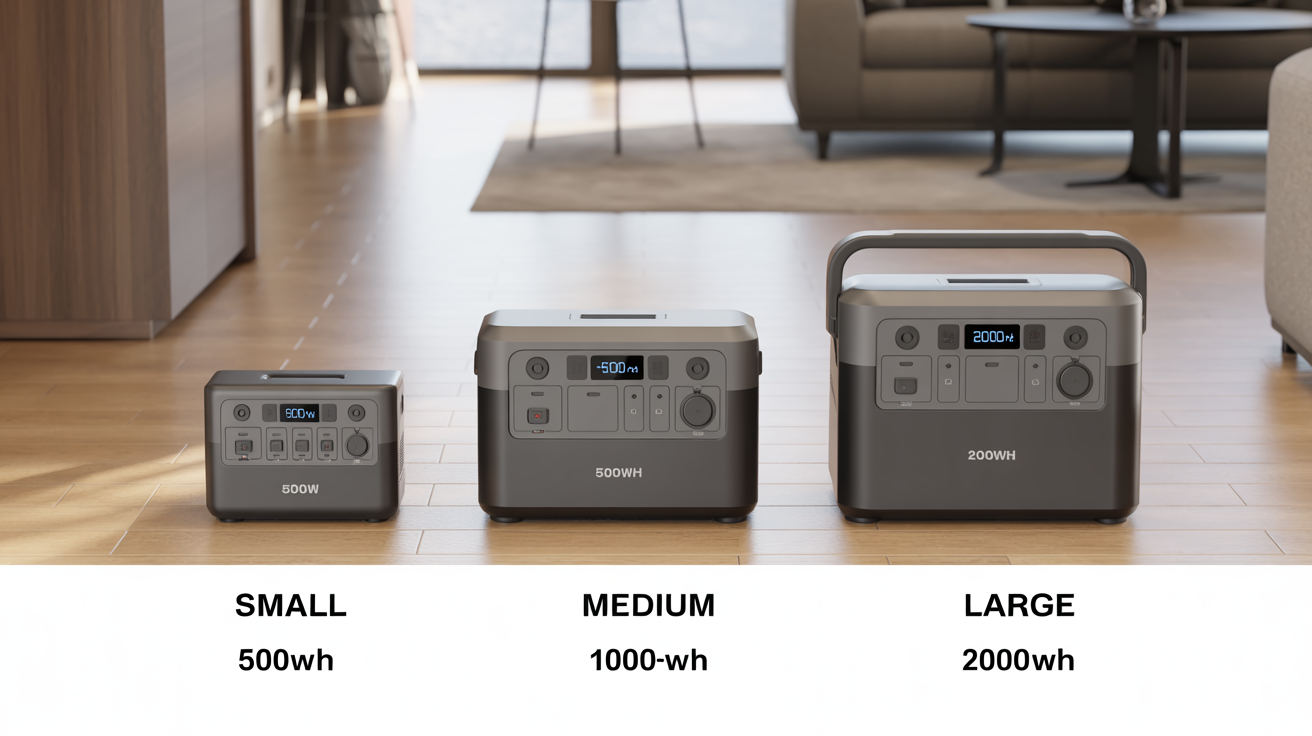
- 500 Wh: Charges 50 smartphones, runs LED lights for 40+ hours, powers a laptop for 8+ hours
- 1,000 Wh: Runs a mini-fridge for 10+ hours, powers a CPAP machine for 2+ nights, charges a laptop 15+ times
- 2,000 Wh: Runs a full-size fridge for 20+ hours, powers essential apartment systems for 2–3 days
For most apartment preppers, 1,000Wh is the minimum recommended capacity. It provides enough power for 24–48 hours of essential use without rationing.
Battery Chemistry
- LiFePO4 (Lithium Iron Phosphate): RECOMMENDED. 3,000–4,000 cycle life, extremely stable, minimal fire risk, heavier but safer
- NMC (Lithium-Ion): Lighter, cheaper, but only 500–800 cycle life and higher thermal runaway risk
For indoor apartment use, always choose LiFePO4. The safety margin is non-negotiable when you’re sleeping 10 feet from the battery.
Output Wattage
Continuous output determines what devices you can run simultaneously:
- 500W: Phones, lights, fans, laptops
- 1,000W: Above + small appliances, CPAP, routers
- 2,000W+: Above + microwave, full-size fridge, power tools
Solar Compatibility
Any power station worth buying in 2026 should accept solar panel input. This transforms a finite battery into a renewable power source—critical for extended outages. Look for units with 200W+ solar input for practical recharging speeds.
These specs matter even more when you’re selecting gear as part of a broader emergency setup. Our best urban survival gear guide covers how power stations fit into your overall apartment preparedness strategy.
Best High-Capacity Power Station for Long Blackouts
Extended blackouts lasting 3–7 days require serious power reserves. Beyond the EcoFlow Delta 2 Max, consider these high-capacity systems:
Bluetti AC200MAX — The Expandable Workhorse
- Capacity: 2,048Wh base, expandable to 8,192Wh with B230 batteries
- Output: 2,200W continuous
- Solar Input: 900W
- Price: $1,699–$1,999
The AC200MAX shines in its expandability. Start with the base unit and add B230 expansion batteries as budget allows. A fully expanded system (8,192Wh) can power essential apartment systems for an entire week without solar recharging—or indefinitely with adequate solar input.
Goal Zero Yeti 3000X — Premium Reliability
- Capacity: 2,982Wh
- Output: 2,000W continuous
- Solar Input: 600W
- Price: $3,199–$3,499
Goal Zero commands a premium price but delivers military-grade build quality and exceptional customer support. The Yeti 3000X is built for people who want to buy once and never worry again. Its WiFi monitoring app provides real-time power consumption data so you can optimize usage during emergencies. For those who are serious about long-term blackout preparedness, this unit provides unmatched peace of mind.
Best Compact Power Station for Budget Survival
Not everyone needs 2,000Wh of capacity. If you’re prepping on a budget, these compact units provide essential power without the premium price tag:
Jackery Explorer 300 Plus — Ultra-Portable
- Capacity: 288Wh
- Output: 300W
- Weight: 7.7 lbs
- Price: $229–$279
At under $280, the Explorer 300 Plus is the entry point for apartment preppers. It weighs less than a gallon of water and can charge your phone 25+ times or run LED lights for 30+ hours. Perfect for short outages and as a grab-and-go evacuation power source.
Anker 521 PowerHouse — Everyday Value
- Capacity: 256Wh
- Output: 200W
- Weight: 8.2 lbs
- Price: $199–$249
Anker’s reputation for quality electronics extends to their power stations. The 521 PowerHouse is rock-solid, charges via USB-C (use your laptop charger), and includes a built-in LED light. It’s an excellent secondary unit to complement a larger primary power station.
Remember that your power station is just one component of a complete urban survival gear setup. Pair it with the right lighting, communication, and cooking tools for full coverage.
Solar Charging in an Apartment: Is It Possible?
The short answer: yes, but with realistic expectations. Apartment solar charging won’t match a rooftop installation, but it can meaningfully extend your power station’s runtime during emergencies.
Where to Place Solar Panels in an Apartment
- South-facing windows: Best option. Place foldable panels on windowsills or hang them using suction cups. Expect 60–70% of rated output due to glass filtering UV.
- Balconies: Ideal if you have one. Lean panels against railing for maximum sun exposure. Secure against wind.
- Rooftop access: If your building allows rooftop access, this provides the best solar exposure. Run an extension cable to your apartment.
Recommended Solar Panels for Apartments
- Jackery SolarSaga 100W: Foldable, 23% efficiency, weighs 10 lbs, fits in a window easily
- Renogy E.FLEX 100W: Ultra-thin, flexible, can hang from windows with included hooks
- BigBlue 63W: Budget-friendly at under $150, USB outputs for direct device charging
Realistic Solar Charging Times
With a single 100W panel in a south-facing window (accounting for glass, angle, and weather):
- 500Wh station: Full charge in 10–12 hours of sunlight
- 1,000Wh station: Full charge in 20–24 hours (2 days of sun)
- 2,000Wh station: Full charge in 40+ hours (4–5 days)—consider two panels
Solar won’t fully replace grid charging, but it provides a critical lifeline during extended outages. Even partial daily recharging (200–300Wh) can keep essential devices running indefinitely.
Safety Tips for Using Large Batteries Indoors
While LiFePO4 power stations are inherently safe, following these guidelines minimizes risk:
- Temperature management: Store and operate between 32°F–113°F. Avoid direct sunlight on the unit. Don’t place near radiators or heating vents.
- Ventilation: While power stations don’t produce exhaust, they generate heat during charging and heavy discharge. Ensure 6+ inches of clearance on all sides.
- Water protection: Keep away from sinks, bathtubs, and windows where rain could enter. Water + high-voltage batteries = danger.
- Charging discipline: Don’t leave units charging unattended overnight until you’ve confirmed they auto-shutoff at 100%. Most modern units do, but verify.
- Weight awareness: A 50-lb power station on a high shelf is a crushing hazard during earthquakes. Store on floor level or low, sturdy furniture.
- Fire extinguisher: Keep a Class B fire extinguisher (rated for electrical fires) within reach. A 5-lb ABC extinguisher costs under $30 and covers all fire types.
For more apartment safety protocols during emergencies, check our urban prepper checklist which includes a complete safety gear inventory.
Common Mistakes When Buying Portable Power Stations
- Choosing NMC batteries over LiFePO4 for indoor use—safety should always come first
- Buying too little capacity and running out during the first real blackout
- Forgetting to buy solar panels for renewable recharging
- Not testing the unit under real load before an actual emergency
- Ignoring weight—a 60-lb unit on a high shelf is dangerous in an earthquake
- Buying cheap off-brand units with no UL/FCC certification
FAQ: Common Questions About Apartment Power Stations
Can I use a gas generator in my apartment during a blackout?
Absolutely not. Gas generators produce carbon monoxide, which is lethal in enclosed spaces. Even using one on a balcony or near an open window is extremely dangerous. Portable power stations are the only safe indoor alternative. They use battery power with zero emissions, zero noise, and zero fire risk from fuel combustion.
How long will a power station keep my fridge running?
A typical apartment refrigerator draws 100–200W while running (compressor cycles on and off). With a 1,000Wh power station, expect 8–15 hours of fridge runtime depending on the model and ambient temperature. A 2,000Wh unit extends that to 20–30 hours. Keep the fridge closed as much as possible to maximize efficiency.
Is it worth buying solar panels for an apartment?
Yes, if you have a south-facing window or balcony. A single 100W panel can recover 300–500Wh per day in favorable conditions—enough to keep phones charged, lights on, and critical devices running during an extended outage. Solar panels transform a power station from a finite resource into a renewable system.
What’s the difference between watts (W) and watt-hours (Wh)?
Watts measure power draw (how much energy a device uses per moment). Watt-hours measure total energy capacity (how much energy the battery stores). A 100W light bulb running for 10 hours consumes 1,000Wh. So a 1,000Wh power station could run that bulb for exactly 10 hours.
How often should I charge my power station when not in use?
Maintain your power station between 50–80% charge during storage. Check and top off every 3–4 months. LiFePO4 batteries self-discharge very slowly (about 2–3% per month), so they hold charge well. Never store at 0% for extended periods—deep discharge damages battery cells permanently.
Build Your Apartment Power Backup Today
Don’t wait for the next blackout to realize you need backup power. Start with a reliable power station, add solar panels when budget allows, and test your system regularly. Use our urban prepper checklist to build your complete apartment emergency system step-by-step.