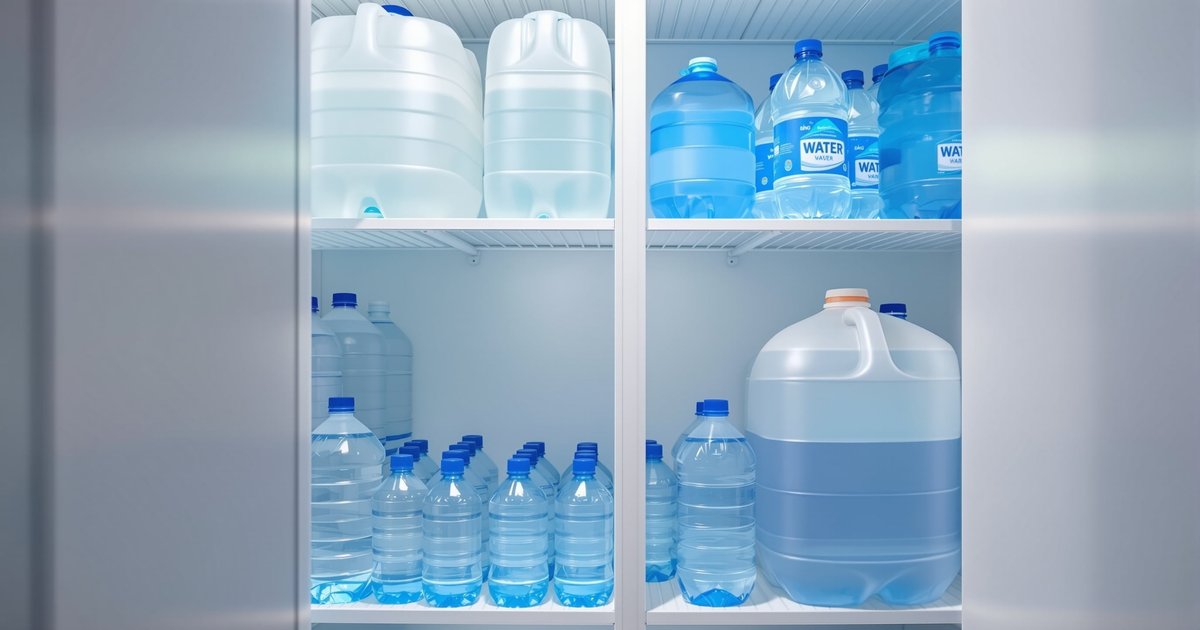
If you live in an apartment, urban water storage probably isn’t the first thing on your mind. But when a pipe bursts, a boil-water notice drops, or a natural disaster knocks out municipal supply, the tap stops working for everyone — renters included. The good news: you don’t need a basement or a backyard to build a reliable emergency water supply. This guide breaks down exactly how much water to store, which containers work in tight spaces, and how to keep your supply fresh — all tailored for urban preparedness in apartments and condos.
Quick Water Storage Rules
- Minimum: 1 gallon per person per day (FEMA / CDC guideline)
- Realistic target: 1.5–2 gallons per person per day for drinking, cooking, and hygiene
- Baseline goal: 3-day supply per household member
- Better goal: 14-day (2-week) supply per household member
- Rotation schedule: Every 6 months for self-filled containers; check expiry for store-bought
- Storage temp: 50 °F–70 °F, away from sunlight and chemicals
- Containers: Food-grade plastic only — no milk jugs, no glass
How Much Water Do You Need Per Person?
Both FEMA and the CDC recommend storing at least one gallon of water per person per day. That covers basic drinking and minimal sanitation. But “one gallon” is a survival floor, not a comfort level. Here’s a more practical breakdown:
- Drinking: 0.5–1 gallon per day (more in summer or if you’re active)
- Cooking / food prep: ~0.5 gallon per day
- Basic hygiene (hand-washing, brushing teeth): ~0.5 gallon per day
- Sanitation (flushing, cleaning): ~0.5 gallon per day
That puts a realistic daily need closer to 1.5–2 gallons per person. For a two-person household aiming at a 14-day supply, that’s 42–56 gallons. Sounds like a lot? It is — but spread across several storage spots in an apartment, it’s completely doable.
Adjust for Your Household
Certain household members need more water than the baseline:
- Nursing mothers: Add 0.5–1 gallon per day
- Children under 5: Slightly less volume, but never cut below 0.5 gallon/day
- Anyone on medication or ill: Plan for extra hydration needs
- Pets: Dogs need roughly 1 oz per pound of body weight daily; cats need about half that
- Hot climates: Increase your estimate by 50 % during summer months
Figuring out how much water to store per person is the foundation of every apartment water storage plan. Get this number right first, then work backward to containers and space.
Best Containers for Urban Water Storage
Not every container is safe for long-term water storage. The wrong material can leach chemicals, harbor bacteria, or simply fall apart. Here are the best options ranked by practicality for apartment dwellers.
Top Picks for Apartments
- Store-bought bottled water (cases of 16.9 oz or 1-gallon jugs) — The simplest option. Commercially sealed, long shelf life (1–2 years), easy to stack. Buy a case every grocery trip until you hit your target.
- 5-gallon food-grade water jugs — Widely available at camping and surplus stores. Compact enough for a closet floor, heavy enough to stay put. Look for BPA-free HDPE (recycling symbol #2).
- 7-gallon Aqua-Tainer or similar rigid containers — Designed specifically for water storage. Built-in spigots make dispensing easy without contamination.
- WaterBricks (3.5-gallon stackable blocks) — Modular, stackable, and built for tight spaces. You can configure them like building blocks under a desk or along a wall.
- Collapsible water bladders (5–7 gallons) — Fold flat when empty. Great for renters who move frequently or want a backup they can toss in a closet.
Containers to Avoid
- Milk jugs: Residual proteins breed bacteria no matter how well you clean them
- Juice containers: Sugars left behind cause the same problem
- Glass bottles: Heavy, fragile, and dangerous in an earthquake or blackout
- Non-food-grade plastics: May leach harmful chemicals over months
- Any container that previously held chemicals: Bleach bottles, detergent jugs, pesticide containers — never reuse these
💧 Recommended Water Storage Solutions
Based on our extensive research and testing, these are the top-rated water storage containers for apartment preppers. Compact, BPA-free, and built for long-term storage.
View Top Water Containers on Amazon →As an Amazon Associate, we earn from qualifying purchases. This helps support our research at no extra cost to you.
If you’re filling your own containers, sanitize them first: mix 1 teaspoon of unscented liquid household bleach (5 %–9 % sodium hypochlorite) per quart of water, swish to coat all surfaces, wait 30 seconds, pour it out, and air-dry before filling.
Where to Store Water in Small Apartments
Space is the biggest obstacle for apartment water storage. The trick is thinking vertically and using dead zones — areas that already exist but hold nothing useful. Here are proven spots:
High-Value Storage Locations
- Under beds: A twin bed frame can hide 10–20 gallons in flat WaterBricks or cases of bottled water. This is the single best spot in most apartments.
- Closet floors: Two 5-gallon jugs per closet adds up fast — a coat closet and a bedroom closet give you 20 gallons without losing hanging space.
- Behind furniture: The gap between a couch and the wall, or behind a bookshelf, can fit a row of 1-gallon jugs.
- Inside a bench or ottoman: Hollow storage furniture does double duty. Line the inside with a few WaterBricks.
- Top of kitchen cabinets: If there’s a gap between your cabinets and the ceiling, use it for sealed gallon jugs or boxed water.
- Laundry area / utility closet: A 7-gallon container beside the water heater barely takes up floor space.
- Pantry shelves: Dedicate one shelf to water — cases of bottled water integrate naturally with food storage. Consider pairing this with your emergency food supply for a complete kit.
Weight Considerations
Water weighs about 8.3 pounds per gallon. A 56-gallon, two-week supply for two people tips the scale at roughly 465 pounds. That weight needs to be distributed — don’t dump it all in one spot on an upper floor. Spread containers across multiple rooms, and keep heavy jugs on the floor or low shelves, never on high racks that could topple.
Also check your lease. Most standard apartment leases don’t restrict water storage, but if you’re storing more than 50 gallons in one room, it’s worth confirming your renter’s insurance covers water damage just in case a container leaks.
Water Rotation & Shelf Life
Stored water doesn’t “expire” the way food does — water molecules don’t go bad. What happens is the container degrades, the seal weakens, or contaminants grow. Here’s how to keep your supply safe to drink.
Rotation Schedule by Container Type
- Commercially bottled water: Follow the printed expiration date, typically 1–2 years from manufacture
- Self-filled food-grade containers (tap water): Rotate every 6 months
- Tap water treated with bleach (8 drops per gallon): Good for up to 12 months; rotate annually
- Water with commercial preservative additive: Can last up to 5 years; inspect every 2 years
How to Rotate Without Wasting Water
Rotation doesn’t mean pouring water down the drain. Use a first-in, first-out approach:
- Label every container with the fill date using a permanent marker
- When rotation day comes, use the oldest water for plants, cooking, cleaning, or pet bowls
- Refill the emptied containers with fresh tap water
- Move the newly filled containers to the back; older ones stay in front
- Set a recurring calendar reminder every 6 months so you never forget
Signs Your Stored Water Has Gone Bad
If you notice any of the following, purify or discard the water:
- Cloudy or discolored appearance
- Musty, sulfuric, or chemical smell
- Floating particles or sediment
- Slimy film on inside container walls
- Container is cracked, bulging, or the seal is broken
Emergency Water Backup Options
Even the best emergency water supply apartment plan can fall short if a crisis lasts longer than expected. Build redundancy with these backup methods:
1. Water Filtration
A portable gravity filter (like a Berkey or Sawyer) can turn questionable tap water or rainwater into safe drinking water. These don’t require electricity — a huge advantage during a power outage. Keep one alongside your stored water as a force multiplier.
2. Water Purification Tablets
Iodine or chlorine dioxide tablets weigh almost nothing and can treat water from any freshwater source. A single bottle of 50 tablets can purify 25 gallons. Toss a bottle in your emergency kit as a last-resort option.
3. Your Water Heater Tank
Most apartment water heaters hold 30–50 gallons of drinkable water. In an emergency, turn off the power or gas to the heater, let it cool, then open the drain valve at the bottom into a clean container. This is water you already have — you just need to know it’s there.
4. Bathtub Bladder (WaterBOB)
If you get advance warning of an incoming emergency (hurricane, winter storm), a bathtub bladder lets you fill your tub with up to 100 gallons of clean water in minutes. The bladder keeps the water sealed and sanitary — far better than an open tub.
5. Boiling
If you have a gas stove or a camping stove, boiling is the most reliable way to kill pathogens. Bring water to a rolling boil for 1 full minute (3 minutes above 6,500 feet elevation). Boiling won’t remove chemicals or heavy metals, but it handles biological contaminants effectively.
Common Mistakes to Avoid
Most apartment water storage failures come down to a handful of repeated errors. Avoid these and you’ll be ahead of 90 % of people:
- Storing water near chemicals. Plastic absorbs fumes. Water stored next to cleaning supplies, paint, or gasoline under the sink can become contaminated even if the container is sealed. Always keep water separate from household chemicals.
- Using the wrong containers. Recycled milk jugs are the most common mistake. They breed bacteria. Use only food-grade containers rated for long-term storage.
- Forgetting to rotate. Water stored for two years in a reused soda bottle is a liability, not an asset. Set a phone reminder and follow the 6-month rule for self-filled containers.
- Storing everything in one spot. If a pipe leak or earthquake damages one storage area, you lose everything. Spread your supply across at least two rooms.
- Ignoring weight distribution. A 5-gallon jug weighs over 40 pounds. Placing multiple heavy containers on a single shelf or rickety furniture is asking for a collapse — and a flood.
- No backup plan. Stored water is step one, not the whole plan. Without a filter, purification tablets, or knowledge of alternative sources, you’re stuck when your supply runs out.
- Waiting for “the right time.” Emergencies don’t send calendar invites. Start with a single case of bottled water this week. You can optimize your apartment water storage setup over the following months.
Frequently Asked Questions
How much water should I store per person in an apartment?
Store at least 1 gallon per person per day as a minimum. For realistic comfort — covering drinking, cooking, and hygiene — plan for 1.5 to 2 gallons per person per day. A 14-day supply for one person is 14–28 gallons, which fits easily under a bed or in a closet.
Can I store water in plastic bottles long term?
Yes, but only in food-grade plastic containers (BPA-free HDPE, recycling symbol #2). Commercially sealed bottled water lasts 1–2 years. Self-filled containers should be rotated every 6 months. Never reuse milk jugs, juice containers, or non-food-grade plastics for water storage.
Where is the best place to store water in a small apartment?
Under beds is the single most efficient spot — you can store 10–20 gallons in flat containers without losing any living space. Closet floors, behind furniture, the tops of kitchen cabinets, and hollow storage ottomans are also excellent choices. Distribute weight across multiple rooms.
Does stored water go bad?
Water itself doesn’t expire, but containers degrade over time, seals can weaken, and contaminants can grow. Store water between 50 °F and 70 °F in a dark location, and rotate self-filled containers every 6 months. If stored water looks cloudy, smells off, or the container is damaged, purify or discard it.
What should I do if I run out of stored water during an emergency?
Use your water heater tank (30–50 gallons of drinkable water), a portable gravity filter for available water sources, or water purification tablets. Boiling water for 1 minute kills most pathogens. Having at least one backup method alongside your stored supply is essential for apartment preparedness.
🏆 Our #1 Pick for Apartment Water Storage
After testing 15+ water storage solutions, the WaterBrick stackable containers remain our top recommendation for apartment preppers — space-efficient, durable, and BPA-free.
Check Current Price on Amazon →Affiliate links help support this site at no cost to you. See our editorial policy.