Quick Summary: Prepping on a budget apartment doesn’t mean cutting corners on safety. With smart prioritization, dollar store finds, and a strategic $100 starter kit, you can build a reliable emergency supply system — no garage, no bunker, and no big paycheck required.
Who This Guide Is For
This guide is written for apartment renters and small-space dwellers who want to start prepping on a budget apartment style — without overwhelming their wallets or their closets. Whether you’re a college student, a young professional, or a family living paycheck to paycheck, emergency preparedness shouldn’t be a luxury. If you’ve been putting off prepping because you think it requires a basement full of gear and thousands of dollars in supplies, this guide will change your mind. You can start today with what you already have, build gradually, and still be far more prepared than 90% of your neighbors. For a complete overview of what to prioritize, start with our urban prepper checklist.
Why Budget Prepping Works for Apartments
There’s a persistent myth in the prepping community that real preparedness requires a rural homestead, a six-month food stockpile, and thousands of dollars in tactical gear. The truth is far more practical. Apartment preppers actually have several advantages when working with a tight budget.
First, smaller spaces force smarter decisions. When you can’t hoard everything, you learn to prioritize the supplies that deliver the most value per square foot and per dollar. A studio apartment prepper with $200 in carefully chosen gear can outperform a suburban prepper with $2,000 in random impulse buys.
Second, apartments are inherently more energy-efficient. Smaller volumes of air are easier to heat or cool during power outages, and shared walls provide insulation. Your blackout preparedness apartment plan becomes simpler and cheaper when you’re not trying to heat 2,500 square feet.
Third, urban locations mean closer proximity to resources — hospitals, fire stations, community distribution centers, and mutual aid networks. Budget prepping in an apartment isn’t about surviving alone in the wilderness. It’s about bridging the gap between a disruption and when help or normalcy returns, which in urban settings is typically 3 to 14 days.
The $100 Starter Kit: What to Buy First
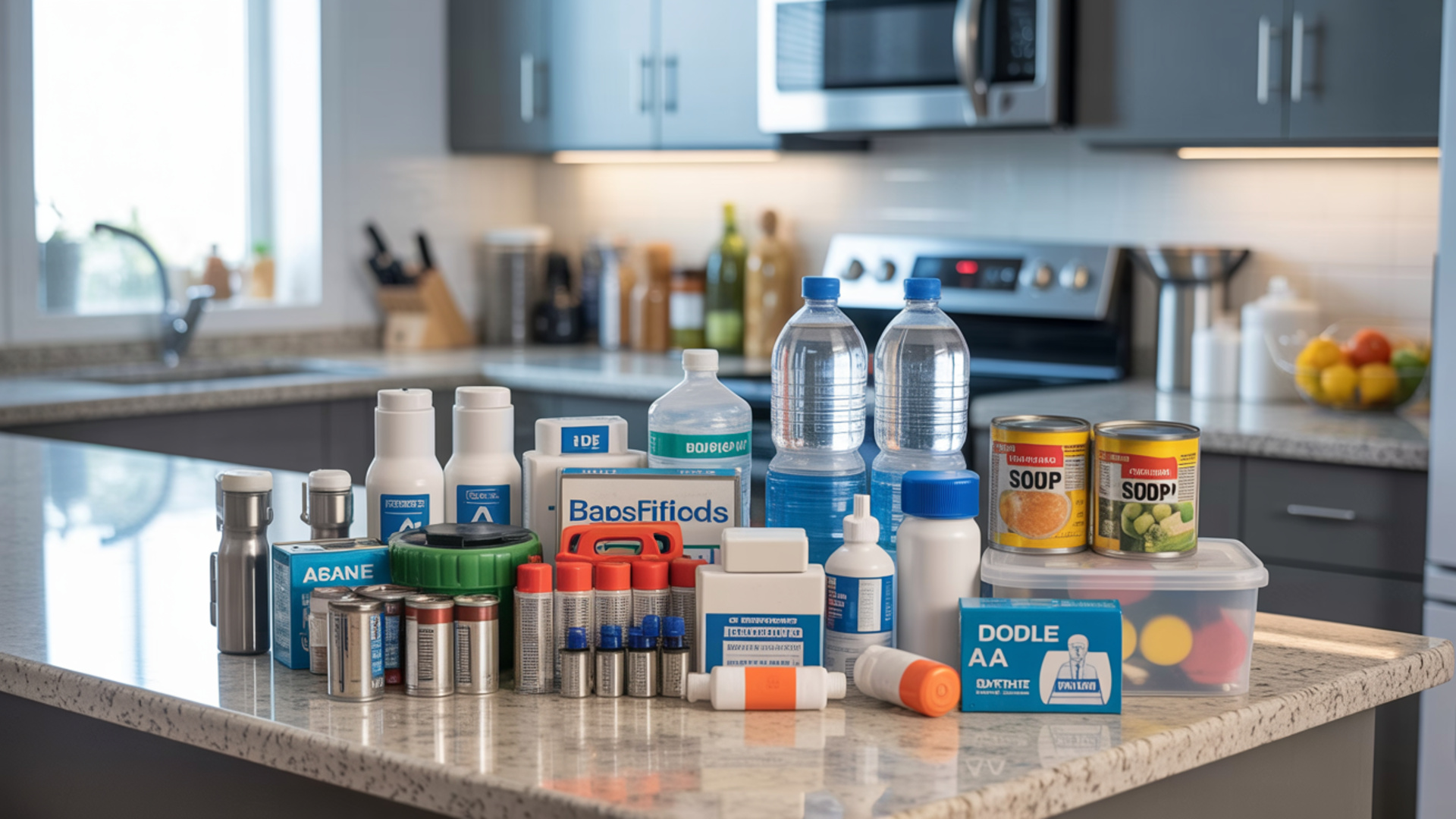
If you only have $100 to spend on emergency preparedness, here’s exactly how to allocate it for maximum impact. This kit covers the critical survival priorities: water, food, light, first aid, and communication.
| Item | Estimated Cost | Priority Level | Why It Matters |
|---|---|---|---|
| 7 gallons of water (store-bought jugs) | $8–$10 | Critical | Covers 1 person for 3–4 days of drinking and basic hygiene |
| Canned food assortment (beans, tuna, soup, vegetables) | $20–$25 | Critical | Shelf-stable protein and calories for 5–7 days |
| Manual can opener | $3 | Critical | Useless cans without it — the most forgotten prep item |
| LED flashlight + extra batteries | $8–$12 | High | Primary light source during power outages |
| Basic first aid kit | $10–$15 | High | Bandages, antiseptic, pain relievers, medical tape |
| Battery-powered or hand-crank radio | $15–$20 | High | Information access when cell towers and internet fail |
| Portable phone charger (10,000 mAh) | $12–$15 | High | Keeps your most important communication tool alive |
| Duct tape + trash bags + zip ties | $5–$7 | Medium | Multi-purpose repair, sealing, and sanitation tools |
| Copies of important documents in waterproof bag | $3–$5 | Medium | Insurance, ID, and medical records protected and portable |
Total: $84–$112. This isn’t a fantasy list — it’s a single trip to Walmart or Target. For detailed recommendations on which gear brands hold up best, check our best urban survival gear 2026 roundup. You can also expand on the food portion with our emergency food supply apartment guide.
Dollar Store Emergency Supplies That Actually Work
Dollar stores are a budget prepper’s secret weapon. Not everything on those shelves is worth buying, but certain items are identical or nearly identical to what you’d pay three to five times more for elsewhere. Here’s what’s genuinely worth grabbing:
Winners at the dollar store:
- Emergency candles — Long-burn candles for $1.25 are functionally identical to hardware store versions at $4–$6.
- Lighters and matches — Buy several. Distribute them across your apartment and go-bag.
- Latex or nitrile gloves — Essential for first aid and sanitation. Quality is perfectly adequate.
- Zip-lock storage bags — Waterproofing documents, organizing small supplies, storing opened food.
- Bandages and gauze — Basic wound care supplies that meet the same standards as pharmacy brands.
- Aluminum foil — Cooking, signaling, heat reflection, and food storage.
- Spray bottles — Fill with diluted bleach for sanitizing surfaces post-disaster.
- Notebook and pencils — Communication and record-keeping when digital tools fail.
Skip at the dollar store: Batteries (often near-dead shelf life), flashlights (unreliable LEDs), and multi-tools (break under minimal pressure). Invest in quality versions of these from reputable retailers.
Building a Cheap Prepper Pantry
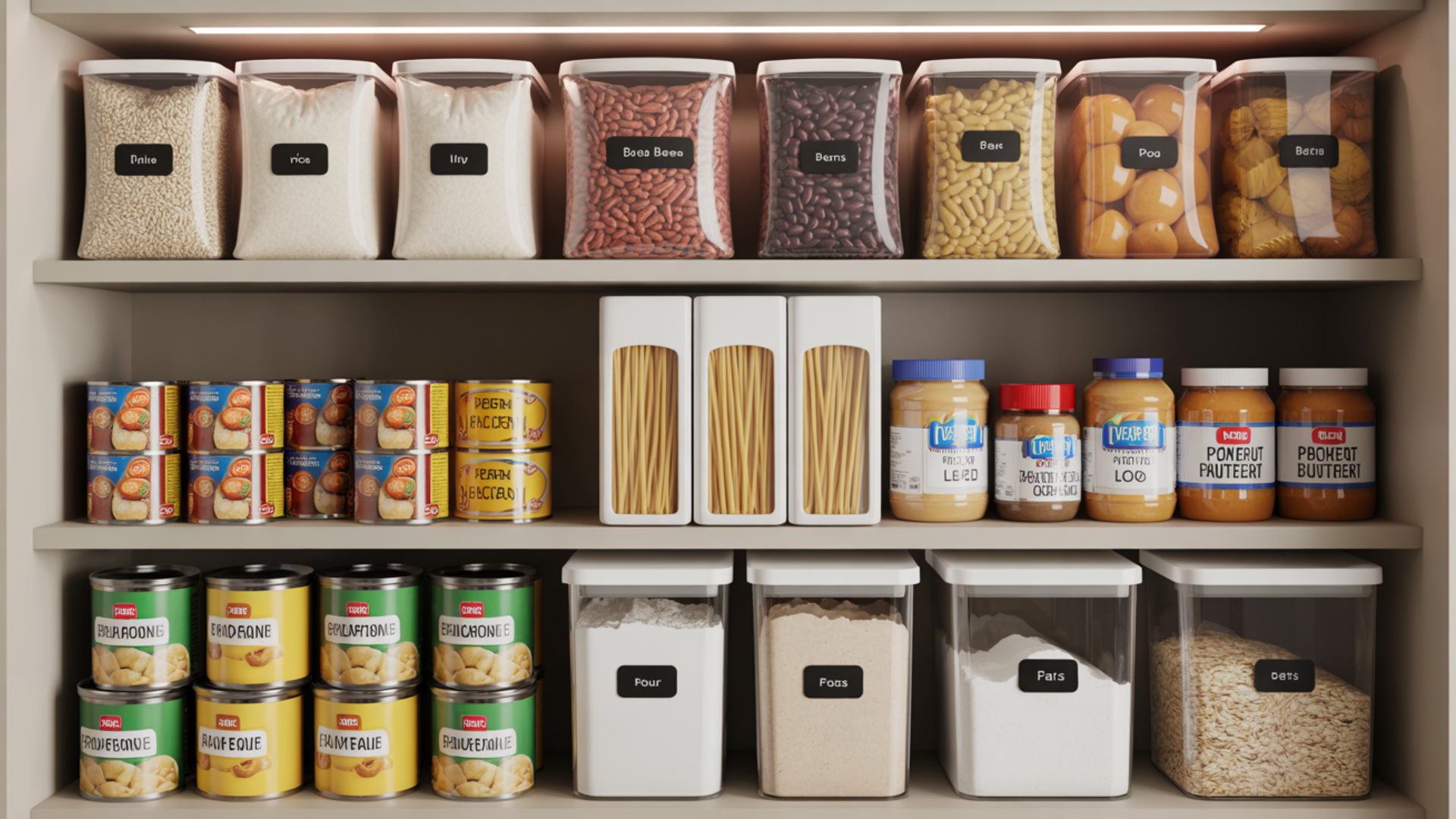
Your food stockpile doesn’t need to consist of expensive freeze-dried meals and MREs. The most cost-effective prepper pantry is built from everyday grocery items purchased strategically over time.
The “copy canning” method is the simplest approach: every time you go grocery shopping, buy one extra of each non-perishable item you normally purchase. Within two months, you’ll have a 2-week food buffer without any single shopping trip feeling the strain.
Best budget staples for apartment preppers:
- Dried rice and beans — Cheapest calories-per-dollar available. Store in sealed containers to prevent pests.
- Canned proteins — Tuna, chicken, sardines, and beans. Watch for sales and stock up when prices drop below $1 per can.
- Peanut butter — Calorie-dense, protein-rich, and requires no cooking or refrigeration.
- Oatmeal — Versatile, filling, and incredibly cheap in bulk. Can be eaten with cold water in a pinch.
- Pasta and jarred sauce — Comfort food that stores for 1–2 years easily.
- Honey — Never expires, provides quick energy, and has mild antibacterial properties.
- Powdered milk — Calcium and protein source that doesn’t require refrigeration.
- Multivitamins — Fills nutritional gaps when fresh produce isn’t available.
Store your pantry items using the first-in-first-out (FIFO) rotation method. Place new purchases behind older ones so nothing expires forgotten in the back of a cabinet. For a deeper dive into building a complete food reserve, see our full emergency food supply apartment planning guide.
Budget Water Storage Solutions
Water is the single most critical prep, and it’s also one of the cheapest. The standard recommendation is one gallon per person per day, covering drinking, cooking, and basic hygiene. For a 7-day supply for one person, you need just 7 gallons.
Cheapest storage options for apartments:
- Store-bought gallon jugs — At roughly $1 per gallon, this is the simplest and cheapest way to start. Stack them in a closet corner or under the bed.
- Cleaned 2-liter soda bottles — Free if you already drink soda. Rinse thoroughly, fill with tap water, add 2 drops of unscented bleach per liter, and store in a cool, dark place.
- 5-gallon food-grade jugs — Available at camping stores or online for $8–$15. Efficient use of space and easy to rotate.
- WaterBOB bathtub bladder — Fills your bathtub with 100 gallons of clean water when you know a storm or disruption is coming. Around $30 and stores flat.
Avoid storing water in milk jugs — the residual proteins promote bacterial growth even after thorough cleaning. Also avoid direct sunlight and heat, which degrade plastic containers and encourage algae growth. Our complete urban water storage guide covers purification methods and long-term storage strategies for every apartment layout. If you’re seriously limited on space, that urban water storage guide also includes creative solutions for micro-apartments and shared living situations.
Affordable Survival Gear Recommendations
Beyond food and water, certain gear items provide outsized value for apartment preppers on a budget. Focus on multi-use tools that serve multiple emergency scenarios.
Under $15:
- Headlamp with red-light mode — hands-free illumination for $8–$12
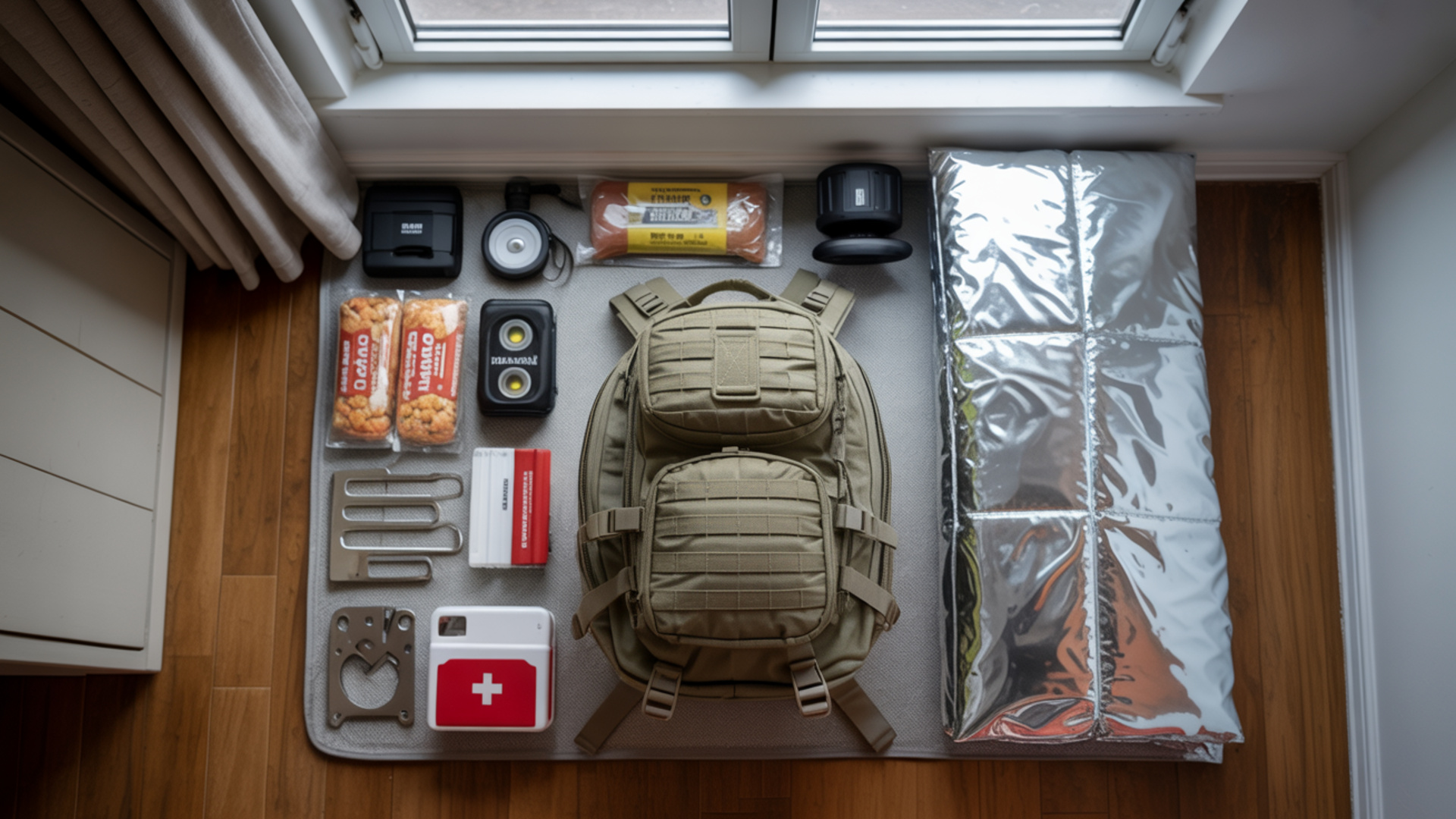
- Emergency Mylar blankets (pack of 10) — lightweight warmth for $7–$9
- Ferro rod fire starter — works wet, lasts thousands of strikes, $6–$10
- Water purification tablets — treats up to 25 gallons for $7–$9
Under $30:
- Portable water filter (Sawyer Mini or similar) — filters up to 100,000 gallons, $20–$25
- Solar-powered phone charger — renewable power source for $20–$30
- Fixed-blade knife (Morakniv Companion) — arguably the best budget survival knife made, $15–$20
Under $50:
- Hand-crank emergency radio with flashlight and USB charging — $25–$40
- Quality multi-tool (Leatherman Wingman or Gerber Suspension) — $30–$45
- Compact sleeping bag rated to 40°F — $30–$45
The key principle is buy once, cry once — even on a budget. A $20 knife that lasts a decade is cheaper than three $8 knives that break. Review our urban prepper checklist to see where each of these items fits into a comprehensive preparation plan.
Free and Low-Cost Prepping Strategies
Some of the most valuable preparation steps cost nothing at all. Before spending another dollar, make sure you’ve completed these zero-cost actions:
- Map your exits — Walk every stairwell and exit route in your building. Know at least two ways out from your unit.
- Digitize documents — Photograph or scan IDs, insurance policies, prescriptions, and lease agreements. Store copies in encrypted cloud storage and on a USB drive.
- Learn basic skills — YouTube has thousands of free tutorials on first aid, fire starting, water purification, basic sewing, and food preservation.
- Fill containers before storms — When severe weather is forecast, fill every pot, clean container, and your bathtub with water. Zero cost, massive payoff.
- Build relationships — Know your neighbors. In every major disaster, mutual aid between neighbors has been the single most effective survival factor.
- Conduct a home inventory — You probably already own useful prep items: matches, candles, blankets, tools, medications, batteries. Organize what you have before buying more.
- Create a communication plan — Designate an out-of-area contact person. Agree on a meetup point with family members if phones go down.
- Download offline resources — Save first aid guides, local maps, and emergency frequency lists to your phone for offline access.
These free strategies often matter more than any physical supply. Return to our homepage for more guides covering each of these skills in detail.
Common Budget Prepping Mistakes
Spending wisely matters as much as spending at all. These are the most frequent — and most expensive — mistakes budget apartment preppers make:
- Buying gear before mastering basics — A $200 survival knife is worthless if you don’t have 3 days of water stored. Always follow the priority order: water, food, light, first aid, communication, then tools.
- Ignoring expiration dates — Budget preppers often buy in bulk and then forget to rotate stock. Expired food and dead batteries create a false sense of security. Set calendar reminders every 6 months to audit your supplies.
- Storing everything in one location — If a fire, flood, or forced evacuation hits your apartment, a single stockpile location means you lose everything. Split critical supplies between your apartment, your vehicle (if applicable), and a go-bag near your door.
- Skipping water for food — New preppers gravitate toward food stockpiles because they’re more visible and satisfying to build. But dehydration will incapacitate you within 3 days while you can survive weeks without food. Water storage is always priority one.
- Falling for marketing hype — Tactical branding adds a 200–400% markup. A “tactical flashlight” is just an LED flashlight. A “survival straw” is a water filter. Buy function, not branding.
- Neglecting physical fitness and skills — No amount of gear compensates for an inability to walk down 15 flights of stairs or perform basic first aid. Free bodyweight exercises and YouTube first aid courses are preps too.
- Prepping in secret instead of community — Lone-wolf prepping is less effective and more expensive than building a small network of prepared neighbors who can share skills, tools, and supplies.
FAQ
How much does it cost to start prepping in an apartment?
You can build a solid 72-hour emergency kit for $80–$120. The key is prioritizing water, shelf-stable food, a light source, basic first aid, and a way to charge your phone. Use the $100 starter kit table above as your shopping list, and expand from there as your budget allows each month.
What are the best dollar store items for emergency prepping?
Emergency candles, lighters, matches, nitrile gloves, zip-lock bags, aluminum foil, bandages, and spray bottles are all excellent dollar store purchases. Avoid dollar store batteries, flashlights, and multi-tools — these items need higher quality to be reliable in an actual emergency.
How do I store emergency water in a small apartment?
Use a combination of store-bought gallon jugs, cleaned 2-liter bottles, and 5-gallon food-grade containers. Store them under beds, in closet corners, behind furniture, and on top of kitchen cabinets using our apartment storage hacks. Our urban water storage guide provides apartment-specific layouts and space-saving strategies for every size unit.
Can I build a prepper pantry without buying freeze-dried food?
Absolutely. The most cost-effective prepper pantry uses ordinary grocery items: canned beans, tuna, soup, dried rice, pasta, oatmeal, peanut butter, and honey. Use the copy canning method — buy one extra of each non-perishable item per grocery trip — and you’ll have a 2-week food buffer within two months without any large single expense.
What should I prioritize if I can only spend $20 per month on prepping?
Month one: water storage (gallon jugs and a few 2-liter bottles). Month two: canned food and a manual can opener. Month three: flashlight, batteries, and a portable phone charger. Month four: first aid kit. Month five: hand-crank radio. By month five, you’ve spent $100 total and have a solid emergency foundation. Check our urban prepper checklist for a complete month-by-month buildout plan.
🛒 Build Your Emergency Kit Today
You don’t need a big budget to start — just a plan and $20. Download our printable Urban Prepper Checklist to track your progress week by week, or jump to our homepage for the full library of apartment prepping guides.