The grey man theory is the practice of making yourself so unremarkable that you effectively become invisible in a crowd — no one notices you, remembers you, or considers you a target.
Why it matters in cities: Urban environments are dense, chaotic, and full of observers. During a crisis, the person who stands out is the first person who gets targeted — for their supplies, their knowledge, or simply because they look like they have something worth taking.
3 Key Takeaways:
- Blend in, don’t stand out — your clothing, behavior, and body language should match the people around you
- Avoid predictable behavior — vary your routines, routes, and timing so no one can anticipate your movements
- Carry gear without looking tactical — civilian bags, neutral colors, and smart packing keep your preparedness invisible
When most people think about survival, they picture wilderness scenarios — building shelters and filtering creek water. But for the majority of us, survival situations will unfold in cities and suburbs.
Urban survival carries a unique risk: other people. In a dense city, you’re surrounded by thousands of observers. During a crisis — a blackout, civil unrest, a supply chain collapse — those observers become potential threats.
The equation is simple. Visibility equals vulnerability. If people can see you’re prepared — that you have food, water, or gear — you become a target. You can’t defend against a crowd.
That’s where the grey man theory comes in. Instead of fighting through a crisis, you walk through it — unnoticed, unremarkable, invisible. This guide breaks down exactly how to do that in an urban apartment setting.
What Is the Grey Man Theory?
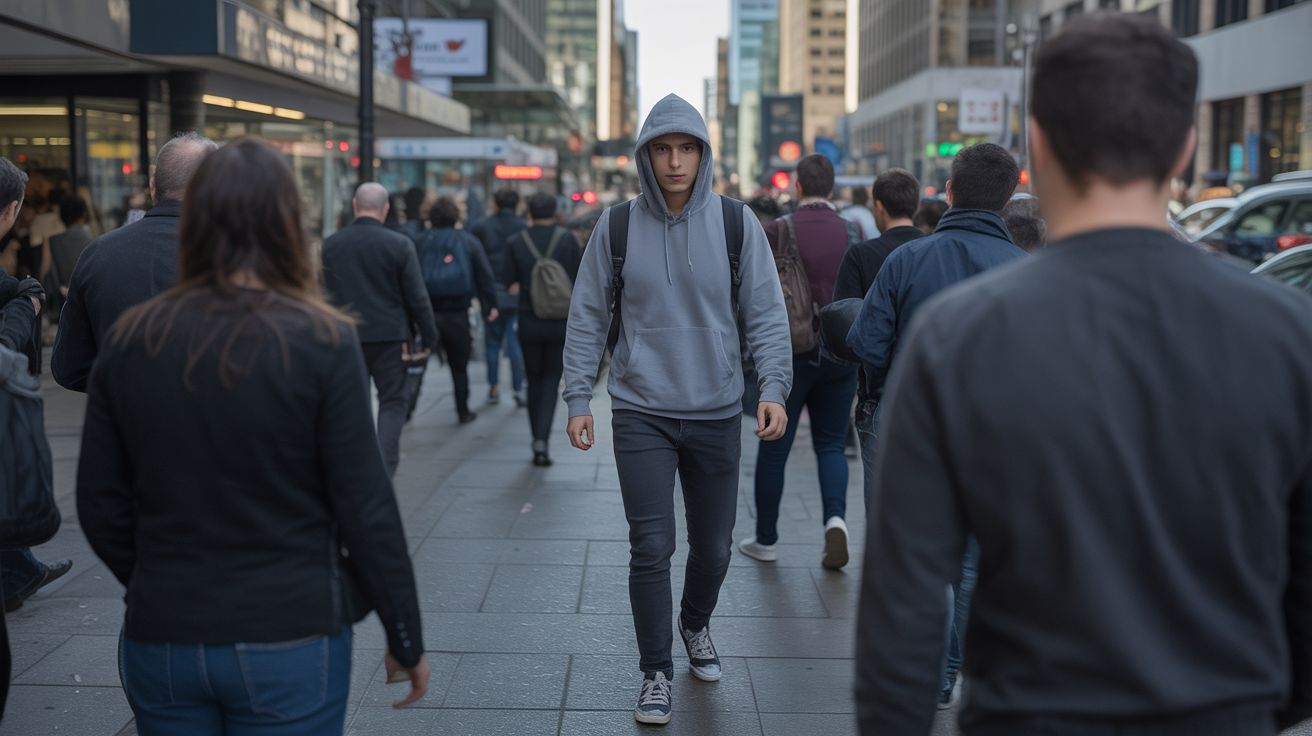
The grey man theory is a survival and security concept built around one idea: the safest person in a crisis is the one nobody notices.
A “grey man” doesn’t hide. They don’t run. They don’t draw attention by acting nervous or overly confident. Instead, they move through their environment looking exactly like everyone else — unremarkable in every way.
The concept originates from intelligence tradecraft. Field operatives learned that the best disguise isn’t a costume — it’s normalcy. You don’t need a fake mustache. You need to look like you belong.
In cities, this works especially well for three reasons:
- Volume of people: Crowds give you natural cover, but only if you match the crowd
- Constant observation: Security cameras, neighbors, passersby — someone is always watching in urban areas
- Social baseline: Every neighborhood has a “normal.” If you fit that normal, your brain gets filtered out by observers as irrelevant background noise
The grey man theory exploits how human attention works. People notice what’s different. Eliminate the differences, and you essentially disappear in plain sight.
Why Blending In Is More Important Than Defending
There’s a common fantasy in prepping culture: the heavily armed, tactically geared survivor who fights through danger. It makes for good movies. It makes for terrible strategy.
Here’s the problem with looking tactical in an urban environment: you become the biggest target in the room.
Someone wearing cargo pants, combat boots, and a MOLLE backpack during a power outage doesn’t look prepared — they look like they have supplies worth taking. They attract attention from civilians, criminals, and law enforcement alike.
Contrast that with someone in jeans, sneakers, and a regular backpack, walking at the same pace as everyone else. No one gives them a second glance.
Consider these real-world scenarios:
- Extended power outage: You walk to your car for supplies. In tactical gear, you get stopped and questioned. In normal clothes, nobody cares.
- Civil unrest: The person in all-black with a military backpack gets singled out. The person in a hoodie and jeans walks right through.
- Supply shortage: The person loading cases of water while wearing a “prepared” t-shirt gets targeted. The person with two grocery totes walks home without incident.
Attention is risk. Every set of eyes on you is a potential problem. The grey man approach eliminates that risk at the source.
Core Principles of the Grey Man Strategy
Becoming a grey man isn’t about buying special gear. It’s about understanding and applying four core principles in every aspect of how you present yourself.
Appearance: Clothing, Colors, and Brands
Your clothing is the first thing people register — and the fastest way to either blend in or stand out.
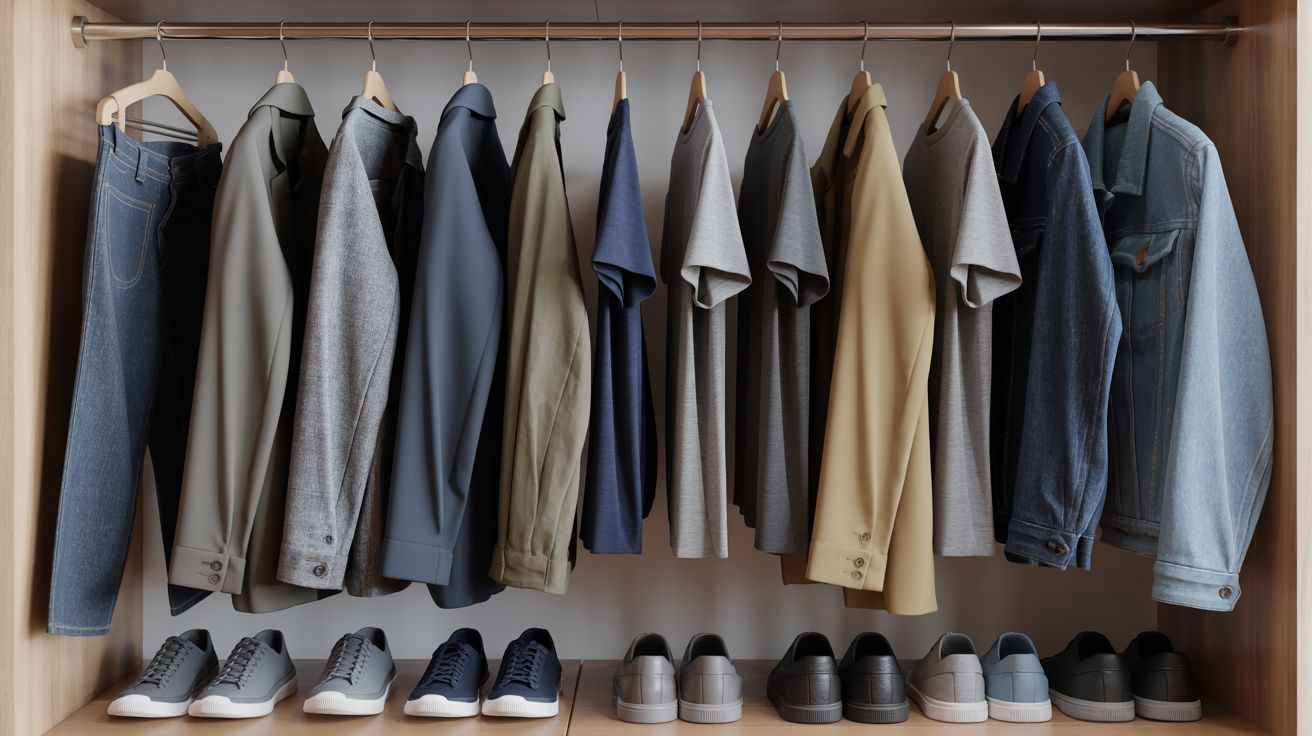
- Stick to neutral colors: Grey, navy, olive, tan, and brown. Avoid all-black (looks tactical), bright colors (draws eyes), and camo (screams “prepper”).
- Wear common brands: Generic, widely available clothing. No tactical brands, no military surplus, no gear company logos.
- Match your environment: In a business district, khakis and a polo blend in. In a working-class neighborhood, jeans and a work jacket fit better. Context is everything.
- Avoid new-looking gear: Brand-new boots and a stiff jacket signal that you bought them for a specific purpose. Slightly worn clothing looks lived-in and unremarkable.
- Skip accessories that signal preparedness: Paracord bracelets, tactical watches with visible compasses, carabiner keychains loaded with tools — all of these are tells.
Behavior: Movement, Posture, and Eye Contact
What you do matters more than what you wear. People notice unusual behavior even faster than unusual clothing.
- Match the pace of those around you: Moving faster or slower than the baseline draws attention.
- Maintain relaxed posture: Don’t scan rooftops or check over your shoulder. Relax your shoulders and look like you’re heading somewhere boring.
- Use appropriate eye contact: None looks suspicious. Too much looks aggressive. Brief, natural glances are what people expect.
- Don’t react to everything: If a car backfires, don’t drop into a crouch. Muted, delayed reactions are what normal people exhibit.
- Have a plausible purpose: Walk like you’re going somewhere specific. “Just wandering” during a crisis gets noticed.
Gear Concealment: Bags and Carry Style
How you carry your supplies is one of the biggest grey man challenges — and one of the most important to get right.
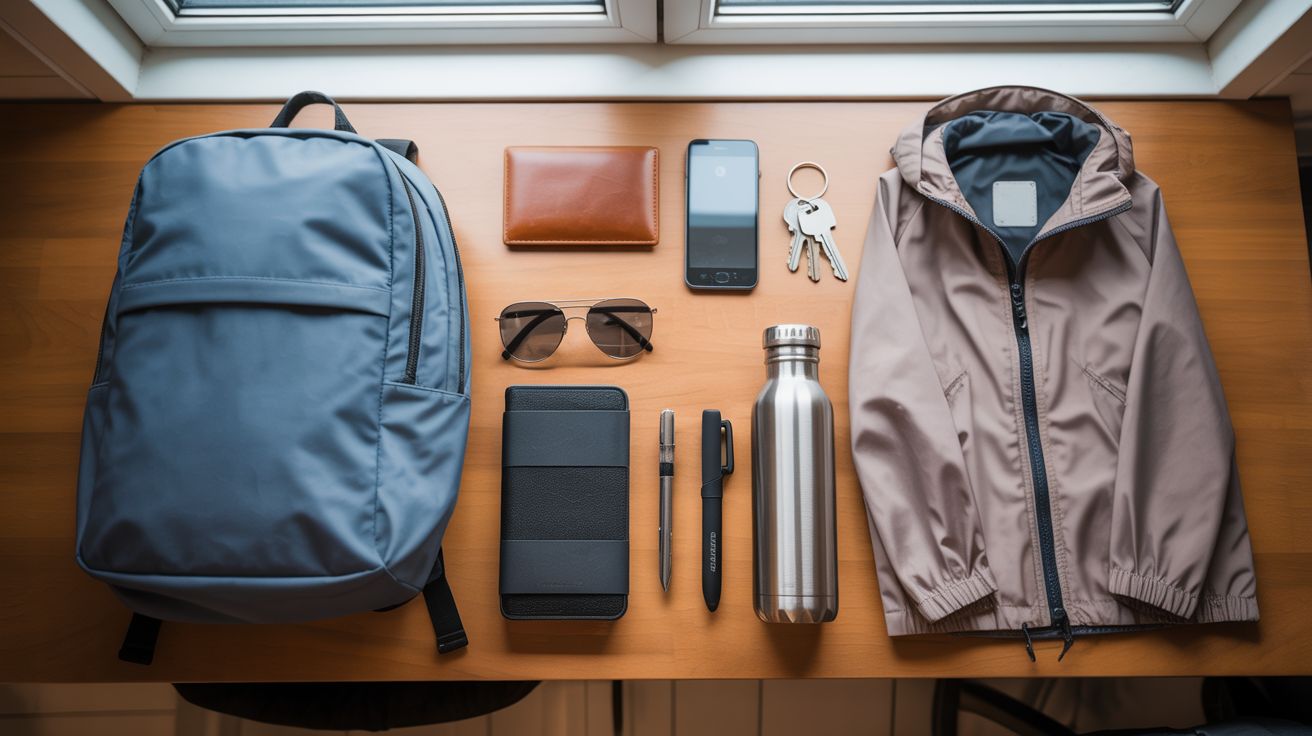
- Use civilian bags: A standard commuter backpack, a messenger bag, a gym duffel, or reusable grocery totes. Nothing with MOLLE webbing, external pouches, or military styling.
- Don’t overload: A backpack straining at the seams tells everyone you’re carrying something important. If you need to move a lot, make multiple trips.
- Distribute weight across bags: Two medium bags look more normal than one huge rucksack. A backpack plus a grocery bag is invisible.
- Avoid external attachments: Nothing clipped to the outside. No gear dangling from straps. Everything goes inside.
Routine Randomness
Patterns make you predictable. Predictability makes you vulnerable.
- Vary your routes: Don’t walk the same path to the store every time. Alternate between two or three routes so no one can anticipate where you’ll be.
- Change your timing: If you always leave at 7 AM, shift it. Go at 6:30 one day, 7:15 the next. Break the pattern.
- Rotate your appearance: Wear different jackets. Switch between a backpack and a messenger bag. Small changes prevent people from building a recognizable profile of you.
- Don’t establish a “supply schedule”: If neighbors notice you bringing in supplies every Saturday morning, they’ll know exactly who to approach — or target — when things go sideways.
Urban-Specific Grey Man Tactics
City living — especially apartment living — adds unique grey man challenges. You’re sharing walls, hallways, and elevators with dozens or hundreds of other people. Privacy is limited by design.
Apartment considerations:
- Elevator behavior: Take the stairs when carrying supplies. If you must use the elevator, go during off-peak hours.
- Hallway awareness: Sound carries. Don’t shuffle heavy boxes at midnight or leave your door open while organizing gear.
- Neighbor management: Be friendly but vague. Don’t volunteer information about your preparations.
- Trash management: MRE wrappers, bulk packaging — your trash tells a story. Break down boxes and mix prepping trash with regular garbage.
Moving supplies discreetly:
- Use common delivery boxes. An Amazon box is invisible in any apartment hallway.
- Bring in supplies with regular groceries. One bag of rice mixed in with normal food doesn’t register.
- If ordering bulk items, time deliveries for when hallways are empty.
- Use a wheeled cart or dolly — it looks like you’re moving everyday items, not stockpiling.
Common Mistakes That Expose You
Even experienced preppers make grey man mistakes. Here are the most common ones — and they’re all avoidable.
Wearing tactical clothing in everyday life. Cargo pants, tactical boots, a rigger’s belt with a visible knife clip. Together, they form a uniform that says “I’m prepared” — and invites questions.
Carrying bulk gear openly. Transporting a 72-hour bag, a water jug, and MREs in broad daylight draws attention. People remember. In a crisis, memories become threats.
Over-prepping visibly. Your balcony shouldn’t look like a garden center. Your car shouldn’t have survival stickers. Your visible bookshelf shouldn’t be lined with prepper titles.
Talking too much. This is the biggest grey man violation. Telling coworkers about your water storage, posting gear hauls on social media — every disclosure is a liability. The first rule of grey man theory: don’t talk about it.
Looking too comfortable during a crisis. If everyone is stressed and you’re calm and well-fed, you stand out. Mirror the emotional state of your environment even if you don’t feel it.
Practical Examples
Theory is useful. Application is everything. Here are three specific scenarios where grey man principles keep you safe.
Scenario 1: Grocery Run During Panic Buying
A major storm is forecast. Grocery stores are mobbed. Shelves are emptying fast.
The grey man approach:
- Bring regular reusable grocery bags — the kind everyone has
- Shop at the same pace as everyone else, even if you know exactly what you need
- Buy a mix of “normal” items alongside priority supplies — chips, a magazine — to look like a regular shopper
- Don’t clear shelves of any single item. Take reasonable quantities.
- Chat briefly in line about the weather. You’re just another person stocking up.
Scenario 2: Leaving Your Apartment During a Blackout
Power has been out for 48 hours. You need to move to a secondary location.
The grey man approach:
- Dress in whatever your neighbors would typically wear
- Use a phone flashlight instead of a headlamp — everyone uses their phone
- Carry a single everyday backpack, moderately full
- If anyone asks, you’re heading to stay with family. Simple, boring, believable.
- Walk with the same uncertain pace as everyone else
Scenario 3: Carrying a Bug Out Bag Unnoticed
You need to move your go-bag from your apartment to your vehicle without drawing attention.
The grey man approach:
- Use a standard-looking backpack in a common color — grey, black, or navy
- Carry a coffee cup in your other hand. Nothing says “normal morning routine” like a coffee cup.
- Make the trip during a time when other residents are leaving for work
- Walk at a natural pace. No urgency, no looking around nervously.
- If the bag is heavy, don’t adjust the straps constantly. Wear it like you carry it every day.
Gear Without Looking Like Gear
One of the biggest grey man challenges is carrying survival gear that doesn’t scream “survival gear.” The goal is functional equipment that passes as ordinary, everyday items.
Every piece of gear you carry should have a plausible civilian explanation. If someone looked in your bag, they should see a normal person’s daily carry — not a survival kit.
Civilian-looking backpacks:
- Commuter-style laptop backpacks with internal organization
- Standard school or college backpacks in neutral colors
- Messenger bags or tote bags for lighter loads
Neutral clothing that performs:
- Merino wool base layers that look like regular shirts but regulate temperature
- Hiking pants that pass as casual chinos
- Trail runners that look like everyday sneakers
- A softshell jacket in grey or navy — functional but unremarkable
Your urban first aid kit should be compact enough to fit inside a regular bag without creating suspicious bulk. Small, flat pouches work better than traditional first aid containers with red crosses on them.
When building your bug out bag checklist, prioritize items that serve double duty. A bandana is a filter, a tourniquet, a signal, and a fashion accessory. A metal water bottle is gear and a normal thing people carry every day.
Items that look civilian but serve survival purposes:
- A power bank (everyone carries one)
- A small LED flashlight on a keychain
- A lighter (common pocket item)
- Zip-lock bags (snack bags that double as waterproofing)
- A plain baseball cap (sun protection, partial face concealment, normalcy)
How Grey Man Connects to Total Preparedness
The grey man theory doesn’t exist in isolation. It’s one layer in a complete urban preparedness strategy. Being invisible is critical — but you also need the systems and supplies behind that invisibility to actually survive.
The connected preparedness framework:
- Physical security: While grey man keeps you invisible outside, apartment security upgrades keep your supplies safe inside. Reinforced doors and secondary locks are your first line of defense at home.
- Power and infrastructure: Blackouts are a common crisis trigger where grey man skills matter most. Your blackout preparedness plan determines whether you’re forced outside or can shelter in place while others scramble.
- Communication: When cell networks go down, an emergency radio communication setup lets you monitor developments and make informed decisions from inside your apartment.
Each system supports the others. Strong apartment security means you stay inside longer, reducing exposure. Blackout preparedness means fewer trips outside. A reliable radio means you know when it’s safe to move — and when to stay put.
The grey man approach ties it all together — the connective tissue between your prepared home and the unprepared world outside your door.
- Always mirror your environment. Before stepping outside, glance out a window. What are people wearing? How are they moving? Match that energy exactly. If everyone has umbrellas, you need an umbrella — even if you have a waterproof jacket.
- Avoid brand-new gear signals. New boots squeak. New jackets are stiff. New backpacks have a sheen. Break in your gear before you need it. Worn equipment looks like it belongs to someone who’s had it for years — not someone who just raided a survival store.
- Practice “invisible movement.” On your daily commute or errands, consciously practice being unmemorable. Walk at crowd speed. Avoid making eye contact with security cameras. Take different routes. After a week, ask someone if they noticed you at a specific time and place. If they didn’t, you’re doing it right.
Final Thoughts: The Best Defense Is Not Being Noticed
Survival in an urban environment isn’t about who has the most gear, the biggest stockpile, or the toughest attitude. It’s about who gets through a crisis without becoming a target.
The grey man theory is deceptively simple: look normal, act normal, be forgettable. But executing it consistently — in your clothing, your behavior, your gear choices, and your daily routines — requires practice and discipline.
Start now, before you need it. Practice blending in during everyday life. Build your kit with concealment in mind. Pay attention to what “normal” looks like in your neighborhood, and match it.
The person who survives an urban crisis isn’t the one with the biggest gun. It’s the one who walked right past the danger — and nobody even looked up.
Explore the linked guides throughout this article to build a complete preparedness plan. The grey man approach is your strategy. The rest is infrastructure.