Affiliate Disclosure: To support our research, some links on this site may be affiliate links. If you make a purchase, we may receive a commission at no extra cost to you. We only recommend gear we trust. You can use our kit builder to get started for a personalized plan.
Emergency Food Supply List: Printable Checklist for Urban Preppers [2026]
Building an emergency food supply doesn’t have to be overwhelming or expensive. This list gives you exactly what to buy, how much, and in what order — organized by food category with shelf life data, calorie counts, and budget tiers from $50 to $250. Whether you’re building a 72-hour kit or a 90-day pantry, use this checklist to build your supply systematically. For more details, check out our guide on Food Storage Rotation: Simple FIFO System for Apartment Preppers. You can calculate your storage requirements for a personalized plan.
How Much Emergency Food Do You Need?
The standard planning figure is 2,000 calories per person per day for adults. Children need 1,200–1,800 depending on age. Active adults or those in cold environments should plan for 2,500+. Here’s what that looks like across different timeframes:
| Duration | 1 Person (cal) | Family of 4 (cal) | Budget Range |
|---|---|---|---|
| 72 hours | 6,000 | 24,000 | $15–50 |
| 2 weeks | 28,000 | 112,000 | $75–200 |
| 30 days | 60,000 | 240,000 | $150–400 |
| 90 days | 180,000 | 720,000 | $400–1,000 |
Start with 72 hours and build up. Don’t try to jump straight to 90 days — you’ll overspend and end up with food you don’t know how to rotate. Pair your food supply with adequate water storage using our water storage calculator. For more details, check out our guide on Portable Water Filters Emergency: Top 5 Compact Purifiers for Urban Survival. You may also find How to Purify Water at Home: 7 DIY Methods That Work in Emergencies helpful.
👉 Build your custom Emergency Kit here
The 47-Item Emergency Food Supply List
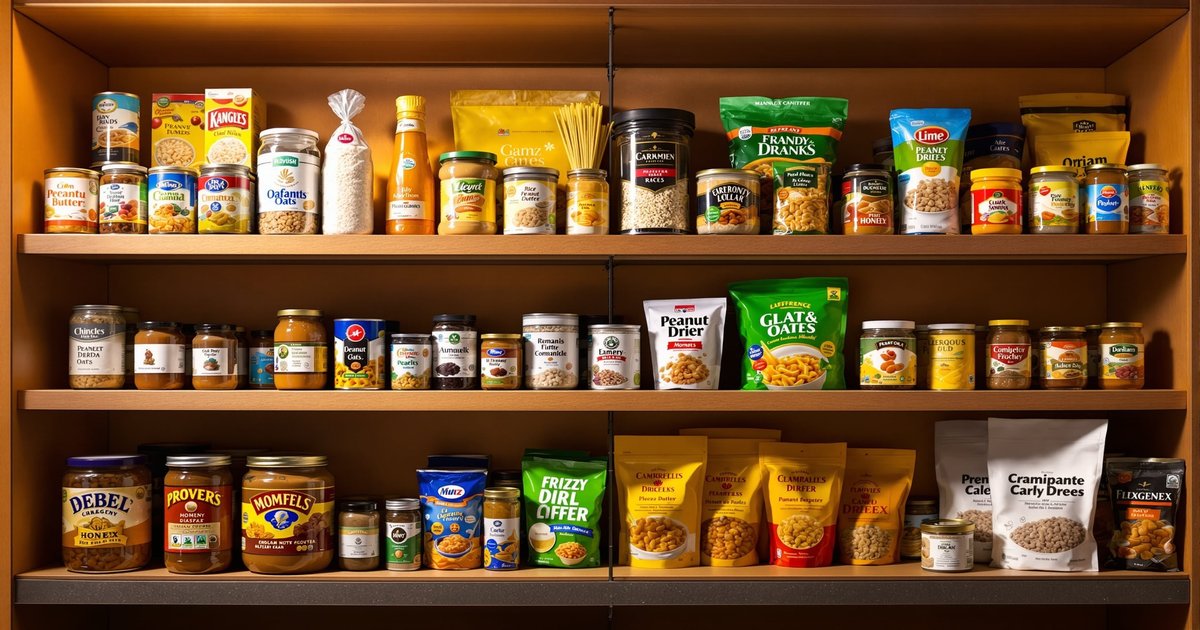
This list is organized by food category. Items marked with ⭐ are highest priority — buy these first for your 72-hour kit. Items marked with 📦 are best for long-term (90-day) storage.
Grains & Starches (The Calorie Foundation)
| # | Item | Qty (2-week/person) | Calories/serving | Shelf Life | Priority |
|---|---|---|---|---|---|
| 1 | White rice | 10 lbs | 205/cup cooked | 25–30 years (Mylar) | ⭐📦 |
| 2 | Rolled oats | 5 lbs | 150/half cup dry | 1–2 years (sealed) | ⭐ |
| 3 | Pasta (various) | 5 lbs | 200/cup cooked | 2–3 years | ⭐ |
| 4 | Flour (all-purpose) | 5 lbs | 455/cup | 1 year (sealed) | |
| 5 | Cornmeal | 2 lbs | 440/cup | 1–2 years | |
| 6 | Crackers (saltines/pilot bread) | 4 boxes | 70/5 crackers | 6–12 months | ⭐ |
| 7 | Instant mashed potatoes | 2 boxes | 110/serving | 1–2 years | |
| 8 | Granola bars | 24 bars | 150–200/bar | 6–12 months | ⭐ |
Proteins
| # | Item | Qty (2-week/person) | Calories/serving | Shelf Life | Priority |
|---|---|---|---|---|---|
| 9 | Canned tuna | 6 cans | 100/can | 3–5 years | ⭐ |
| 10 | Canned chicken | 4 cans | 130/can | 3–5 years | ⭐ |
| 11 | Canned salmon | 3 cans | 180/can | 3–5 years | |
| 12 | Spam/canned meat | 3 cans | 180/serving | 3–5 years | |
| 13 | Dried beans (pinto/black) | 5 lbs | 245/cup cooked | 25–30 years (Mylar) | ⭐📦 |
| 14 | Dried lentils | 3 lbs | 230/cup cooked | 25–30 years (Mylar) | 📦 |
| 15 | Peanut butter | 2 jars (40oz) | 190/2 tbsp | 1–2 years | ⭐ |
| 16 | Canned chili/stew | 4 cans | 250/can | 2–5 years | ⭐ |
| 17 | Beef jerky | 1 lb | 80/oz | 1–2 years | |
| 18 | Protein powder | 1 container | 120/scoop | 1–2 years |
Fruits & Vegetables
| # | Item | Qty (2-week/person) | Calories/serving | Shelf Life | Priority |
|---|---|---|---|---|---|
| 19 | Canned vegetables (mixed) | 8 cans | 60–80/can | 2–5 years | ⭐ |
| 20 | Canned tomatoes | 4 cans | 40/can | 2–5 years | ⭐ |
| 21 | Canned fruit (in juice) | 6 cans | 100/can | 2–5 years | ⭐ |
| 22 | Dried fruit (raisins, apricots) | 2 lbs | 130/quarter cup | 6–12 months | |
| 23 | Applesauce cups | 12 cups | 90/cup | 1–2 years | |
| 24 | Freeze-dried vegetables | 2 cans | varies | 25 years | 📦 |
| 25 | Canned beans (baked/kidney) | 4 cans | 200/can | 2–5 years | ⭐ |
| 26 | Tomato sauce/paste | 4 cans | 30–70/serving | 2–5 years |
Fats, Oils & Calorie Boosters
| # | Item | Qty (2-week/person) | Calories/serving | Shelf Life | Priority |
|---|---|---|---|---|---|
| 27 | Cooking oil (vegetable/olive) | 1 bottle (48oz) | 120/tbsp | 1–2 years | ⭐ |
| 28 | Honey | 1 jar (32oz) | 60/tbsp | Indefinite | 📦 |
| 29 | Sugar (white) | 5 lbs | 45/tbsp | Indefinite (sealed) | 📦 |
| 30 | Powdered milk | 1 box | 80/cup prepared | 2–10 years (sealed) | |
| 31 | Nuts (mixed/almonds) | 2 lbs | 170/oz | 6–12 months | |
| 32 | Seeds (sunflower/pumpkin) | 1 lb | 160/oz | 6–12 months |
Comfort Foods & Morale Boosters
| # | Item | Qty (2-week/person) | Calories/serving | Shelf Life | Priority |
|---|---|---|---|---|---|
| 33 | Coffee/tea | 1 canister + 1 box | 2–5/cup | 1–2 years | ⭐ |
| 34 | Hot chocolate mix | 1 box | 120/packet | 1–2 years | |
| 35 | Hard candy | 1 bag | 60/5 pieces | 1–2 years | |
| 36 | Chocolate bars | 6 bars | 200–250/bar | 6–12 months | |
| 37 | Instant soup packets | 12 packets | 60–100/packet | 1–2 years | ⭐ |
| 38 | Mac and cheese boxes | 4 boxes | 250/serving | 1–2 years |
Seasonings & Essentials
| # | Item | Qty | Shelf Life | Priority |
|---|---|---|---|---|
| 39 | Salt | 2 lbs | Indefinite | ⭐📦 |
| 40 | Black pepper | 1 container | 3–4 years | |
| 41 | Garlic powder | 1 container | 3–4 years | |
| 42 | Bouillon cubes/powder | 1 jar | 1–2 years | ⭐ |
| 43 | Soy sauce | 1 bottle | 2–3 years | |
| 44 | Hot sauce | 1 bottle | 3–5 years | |
| 45 | Vinegar | 1 bottle | Indefinite | 📦 |
| 46 | Baking soda | 1 box | Indefinite (sealed) | |
| 47 | Multivitamins | 1 bottle (90-day) | N/A | ⭐ |
👉 Calculate exactly how much water you need
Budget Emergency Food Pantry — $100 for 2 Weeks
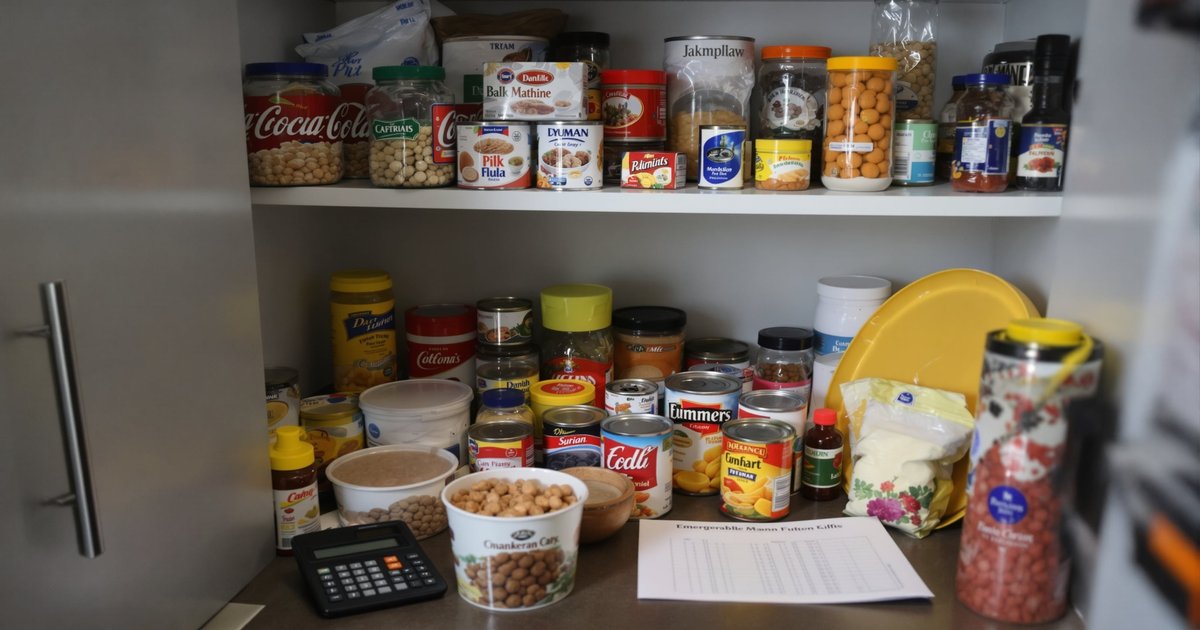
If you’re starting from zero and want a functional 2-week emergency food supply for one adult, here’s your shopping list prioritized by caloric value per dollar:
| Item | Qty | Cost | Total Calories |
|---|---|---|---|
| White rice (25 lb bag) | 1 | $15 | ~40,000 |
| Dried pinto beans (10 lbs) | 1 | $12 | ~15,000 |
| Rolled oats (10 lbs) | 1 | $8 | ~17,000 |
| Peanut butter (40oz jars) | 2 | $12 | ~9,400 |
| Canned vegetables (15oz) | 12 | $12 | ~2,400 |
| Canned tuna/chicken | 8 | $12 | ~1,600 |
| Pasta (1 lb boxes) | 5 | $6 | ~8,400 |
| Cooking oil (48oz) | 1 | $5 | ~11,500 |
| Sugar (5 lbs) | 1 | $4 | ~8,700 |
| Salt, bouillon, spices | — | $5 | minimal |
| Coffee/tea | 1 | $5 | minimal |
| Multivitamins | 1 | $4 | N/A |
| TOTAL | $100 | ~114,000 |
That’s approximately 114,000 calories — enough for one adult for 57 days at 2,000 calories/day, or a family of four for 2 weeks. The key is calorie-dense staples (rice, beans, oats, oil) supplemented by canned goods for nutrition and variety. For a deeper dive, see our guide on preparedness checklist.
Best Freeze-Dried Emergency Food Brands
For longer shelf life (25+ years) and easier preparation (just add water), freeze-dried meals are the premium option. Here are the top brands for urban preppers: You can figure out exactly how much water your household needs for a personalized plan.
| Brand | Shelf Life | Price/Serving | Taste Rating | Best For |
|---|---|---|---|---|
| Mountain House | 30 years | $5–8 | ⭐⭐⭐⭐⭐ | Best taste, proven reliability |
| Augason Farms | 25 years | $2–4 | ⭐⭐⭐⭐ | Best value, bulk ingredients |
| Wise Company | 25 years | $3–5 | ⭐⭐⭐ | Budget complete meal kits |
| ReadyWise | 25 years | $3–5 | ⭐⭐⭐⭐ | Variety packs, good portions |
| My Patriot Supply | 25 years | $3–6 | ⭐⭐⭐⭐ | Complete kits with water filtration |
Our recommendation: Start with grocery store staples (the $100 plan above) for your first 2-week supply. Then add Mountain House or Augason Farms freeze-dried meals for variety and extended shelf life. Don’t build your entire supply from freeze-dried meals — it’s too expensive and you’ll miss the nutritional variety of a mixed pantry.
How to Calculate Your 30-Day Food Needs
Before building your emergency food supply, you need to understand how much food your household actually needs. The average adult requires 2,000-2,500 calories per day to maintain normal activity levels. During emergencies, stress and physical activity may increase this requirement.
Here’s a simple calculation method:
- Adults: 2,000 calories/day × 30 days = 60,000 calories per person
- Children (ages 4-13): 1,500 calories/day × 30 days = 45,000 calories
- Teenagers: 2,500 calories/day × 30 days = 75,000 calories
For a family of four (2 adults, 2 children), you’ll need approximately 210,000 total calories for 30 days. When shopping, check nutrition labels to calculate how many servings you’ll need. A can of beans (350 calories) provides roughly one meal component for one person.
According to the CDC’s emergency preparedness guidelines, it’s wise to add a 10% buffer to account for higher stress and activity levels during emergencies.
Best Storage Methods for Small Spaces
Urban preppers face unique storage challenges. Space is premium, and proper food preservation is critical to avoid waste.
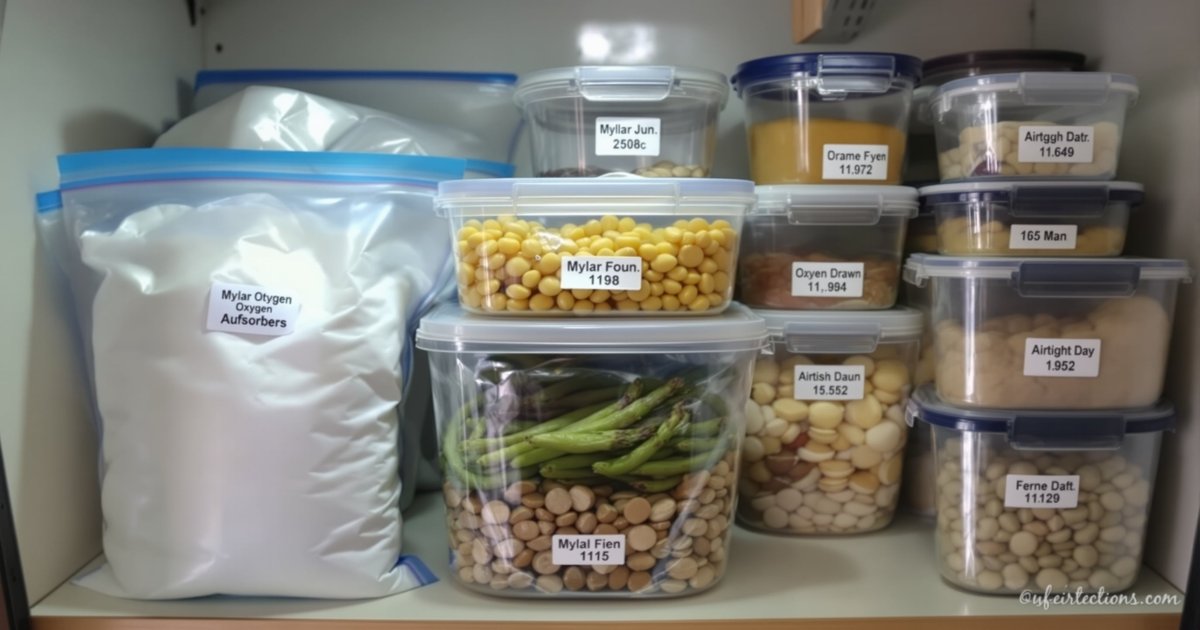
Mylar Bags with Oxygen Absorbers: The gold standard for long-term storage (20+ years). These metallized bags protect food from light, moisture, and oxygen. They’re stackable and fit perfectly in closets, under beds, or in storage ottomans. Use 1-gallon bags for rice, beans, and pasta.
Food-Grade Plastic Buckets: Excellent for bulk storage. Stack them in closets or use as end tables with a cushion on top. A 5-gallon bucket holds approximately 35 pounds of wheat or 33 pounds of white rice.
Clear Storage Bins: Ideal for canned goods and rotation systems. Label each bin by expiration date range (e.g., “Expires 2026 Q1”). Store under beds, in coat closets, or on top of kitchen cabinets.
Vacuum-Sealed Bags: Perfect for dehydrated foods and save 50% space compared to original packaging.
Food Storage Tips for Apartment Preppers
👉 Make sure your supplies fit your space
- Label everything with purchase date and expiration date using a permanent marker
- Use the FIFO method — new items go to the back, consume from the front. Read our complete food storage rotation guide for implementation steps
- Store in cool, dark locations — avoid garages, attics, or areas near heat sources
- Invest in proper containers — 5-gallon food-grade buckets with gamma lids for bulk grains and beans
- Rotate quarterly — check dates every 3 months and incorporate near-expiry items into regular meals
- Keep a written inventory — a simple spreadsheet or printed list prevents duplicate purchases and missed expirations